Linear Logic and the Four Elements

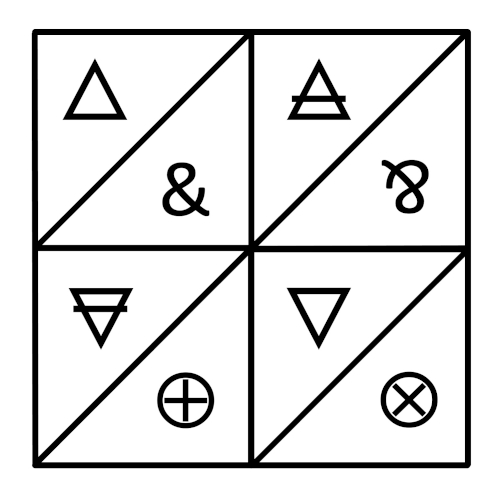
Here is an alignment between two of my favorite topics, the four operators of linear logic and the four elements.

I’ve been wanting to create this eight-fold for a while, and so here it is. I think it looks rather nice.

At this point I should present my reasons for this symbolic amalgam, but I leave it up to you, dear reader.

However, I will write the names of the symbols starting with the upper left and going widdershins…

  • Fire / With
  • Earth / Plus
  • Water / Times
  • Air / Par

[*5.188, *11.26, *13.82]

<>

The Diamond Approach Design Method

Again, I have taken a diagram and bent it into my preferred vision. At least the original figures have isosceles right triangles to begin with. However, they were in a left-to-right sequence (ordered by time) instead of a cycle as I have done. On many diagrams of the diamond approach there are indeed loops that return the user to positions earlier in the sequence so I don’t feel too bad.

The steps that are part of the diamond approach are reminiscent of other learning cycles, such as that of Kolb. The original left-to-right sequence emphasizes the order, as well as showing that steps may be divergent or convergent (analytic or synthetic) in their methods. Instead I have denoted divergence by arrows facing away from each other and convergence by arrows facing towards each other.

    • Discover (divergent)
    • Define (convergent)
    • Develop (divergent)
    • Deliver (convergent)

The main creator of the Diamond Approach is A. H. Almaas, who has written many books on spirituality or esoteric subjects such as the Enneagram. Being a skeptical sort, I have no idea if the notions and methods in these books are worth your time, but the goals indeed sound laudable. How do they differ from psychoanalysis, psychotherapy, or other techniques to improve mental health? Further reading may be required before you pay for classes and retreats.

Further Reading:

https://www.diamondapproach.org/home

https://www.diamondapproach.org/almaas

https://en.wikipedia.org/wiki/A._H._Almaas

https://www.google.com/search?q=the+diamond+approach+design+method&tbm=isch

[*13.74, *13.75]

<>

The Three Pillars of Stoicism

The Four Cardinal Virtues of Wisdom, Justice, Temperance, and Courage are often linked to the “Three Pillars” of Stoicism: Logics, Ethics, and Physics. Logics and rational thought enables the virtue of (practical) wisdom to produce intelligent assent or rejection. Ethics and moral strivings condition the virtue of justice (and courage) to inform proper action or non-action. Physics and natural constraints temper the virtue of courage (and temperance) by proportionate or bounded desire or aversion.

    • Logics (Rational Domain): Assent for (practical) Wisdom
    • Physics (Natural Domain): Desire for Courage and Temperance (restraint)
    • Ethics (Moral Domain): Action for Justice

Note the mismatch between Four Cardinal Virtues and the Three Pillars. Some add Metaphysics to get Four Pillars, although what domain does it inform? (Supernatural? Speculative? Philosophical?) Also note my use of the term “Logics”. If the British can use the term “Maths” then I can certainly use “Logics,” because logic can now come in many different formulations.

Further Reading:

The Highest Good: An Introduction To The 4 Stoic Virtues

Disciplines, Fields, and Virtues: The Full Stoic System in One Neat Package

Stoicism

The Spheres of Human Understanding

The Four Cardinal Virtues

Images of Logics, Ethics, Physics:

https://www.google.com/search?q=logics+physics+ethics&tbm=isch

<>


The Endless of Sandman

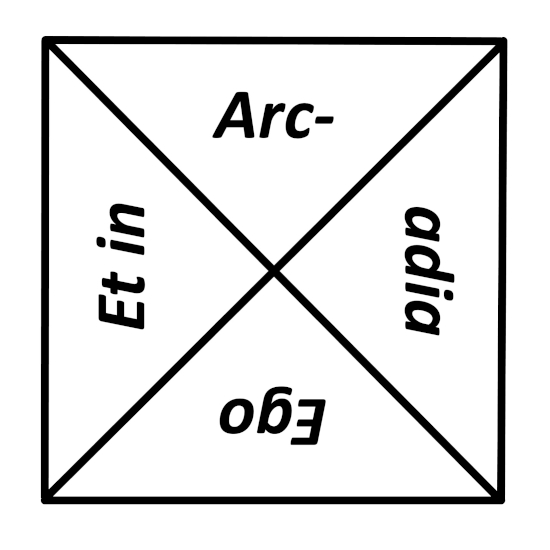
The Endless are merely patterns. The Endless are ideas. The Endless are wave functions. The Endless are repeating motifs. The Endless are echoes of darkness, and nothing more… And even our existences are brief and bounded. None of us will last longer than this version of the Universe.

Destruction of the Endless

The Endless are:

    • Destiny
    • Death
    • Dream
    • Destruction
    • Desire
    • Despair
    • Delirium

Further Reading:

https://en.wikipedia.org/wiki/The_Sandman_(TV_series)

https://en.wikipedia.org/wiki/Endless_(comics)

https://sandman.fandom.com/wiki/The_Endless

<>


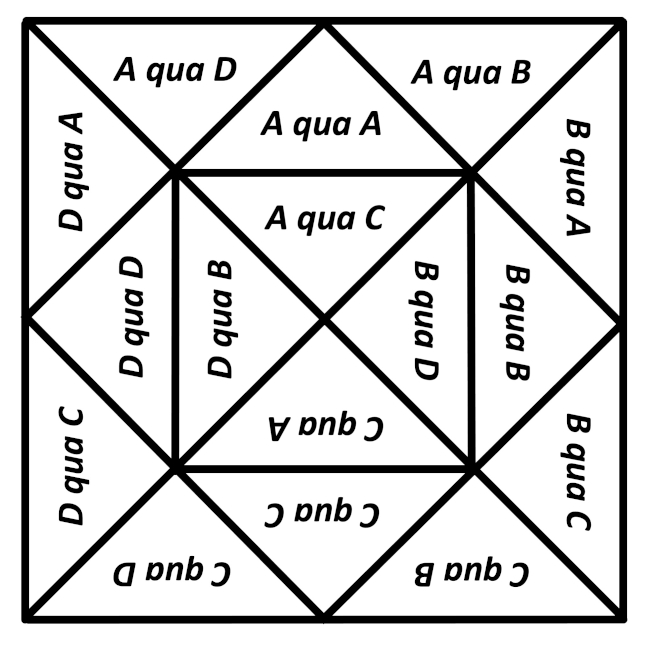
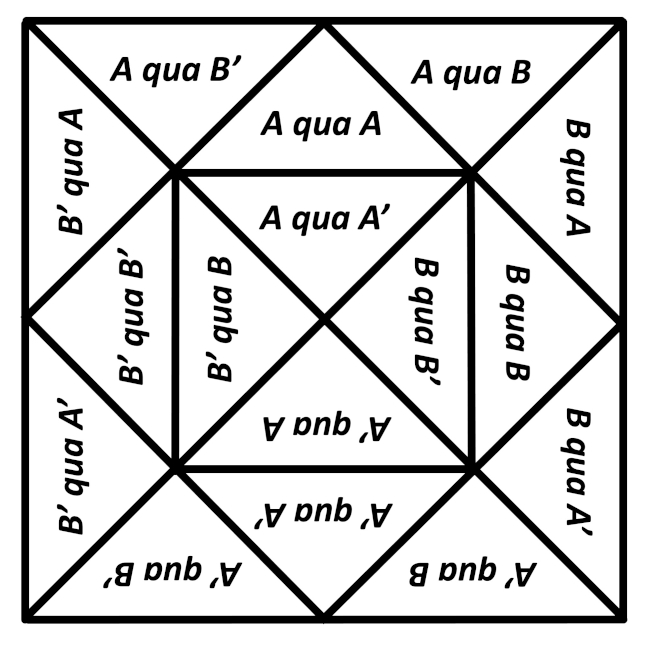
Linear Logic and the Laws of Excluded Middle and Noncontradiction

If LEM is the Law of Excluded Middle and LNC is the Law of Non-contradiction then

  • Classical Logic preserves both LEM and LNC
  • Intuitionistic Logic preserves LNC, but rejects LEM
  • Co-Intuitionistic Logic preserves LEM, but rejects LNC
  • Linear Logic broadly preserves neither, but narrowly preserves and rejects them with its pairs of conjunctive and disjunctive logical operators

Above is shown the four operators of Linear Logic and the statements for their preservation and rejection of LEM and LNC.

Further Reading:

https://en.wikipedia.org/wiki/Law_of_excluded_middle

https://en.wikipedia.org/wiki/Law_of_noncontradiction

https://plato.stanford.edu/entries/logic-classical/

https://plato.stanford.edu/entries/logic-intuitionistic/

https://plato.stanford.edu/entries/logic-linear/

Pete Wolfendale / Essay on Transcendental Realism
(at PhilPapers)

https://t.co/hoHWUOhQE0

https://plato.stanford.edu/entries/contradiction/

https://ncatlab.org/nlab/show/paraconsistent+logic

[*13.60]
<>


Charles Howard Hinton

Another early author of note about the fourth dimension, Charles Howard Hinton, invented the terms “Ana” and “Kata” to denote the two movements along a fourth-dimensional direction. He was also the inventor of the term “tesseract” for a four-dimensional cube.

Further Reading:

https://en.wikipedia.org/wiki/Charles_Howard_Hinton

https://publicdomainreview.org/essay/notes-on-the-fourth-dimension

https://en.wikipedia.org/wiki/Four-dimensional_space

https://onlinebooks.library.upenn.edu/webbin/book/lookupname?key=Hinton%2C%20Charles%20Howard%2C%201853%2D1907

https://www.sciencefocus.com/science/the-four-dimensional-life-of-mathematician-charles-howard-hinton/

https://paw.princeton.edu/article/charles-howard-hinton-he-wrote-science-fiction-genre-existed

https://en.wikisource.org/wiki/What_is_the_Fourth_Dimension%3F

https://en.wikipedia.org/wiki/Alicia_Boole_Stott

<>


Four-Dimensional Vistas

The Fourth Dimension has been an interest of mine since I was a child. I’m not sure when I first heard about it, but I still have my coverless copy of “Geometry of 4 Dimensions” by Henry Parker Manning that I bought in a used book store. (I wonder why it hasn’t ever been reissued by Dover?) Maybe I heard about the fourth dimension in some science fiction TV movie, or in some mathematical survey book like “Mathematical Snapshots” or “Mathematics and the Imagination”.

Once I tried to explain to my best friend about my newly discovered insight how a hypercube could be folded up in four-dimensional space from its so-called three-dimensional net consisting of eight cubes, just as a regular three-dimensional cube could be folded up from its two-dimensional net of six squares. This 3D net somewhat resembling a cross is famously seen in Dali’s “Crucifixion (Corpus Hypercubus),” although I probably didn’t refer to this painting in my explanation.

I’m not sure who came up with the take-away message from my exposition, but it remains clear in my memory that the “junk in the middle” of the hypercube was a piece of the fourth dimension, just as the faces of a cube enclose a piece of our normal third dimension.

I recently came across Claude Fayette Bragdon, architect, author, draughtsman, stage designer, and mystic. At first I was interested in his drawings found on-line. His book “Four-Dimensional Vistas” started off with a good if overly wordy introduction to the concept of the fourth dimension. But then he suggests that many esoteric concepts such as the meaning of dreams, reincarnation, past-life regression, prognostication, ESP, etc. could possibly be explained by higher dimensional space or even higher dimensional time.

Even though I initially found many of these hypotheses too far-fetched for my tastes, I still found some interesting ideas to mull over in this little book.

Further Reading:

https://en.wikipedia.org/wiki/Claude_Fayette_Bragdon

https://www.gutenberg.org/ebooks/author/4128

https://theosophy.wiki/en/Claude_Fayette_Bragdon

Claude Fayette Bragdon

https://rbscp.lib.rochester.edu/bragdon-family-papers-claude-bragdon-architectural-drawings

The art of Claude Fayette Bragdon, 1866–1946

https://rbscp.lib.rochester.edu/3514

https://bauarchitecture.com/research.loshuworldofwonderous.shtml

Claude Fayette Bragdon / Four-Dimensional Vistas (1930)

Claude Fayette Bragdon / The Beautiful Necessity (1910)

Claude Fayette Bragdon / Architecture and Democracy (1918)

For my gratuitous anime tie-in, Bragdon’s world-view suddenly reminds me of the anime character  Haruhi Suzumiya, who wished for her aliens, time-travelers, and ESPers so much that she willed them into being. If only she had known about the fourth dimension!

https://reelrundown.com/animation/Anime-Philosophy-1-Melancholy-of-Haruhi-Suzumiya

[*3.139, *12.121, *13.50]

<>


Sixteen Emotions

Emotions are also often divided into sixteen different types instead of the eight we saw in The Circumplex Model of Affect. The Geneva Emotion Wheel (1.0) used the same Valence and Arousal axes and produced the following 16 emotions:

(Circular Order) Anger, Contempt, Disgust, Envy, Guilt, Shame, Fear, Sadness, Surprise, Interest, Hope, Relief, Satisfaction, Joy, Elation, Pride

(Alphabetized) Anger, Contempt, Disgust, Elation, Envy, Fear, Guilt, Hope, Interest, Joy, Pride, Relief, Sadness, Satisfaction, Shame, Surprise

(But an updated GEW Version 3.0 has 20 emotions in a circle on Valence and Control axes. See below for details.)

Another study used a Deep Neural Network on a training set of emotional facial expressions. They used the algorithm to track instances of 16 facial expressions one tends to associate with amusement, anger, awe, concentration, confusion, contempt, contentment, desire, disappointment, doubt, elation, interest, pain, sadness, surprise and triumph. (See below for details.)

Further Reading:

Deep Neural Network Study:

https://www.universityofcalifornia.edu/news/16-facial-expressions-most-common-emotional-situations-worldwide

https://www.nature.com/articles/s41586-020-3037-7.epdf?sharing_token=HSJMoSVfY5o49OnJekiTadRgN0jAjWel9jnR3ZoTv0MoNbV4Dp3UAuVQXWMsVp072AXdB1TV9xrCOEfkEnu1VW_w0-pFu7hQYyeyo5A49FOV_5mAwoGr4xwHjXYpnJlyerbBlvPyRSZhs_kxs3D8hFdx2EHBSkEWMLArimiJwI0%3D

https://www.nature.com/articles/s41586-020-3037-7?WT.ec_id=NATURE-202012&sap-outbound-id=9B32ED76494952DF4CA6556F00159EE7E7331DCE

GEW (Geneva Emotion Wheel, Version 1.0)

https://www.researchgate.net/publication/280880848_Geneva_Emotion_Wheel_Rating_Study

GEW Version 3.0, with 20 emotions on a Valence and Control wheel with 2 options per emotion (in Circular Order):

Irritation, Anger
Contempt, Scorn
Disgust, Repulsion
Envy, Jealousy
Disappointment, Regret

Guilt, Remorse
Embarrassment, Shame
Worry, Fear
Sadness, Despair
Pity, Compassion

Longing, Nostalgia
Astonishment, Surprise
Feeling Disburdened, Relief
Wonderment, Feeling Awe
Tenderness, Feeling Love

Enjoyment, Pleasure
Happiness, Joy
Pride, Elation
Amusement, Laughter
Involvement, Interest

https://www.frontiersin.org/articles/10.3389/fpsyg.2021.662610/full

There are also several Classroom Charts available for Teachers and Students, for example (both in Alphabetical order):

Angry, Bored, Confused, Curious, Disappointed, Embarrassed, Excited, Grumpy, Happy, Nervous, Proud, Sad, Scared, Shy, Silly, Surprised

Angry, Afraid, Bored, Embarrassed, Excited, Guilty, Happy, Hopeful, Loved, Jealous, Proud, Sad, Shy, Sorry, Surprised, Tired

Images for Sixteen Emotions:

https://www.google.com/search?q=16+emotions&client=firefox-b-1-d&hl=en&tbm=isch

<>

The Circumplex Model of Affect

James Russell developed a circumplex model of emotion, not to be confused with the interpersonal circumplex. (There are a variety of circumplex models for various subjects, since they are merely circular and continuously scaled in nature.)

This model is also called Emotional Valence and Arousal, where Valence ranges from Negative to Positive (or Unpleasant to Pleasant) and Arousal ranges from Low to High (or Mild to Intense). We get the fourfold partitions of

  • Mildly Unpleasant
  • Mildly Pleasant
  • Intensely Unpleasant
  • Intensely Pleasant

or

  • Low & Negative
  • Low & Positive
  • High & Negative
  • High & Positive

There are several way to discretize this circumplex into eight parts, but here is one from Russell (1980).

  • Aroused
  • Excited
  • Pleased
  • Contented
  • Sleepy
  • Depressed
  • Miserable
  • Distressed

Compare with the concept of Flow, where the variables are challenge and skill, instead of arousal and valence.

Further Reading:

https://en.wikipedia.org/wiki/Emotion_classification

https://en.wikipedia.org/wiki/Circumplex_model_of_group_tasks

https://www.google.com/search?channel=cus5&source=univ&tbm=isch&q=circumplex

James Russell / A Circumplex Model of Affect, J. of Personality and Social Psychology 1980, Vol. 39, No. 6, 1161-1178

James A. Russell, Maria Lewicka, Toomas Niit / A Cross-Cultural Study of a Circumplex Model of Affect, J. of Personality and Social Psych. 1989, Vol. 57 No. 5, 848-856

Jonathan Posner, James A. Russell, Bradley S. Peterson / The circumplex model of affect: An integrative approach to affective neuroscience, cognitive development, and psychopathology
Dev. Psychopathol. 2005, 17(3), 715-734

https://www.ncbi.nlm.nih.gov/pmc/articles/PMC2367156/

<>

Eugen Rosenstock-Huessy and His Cross of Reality

Imperative (prejective), conjunctive or optative (subjective), preterite or perfect (trajective), neutral indicative (objective) are grammatical necessities arising out of times and spaces.

— Eugen Rosenstock-Huessy

Further Reading:

https://en.wikipedia.org/wiki/Eugen_Rosenstock-Huessy

https://plato.stanford.edu/entries/rosenstock-huessy/

Home

https://dartmouthalumnimagazine.com/articles/eugen-rosenstock-huessy

Fractured Paradigms

Trajective and Prejective in Rosenstock-Huessy’s “Cross of Reality”

Fourfold Vision Meets Cross of Reality

Click for PDF:  Martin Zwick / Rosenstock-Huessy’s “Cross of Reality” and Systems Theory

Martin Zwick / Ideas and Graphs: the Tetrad of Activity
https://works.bepress.com/martin_zwick/216/

Click to access QUADRILATERAL%20TEACHING.pdf

Letters to the Third Millennium (Book Review)

Caryl Johnston / Grammar, Speech, Rhetoric, & the Fate of Humanity

[*13.44, *13.46]

<>


Every Fourth Thing

Daydream Tourist

Because there are way more than seven wonders in the world.

The Digital Ambler

Always Forward Between Heaven and Earth

The Mouse Trap

Psychological Musings

Wrong Every Time

Critiquing anime and everything else

The Chrysalis

"For man has closed himself up, till he sees all things thro' narrow chinks of his cavern" -- William Blake

  Bartosz Milewski's Programming Cafe

Category Theory, Haskell, Concurrency, C++

The Inquisitive Biologist

Reviewing fascinating science books since 2017

Gizmodo

Every Fourth Thing

Simplicity

Derek Wise's blog: Mathematics, Physics, Computing and other fun stuff.

COMPLEMENTARY 4x

integrating 4 binary opposites in life, learning, art, science and architecture

INTEGRATED 4x

integrating 4 binary opposites in life, learning, art, science and architecture

Playful Bookbinding and Paper Works

Chasing the Paper Rabbit

Antinomia Imediata

experiments in a reaction from the left

Digital Minds

A blog about computers, evolution, complexity, cells, intelligence, brains, and minds.

philosophy maps

mind maps, infographics, and expositions

hyde and rugg

neat ideas from unusual places

Visions of Four Notions

Introduction to a Quadralectic Epistomology

Explaining Science

Astronomy, space and space travel for the non scientist

Log24

Every Fourth Thing

Ideas Without End

A Serious Look at Trivial Things

Quadralectic Architecture

A Survey of Tetradic Testimonials in Architecture

Minds and Brains

Musings from a Naturalist

Why Evolution Is True

Why Evolution is True is a blog written by Jerry Coyne, centered on evolution and biology but also dealing with diverse topics like politics, culture, and cats.

Quadriformisratio

Four-fold thinking4you

Multisense Realism

Craig Weinberg's Cosmology of Sense

RABUJOI - An Anime Blog

Purveyors of Fine Anime Reviews and Ratings Since 2010

Intra-Being

Between Subject and Object

The Woodring Monitor

Every Fourth Thing

FORM &amp; FORMALISM

Every Fourth Thing

Log24

Every Fourth Thing

The n-Category Café

Every Fourth Thing

THIS IS NOT A BLOG

Every Fourth Thing

PHILOSOPHY IN A TIME OF ERROR

Sometimes those Sticking their Heads in the Sand are Looking for Something Deep

Networkologies

Online Home of Christopher Vitale, Associate Professor of Media Studies, The Graduate Program in Media Studies, Pratt Institute, Brooklyn, NY.

Hyper tiling

Linking Ideas

DEONTOLOGISTICS

RESEARCHING THE DEMANDS OF THOUGHT

Incognitions

Explorations in the Paradoxes of Meaning

Object-Oriented Philosophy

"The centaur of classical metaphysics shall be mated with the cheetah of actor-network theory."

Objects & Things

objects & things, design, art & technology