Category Archives: Science

The Four New Elements

sq_new_elementsFour new elements have been named! They are Nihonium (Nh 113), Moscovium (Mc 115), Tennessine (Ts 117), and Oganesson (Og 118).
References:

IUPAC is naming the four new elements nihonium, moscovium, tennessine, and oganesson

Also see:

https://equivalentexchange.wordpress.com/2010/07/21/the-four-elements-of-empedocles/

[*9.136]

<>

The Fourfold Body

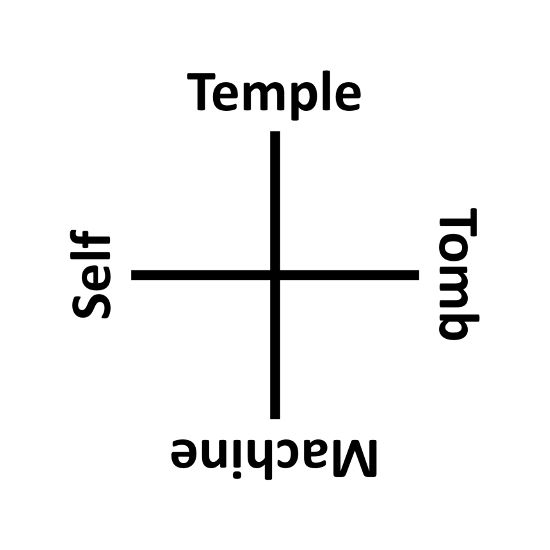
sq_tomb_templeAs an addendum to my previous post, I remembered the nice article below.

Anthony Synnott / Tomb, Temple, Machine and Self: The Social Construction of the Body, The British Journal of Sociology, Vol. 43, No. 1 (Mar., 1992), pp. 79-110

Abstract:

The body is socially constructed; and in this paper we explore the various and ever-changing constructions of the body, and thus of the embodied self, from the Greeks to the present. The one word, body, may therefore signify very different realities and perceptions of reality; and we consider briefly how and why these meanings changed.

Plato believed the body was a ‘tomb’, Paul said it was the ‘temple’ of the Holy Spirit, the Stoic philosopher Epictetus taught that it was a ‘corpse’. Christians believed, and believe, that the body is not only physical, but also spiritual and mystical,  and many believed it was an allegory of church, state and family. Some said it was cosmic: one with the planets and the constellations. Descartes wrote that the body is a ‘machine’, and this definition has underpinned bio-medicine to this day; but Sartre said that the body is the self.

In sum, the body has no intrinsic meaning. Populations create their own meanings, and thus their own bodies; but how they create, and then change them, and why, reflects the social body.

Also a book!

Anthony Synnott / The Body Social: symbolism, self, and society (1993)

[*6.142, *9.139]

<>

The Paradoxes of Zeno

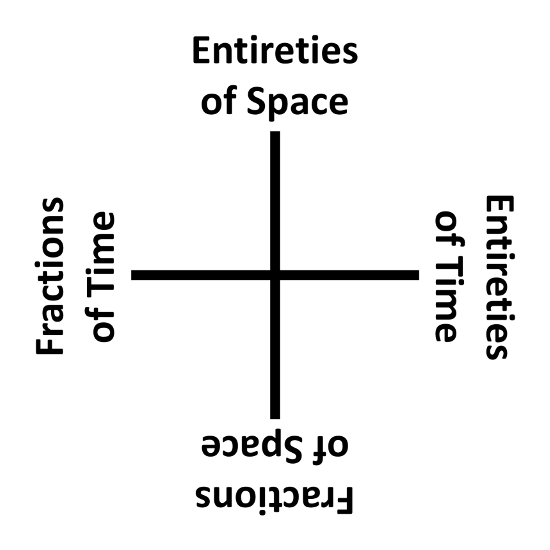
sq_zeno_paradoxes5“Suppose,” said Zeno, “that Achilles and a tortoise are planning to race”.

Such is the beginning of a famous thought experiment by an ancient philosopher. Since athletic Achilles was much faster than the slow tortoise, he let the tortoise start first. But alas, he could never catch up to it, since every time Achilles made it to where the tortoise had been, the tortoise had moved just a little further ahead. Of course Achilles was faster so he had to pass the tortoise quickly unless it had started near the finish line. So, paradox!

Most of the paradoxes of Zeno were about fractions and entireties of time and space. Can an infinite series of fractions of space add up to a finite entirety of space in a finite entirety of time? Some might say that integral calculus solves these basically mathematical problems, yet others think they point to metaphysical issues as regards to the discreteness and the continuity of time and space.

This fourfold reminds me of my previous fourfold Spacetime which dealt with succession (as parts of time), location (as parts of space), extension (as wholes of space), and duration (as wholes of time). It must have been in the back of my mind.

References:

https://en.wikipedia.org/wiki/Zeno%27s_paradoxes

https://equivalentexchange.wordpress.com/2011/09/23/spacetime/

[*9.122]

<>

Propositions as Types

sq_propositions_as_types3For almost 100 years, there have been linkages forged between certain notions of logic and of computation. As more associations have been discovered, the bonds between the two have grown stronger and richer.

  • Propositions in logic can be considered equivalent to types in programming languages.
  • Proofs of propositions in logic can be considered equivalent to programs of given type in computation.
  • The simplification of proofs of propositions in logic can be considered equivalent to the evaluation of programs of types in computation.

The separate work of various logicians and computer scientists (and their precursors) can be paired:

  • Gerhard Gertzen’s work on proofs in intuitionistic natural deduction and Alonzo Church’s work on the simply typed lambda calculus.
  • J. Roger Hindley and Robin Milner’s work on type systems for combinatory logic and programming languages, respectively.
  • J. Y. Girard and John Reynold’s work on the second order lambda calculus and parametric polymorphic programs, respectively.
  • Haskell Curry’s and W. A. Howard’s work on the overall correspondence between these notions of proofs as programs or positions as types.

Logic and computation are the sequential chains of efficient causation and actions. Propositions and types are the abstract grids of formal causation and structures. Proofs and programs are the normative cycles of final causation and functions. Simplification and evaluation are the reductive solids of material causation and parts.

References:

Philip Wadler / Propositions as Types, in Communications of the ACM, Vol. 58 No. 12 (Dec 2015) Pages 75-85.

http://cacm.acm.org/magazines/2015/12/194626-propositions-as-types/fulltext

Preprint at

Click to access propositions-as-types.pdf

Also see:

http://www.drdobbs.com/old-ideas-form-the-basis-of-advancements/184404384

https://en.wikipedia.org/wiki/Hindley%E2%80%93Milner_type_system

https://en.wikipedia.org/wiki/System_F

https://en.wikipedia.org/wiki/Curry%E2%80%93Howard_correspondence

[*9.92-9.94]

<>


The Four Cultures Model of Fons Trompenaars

sq_trompenaarHere is a model of cultural differences, with two major axes:

Egalitarian (Decentralized) vs. Hierarchical (Centralized)
Person (Informal) vs. Task (Formal)

Leading to the following types (and orientations):

  • Incubator (Fulfilment) [Egalitarian/Person]
  • Family (Power) [Hierarchical/Person]
  • Guided Missile (Project) [Egalitarian/Task]
  • Eiffel Tower (Role) [Hierarchical/Task]

Trompenaars’ research later expanded these into seven cultural differences (universalism vs. particularism, individualism vs. communitarianism, neutral vs. emotional, specific vs. diffuse, achievement vs. ascription, sequential vs. synchronic, and internal vs. external control)! I’m not clear on how the four map into the seven.

Another model of cultural dimensions was developed by Geert Hofstede, who first found four dimensions (power distance index, individualism vs. collectivism, uncertainty avoidance index, and masculinity vs. femininity), and later increased these to six (adding long-term vs. short-term, and indulgence vs. restraint). Again, I’m unsure what the differences are between Trompenaars’ and Hofstede’s models.

Trompenaars’ model of four cultures is somewhat similar to another fourfold I found in the article “How to Build Scenarios”. It consists of two axes: individual vs. community and fragmentation vs. coherence.

  • Ectopia [Community/Fragmented]
  • I Will [Individual/Fragmented]
  • Consumerland [Individual/Coherent]
  • New Civics [Community/Coherent]

This fourfold is also mentioned in the book “The Power of the 2×2 Matrix”, which looks quite interesting. I think it is generally geared towards business decision applications, but has a compendium of various 2×2 matrices that appear to be broadly useful.

Also, the ChangingMinds.org website looks like it has a wealth of models and introductory information about them (and not only those with four aspects).

References:

http://changingminds.org/explanations/culture/trompenaars_four_cultures.htm

https://en.wikipedia.org/wiki/Fons_Trompenaars

http://en.wikipedia.org/wiki/Trompenaars’_model_of_national_culture_differences

http://en.wikipedia.org/wiki/Hofstede’s_cultural_dimensions_theory

Books / Articles:

Fons Trompenaars, Peter Woolliams / Business Across Cultures

Lawrence Wilkinson / How to Build Scenarios (in Wired Scenarios 1.01)

Alex Lowy, Phil Hood / The Power of the 2×2 Matrix: using 2×2 thinking to solve business problems and make better decisions

[*4.130, *9.64, *9.82]

<>

The Four Idols of Francis Bacon

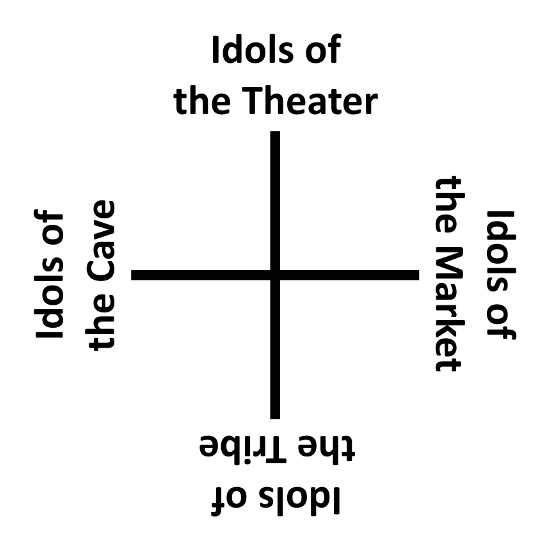
sq_four_idols2As a counterpoint to my previous post (and perhaps most of my previous posts) I present the following from Francis Bacon’s Novum Organum:

Idols of the Tribe
Errors in the mind of the group
Beliefs because most people have them

Idols of the Cave
Errors in the mind of the individual
Beliefs due to limited experience

Idols of the Marketplace
Errors in the use of words
Beliefs due to misuse of words

Idols of the Theater
Errors in false learning
Beliefs colored by religion and personal philosophy

References:

http://www.sirbacon.org/links/4idols.htm

http://www.iep.utm.edu/bacon/#SH2j

http://plato.stanford.edu/entries/francis-bacon/#Ido

[*9.84]

<>

The Four Requisites of Randall Collins

sq_four_requisites2“Everything in the human world has four aspects” states sociologist Randall Collins, and I couldn’t agree more. For his view of sociology, these four aspects are the Social, the Political, the Cultural, and the Economic.

These four requisites are adapted from Talcott Parsons, who was Collins’ undergraduate teacher. Parsons’ four requisites were named differently, and together they are known as the “AGIL” model. “A” stood for Adaptation, “G” for Goal-attainment, “I” for Integration, and “L” for Latency. It was also called the Structural-Functional model of society. Besides the change in names, Collins also says that the functionalism inherent in Parsons’ model has been downplayed in his because a biological, functional approach cannot model conflict, which is pervasive in human interaction.

Collins wrote a book on the historical “sociology” of philosophies, “The Sociology of Philosophies”. This book was the reason I first noted Collins, but I haven’t studied the book in any detail to note if any fourness falls out of the analysis. This kind of historical and organizational model of philosophy seems to be popular, and several others have attempted to compile something similar.

Collins also wrote “Four Sociological Traditions”, a history of sociology organized around the development of four classic schools of thought: the conflict tradition of Marx and Weber, the ritual solidarity of Durkheim, the microinteractionist tradition of Mead, Blumer, and Garfinkel, and the utilitarian/rational choice tradition. This book was the second reason I noted Collins, but not having read the book, I wasn’t sure how to interpret these four schools as a four-fold.

References:

http://sociological-eye.blogspot.com/2015/07/four-requisites-for-success-or-failure.html

https://en.wikipedia.org/wiki/Randall_Collins

https://en.wikipedia.org/wiki/Talcott_Parsons

Books by Randall Collins:

Four Sociological Traditions

The Sociology of Philosophies : a global theory of intellectual change

Philosophical Family Trees:

http://www.philosophyforlife.org/the-kevin-bacon-history-of-philosophy/

http://kevinscharp.com/Kevin%20Scharp%20-%20%20Diagrams.htm

http://www.designandanalytics.com/visualizing-the-history-of-philosophy-as-a-social-network-the-problem-with-hegel

[*3.79, *4.6, *4.7, *9.7, *9.68, *9.71]

<>


The Brain with David Eagleman

sq_whowhatSpeaking of brains, “The Brain with David Eagleman” by neuroscientist and author David Eagleman is currently showing on PBS. The first episode “What is reality?” was pretty good, showing reasons why what we think of as an objective reality is really just a temporally delayed and conceptually constructed neurological fabrication.

The six episodes are titled:

  1. What is reality?
  2. What makes me?
  3. Who is in control?
  4. How do I decide?
  5. Why do I need you?
  6. Who will we be?

I wonder if the answers to these questions will pretty much be “the brain, the brain, the brain…”. Check your local listings and tune in to find out!

Books:

David Eagleman / The Brain: the story of you

David Eagleman / Incognito: the secret lives of the brain

David Eagleman / Sum: forty tales from the afterlife

David Eagleman / Why the Net Matters: six easy ways to avert the collapse of civilization

References:

Home

https://en.wikipedia.org/wiki/David_Eagleman

[*9.56, *9.57]

<>

The Carnot Cycle

sq_carnotThe Carnot Cycle consists of four steps:

  1. Isothermal Expansion
  2. Adiabatic or Isentropic Expansion
  3. Isothermal Compression
  4. Adiabatic or Isentropic Compression

The cycle is ordinarily plotted on two axes in two different ways: Pressure and Volume, in which case the cycle is a curvy quadrilateral and descending to the right, or Temperature and Entropy, in which case the cycle is a nice rectangle that emphasizes the isothermal and adiabatic (isentropic) aspects of the steps.

References:

https://en.wikipedia.org/wiki/Carnot_cycle

Images of the Carnot Cycle from Google search.

Tip of the hat to:

Stuart Kauffman / Investigations

Also please see the previous posts:

https://equivalentexchange.wordpress.com/2012/01/27/thermodynamics-and-the-four-thermodynamic-potentials/

https://equivalentexchange.wordpress.com/2013/05/24/the-four-laws-of-thermodynamics/

[*9.51]

<>

Religion and Science

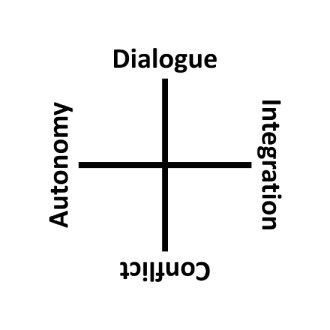
sq_religion_vs_scienceWhat is the relationship between religion and science? Instead of one answer, Templeton Prize winner Ian Barbour presents us with four possibilities: independence (or autonomy), conflict, dialogue, and integration.

These four relationships described by Barbour can be useful to consider, as they describe what may exist between the two entities in the mind of an individual or the social discourse of a culture. For religion and science, what is their stance towards one another? Would you say they are independent of one another like Stephen Jay Gould’s non-overlapping magisteria, or in constant conflict as they appear to be in the media? Or are they in helpful dialogue with one another or even harmoniously integrated with one another? Or are they one thing some times, and then another thing at other times?

It seems that these four relationships are not restricted to just religion and science, as any two distinct institutions could have one or more of these interactions between them. For example there is religion and government, science and business, or public education and certain political organizations, to name just a few. Also, any two different religious institutions or any two different scientific fields could be in any of these relationships. For example there is the Catholic Church and all Protestant Churches, Sunni Islam and Shia Islam, and even Christianity and Buddhism. For science, consider physics and biology, chemistry and sociology, etc.

So why pick on religion and science? Is it because there seems to be so much conflict between them in our own minds? Are they frequently at odds with one another in the public and private spheres? And is that a good thing or a bad thing?

What is religion, anyway? Is it the sum total of all religious institutions and cultural behaviors? Is it the sum total of all religious beliefs held by individuals? Or is it the total of both of those things, plus more? And what is science? Is it the sum total of all scientific facts and literature, or the actual institutional structures and methodologies for all scientific practitioners? Is it the sum total of all scientific knowledge along with all the evidence for all that knowledge that are in the current minds of scientists and even non-scientists?

Without people, all you would have left of religion are the buildings, the texts, and the relics. Without people, all you would have left of science are the buildings, the writings, the instruments, and the facts. Both obviously have very large individual and social components that are sustained through teaching and learning. If post-humans or alien visitors found only the material residue of human religion, they could possibly understand it to some extent with enough anthropological work. If visitors found only the material residue of human science, I think they would be able to follow the chain of reasoning and the body of evidence to support the factual conclusions. Some facts and theories might be incorrect, certainly, but not most. Thus science contains an objective component not found in religion.

The first sentence about each from Wikipedia:

“A religion is an organized collection of beliefs, cultural systems, and world views that relate humanity to an order of existence.”

“Science is a systematic enterprise that builds and organizes knowledge in the form of testable explanations and predictions about the universe”.

The definition of science is pretty clear, but the one for religion is a little vague. I’m not sure what an “order of existence” is supposed to be, and it’s not defined there on Wikipedia. Is it an ordering of things that exist, so humanity is assigned to fit in a certain place in a hierarchy, say between gods and animals, i.e. a “great chain of being”? Is that the same as a “world view”? It seems that a world view could contain an order of existence, but not necessarily the other way around. So one could have a world view without an order of existence.

Only you can decide for yourself which relationship exists between religion and science, and unless you have public writings on the matter, no one can investigate and draw their own conclusions of what you think. And anyone can produce a claim for the ultimate stance between religion and science, but of course such claims must be substantiated by reason and evidence. Scholars can produce informed discussions on the matter, to greater or lesser acceptance.

References:

https://en.wikipedia.org/wiki/Ian_Barbour

https://en.wikipedia.org/wiki/Relationship_between_religion_and_science#Perspectives

Science and Religion: Barbour’s 4 models

https://en.wikipedia.org/wiki/Religion

https://en.wikipedia.org/wiki/Science

Also please see the previous post:

https://equivalentexchange.wordpress.com/2011/07/27/the-four-conic-sections/

[*9.42]

<>