Category Archives: fourfolds

The Periodic Table of the Elements

The familiar periodic table of the elements may be overwhelming in its usual initial presentation. You may not have noticed that there are four blocks of elements in the table, and they even have names! All good atomists need to become facile with the chemical elements though, because they are indeed the building blocks of the universe!

The table is usually presented as a partial grid, consisting of 7 rows and 18 (or 32) columns, although there are alternate representations. But columns (C) are called groups (G) and rows (R) are called periods (P)!

Within the grid, elements are arranged in four blocks, with the following properties:

  • s-block: 2C x 7R = 14 (G1-2,18, P1-7) “sharp”
  • p-block: 6C x 6R = 36 (G13-18, P2-7) “principal”
  • d-block: 10C x 4R = 40 (G3-12, P4-7) “diffuse”
  • f-block: 14C x 2R = 28 (between G2 and G3, P6-7) “fundamental”

Note how columns (groups) increase (by four!) as rows (periods) decrease! Blocks are named after electron orbitals which are also named s, p, d, and f.

Thus there are currently 118 elements having a unique “atomic number” in the usual periodic table, with the rows or periods having the following number of elements:

  • P1: 2 (2s)
  • P2: 8 (2s, 6p)
  • P3: 8 (2s, 6p)
  • P4: 18 (2s, 6p, 10d)
  • P5: 18 (2s, 6p, 10d)
  • P6: 32 (2s, 6p, 10d, 14f)
  • P7: 32 (2s, 6p, 10d, 14f)

Note the number of groups increases as the period does. This is due to the properties of electrons and their shells. Familiar elements are scattered throughout the table, although they occur less and less as the atomic number increases. Elements can also occur as different isotopes due to having a differing number of electrons than usual, and so may have a positive or negative charge.

As an homage to the classical four elements, I’ve arranged the blocks as follows: the s-block has the reactive alkali and alkaline metals (fire), the p-block includes the noble gases (plus C, N, and O needed for life as we know it) (air), the d-block has the precious metals like gold, silver, and platinum (plus liquid at room temp mercury but not bromine) (water), and the f-block with the heaviest and often radioactive elements like uranium and plutonium (earth).

Further Reading:

https://en.wikipedia.org/wiki/Periodic_table

https://en.wikipedia.org/wiki/Block_(periodic_table)#s-block

https://en.wikipedia.org/wiki/Block_(periodic_table)#p-block

https://en.wikipedia.org/wiki/Block_(periodic_table)#d-block

https://en.wikipedia.org/wiki/Block_(periodic_table)#f-block

https://en.wikipedia.org/wiki/Periodic_table_(electron_configurations)

<>

Direction of Fit

The notion of “Direction of Fit” can describe several associated concepts, from a specific one in “Speech Act Theory” (SAT) to the more general one in the “Philosophy of Mind” (POM). For SAT, the concept depends on whether words accurately describe the world (word-to-world), or if the world is actually altered by words (world-to-word) (or possibly both or neither). For POM, the concept is generalized to be between mind (or thought) and world, and of course, word could serve to mediate between mind (or thought) and world.

I propose that direction of fit could also be enlarged to encompass the fits of world-to-world and word-to-word.

Perhaps the notion of world fitting to world is tautological, that it is always true by necessity. For any fit of world to world is natural, in as much as we understand it, because anything else would be super-natural. This is the realm of science then, when we try to explain how the mechanism of the world behaves in its ordered operation. I imagine that we could also put engineering and technology in this case, since we are trying to create an artifact in the world that meshes with the normal goings on of nature. If it meshes very poorly, it either breaks or nature does instead.

The notion of word fitting to word is interesting as well. It is not given that words I write will fit with the words that you read, or there is a proper fit between speaking and listening. I guess the art of rhetoric can be placed here, as how we can fashion our words best to convince or explain or engage. In the POM sense, perhaps any art could be included as well, from literature to music to visual arts, since they strive to convey thoughts to thoughts. I am reminded of the notion of the perfect language in accurately describing the world or of complete understanding between minds.

Maybe words describing world could also be science, but perhaps its proper realm should be more of history or the states of human affairs. This is more in agreement with the opposite direction of World-to-Word, or world fitting to word.

Maybe I’m just thinking of a certain fourfold of Richard McKeon, and want to make a correspondence of

  • Word-to-World => Thought
  • World-to-Word => Action
  • Word-to-Word => Word
  • World-to-World => Thing

although I’m not sure this works.

Further Reading:

https://en.wikipedia.org/wiki/Direction_of_fit

https://plato.stanford.edu/entries/speech-acts/

https://en.wikipedia.org/wiki/Triangle_of_reference

https://en.wikipedia.org/wiki/The_Message_in_the_Bottle#%22The_Delta_Factor%22

https://read.dukeupress.edu/the-philosophical-review/article-abstract/123/4/429/87552/On-the-Very-Idea-of-Direction-of-Fit?redirectedFrom=fulltext

https://www.jstor.org/stable/44290001

https://plato.stanford.edu/entries/belief/

https://plato.stanford.edu/entries/intention/

http://www.gavinjensen.com/blog/category/Philosophy+of+Language

Things, Thoughts, Words, and Actions

[*12.96, *12.98]

<>


The Six Flavors of Quarks

Further Reading:

https://en.wikipedia.org/wiki/Quark

The Standard Model of Particle Physics

Working to Understand the Changing Flavors of Quarks

https://en.wikipedia.org/wiki/Eightfold_way_(physics)

[*13.8]


Build Your Atomic Habits

In Atomic Habits, author James Clear describes the behavior of making and breaking habits in four stages:

  • Cue:
    To increase a habit, make its cue obvious
    To decrease a habit, make its cue invisible
  • Craving:
    To increase a habit, make its craving attractive
    To decrease a habit, make its craving offputting
  • Response:
    To increase a habit, make its response easy
    To decrease a habit, make its response hard
  • Reward:
    To increase a habit, make its reward satisfying
    To decrease a habit, make its reward unfulfilling

Further Reading:

James Clear / Atomic Habits: An Easy & Proven Way to Build Good Habits & Break Bad Ones

Atomic Habits by James Clear

https://aliabdaal.com/book-notes/atomic-habits-summary/

Atomic Habits: An Easy & Proven Way to Build Good Habits & Break Bad Ones

[*13.86]

<>

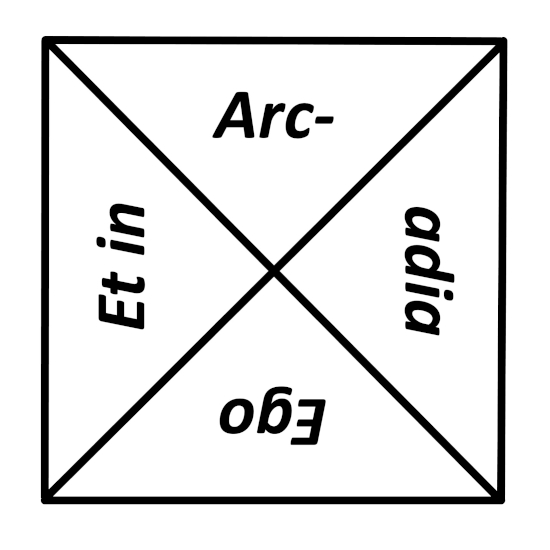
Et in Arcadia Ego

Further Reading:

https://en.wikipedia.org/wiki/Et_in_Arcadia_ego

https://en.wikipedia.org/wiki/Et_in_Arcadia_ego_(Guercino)

https://en.wikipedia.org/wiki/Memento_mori

https://en.wikipedia.org/wiki/Mono_no_aware

https://en.wikipedia.org/wiki/Sic_transit_gloria_mundi

https://en.wikipedia.org/wiki/Vanitas

[*10.70]

<>


Surrounded by Idiots

Here’s another modern-day take on the Four Temperaments, a popular book series by Thomas Erikson called “Surrounded by Idiots.” After the original which is subtitled “The Four Types of Human Behavior and How to Effectively Communicate with Each in Business (and in Life),” he has written sequels titled “Surrounded by Narcissists,” “… by Psychopaths,” “… by Bad Bosses,” and “… by Setbacks”.

I have found a simple chart explaining his original four types using a two-by-two matrix of introvert vs. extrovert and task or issue-oriented vs. relation-oriented, and a review I read indicates that the DISC Theory of personality is the main influence for the author (and which is also related to humorism.)

    • Red: Extrovert and Task/Issue-oriented
    • Yellow: Extrovert and Relation-oriented
    • Blue: Introvert and Tasks/Issue-oriented
    • Green: Introvert and Relation-oriented

Notably the cover art for the series uses four colors for the different types of people: Red, Yellow, Green, and Blue. These colors are sometimes also used by others to denote the Four Temperaments. These four colors are often used for other classification schemes, and even for corporate logos. Also, these four colors are the set union of the three primary colors of light and the (traditional) three primary pigments.

Further Reading:

Thomas Erikson: Surrounded by Idiots

https://www.businessinsider.com/guides/learning/surrounded-by-idiots-book-review

https://en.wikipedia.org/wiki/Humorism

[*13.87]

<>

The Four-Drive Theory

The Four-Drive Theory of Lawrence and Nohria of the Harvard Business School is a popular model for the motivations of employees within a work environment. They list four drives which need to be in balance for worker happiness and productivity:

    • Drive to Acquire
    • Drive to Bond
    • Drive to Learn
    • Drive to Defend

Further Reading:

Paul R. Lawrence, Nitin Nohria / Driven: how human nature shapes our choices

http://changingminds.org/explanations/needs/lawrence_nohria.htm

https://hbswk.hbs.edu/archive/driven-the-four-drives-underlying-our-human-nature-driven-how-human-nature-shapes-organizations

https://blogresellerprofits.com/2020/02/14/four-drive-model-theory/

Images for Four Drive Theory:

https://www.google.com/search?q=four+drive+theory&tbm=isch

Also:

http://changingminds.org/explanations/needs/needs.htm

https://en.wikipedia.org/wiki/Four_Fs_(evolution)

https://en.wikipedia.org/wiki/Leadership

(Where’s a Wikipedia Page?)

[*13.92, *13.93]

<>


The Diamond Approach Design Method

Again, I have taken a diagram and bent it into my preferred vision. At least the original figures have isosceles right triangles to begin with. However, they were in a left-to-right sequence (ordered by time) instead of a cycle as I have done. On many diagrams of the diamond approach there are indeed loops that return the user to positions earlier in the sequence so I don’t feel too bad.

The steps that are part of the diamond approach are reminiscent of other learning cycles, such as that of Kolb. The original left-to-right sequence emphasizes the order, as well as showing that steps may be divergent or convergent (analytic or synthetic) in their methods. Instead I have denoted divergence by arrows facing away from each other and convergence by arrows facing towards each other.

    • Discover (divergent)
    • Define (convergent)
    • Develop (divergent)
    • Deliver (convergent)

The main creator of the Diamond Approach is A. H. Almaas, who has written many books on spirituality or esoteric subjects such as the Enneagram. Being a skeptical sort, I have no idea if the notions and methods in these books are worth your time, but the goals indeed sound laudable. How do they differ from psychoanalysis, psychotherapy, or other techniques to improve mental health? Further reading may be required before you pay for classes and retreats.

Further Reading:

https://www.diamondapproach.org/home

https://www.diamondapproach.org/almaas

https://en.wikipedia.org/wiki/A._H._Almaas

https://www.google.com/search?q=the+diamond+approach+design+method&tbm=isch

[*13.74, *13.75]

<>

The Three Pillars of Stoicism

The Four Cardinal Virtues of Wisdom, Justice, Temperance, and Courage are often linked to the “Three Pillars” of Stoicism: Logics, Ethics, and Physics. Logics and rational thought enables the virtue of (practical) wisdom to produce intelligent assent or rejection. Ethics and moral strivings condition the virtue of justice (and courage) to inform proper action or non-action. Physics and natural constraints temper the virtue of courage (and temperance) by proportionate or bounded desire or aversion.

    • Logics (Rational Domain): Assent for (practical) Wisdom
    • Physics (Natural Domain): Desire for Courage and Temperance (restraint)
    • Ethics (Moral Domain): Action for Justice

Note the mismatch between Four Cardinal Virtues and the Three Pillars. Some add Metaphysics to get Four Pillars, although what domain does it inform? (Supernatural? Speculative? Philosophical?) Also note my use of the term “Logics”. If the British can use the term “Maths” then I can certainly use “Logics,” because logic can now come in many different formulations.

Further Reading:

The Highest Good: An Introduction To The 4 Stoic Virtues

Disciplines, Fields, and Virtues: The Full Stoic System in One Neat Package

Stoicism

The Spheres of Human Understanding

The Four Cardinal Virtues

Images of Logics, Ethics, Physics:

https://www.google.com/search?q=logics+physics+ethics&tbm=isch

<>


Linear Logic and the Laws of Excluded Middle and Noncontradiction

If LEM is the Law of Excluded Middle and LNC is the Law of Non-contradiction then

  • Classical Logic preserves both LEM and LNC
  • Intuitionistic Logic preserves LNC, but rejects LEM
  • Co-Intuitionistic Logic preserves LEM, but rejects LNC
  • Linear Logic broadly preserves neither, but narrowly preserves and rejects them with its pairs of conjunctive and disjunctive logical operators

Above is shown the four operators of Linear Logic and the statements for their preservation and rejection of LEM and LNC.

Further Reading:

https://en.wikipedia.org/wiki/Law_of_excluded_middle

https://en.wikipedia.org/wiki/Law_of_noncontradiction

https://plato.stanford.edu/entries/logic-classical/

https://plato.stanford.edu/entries/logic-intuitionistic/

https://plato.stanford.edu/entries/logic-linear/

Pete Wolfendale / Essay on Transcendental Realism
(at PhilPapers)

https://t.co/hoHWUOhQE0

https://plato.stanford.edu/entries/contradiction/

https://ncatlab.org/nlab/show/paraconsistent+logic

[*13.60]
<>