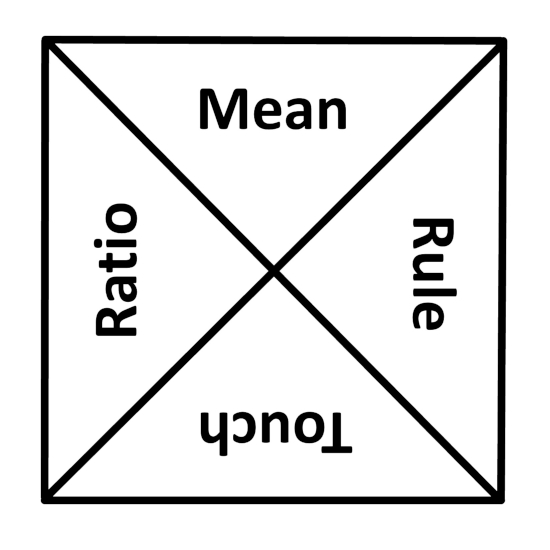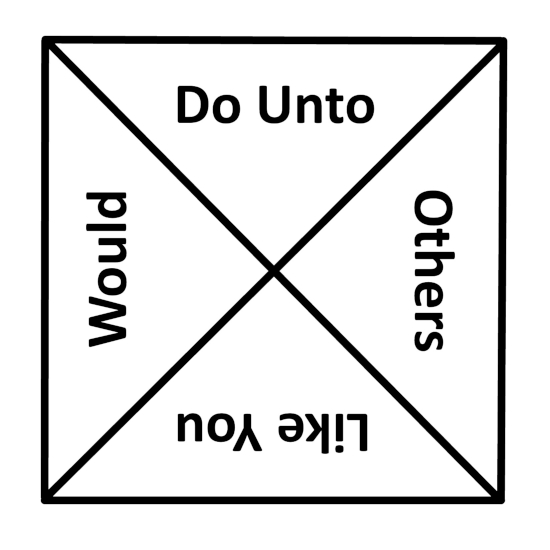
Edgar Schein’s Four Principles of Organization

What are the four principles of organizing? Google search led me to:

Edgar Schein, a prominent organizational psychologist, identified four key elements of an organization’s structure: common purpose, coordinated effort, division of labor, and hierarchy of authority. Each of the four elements represents an essential component of an effective structure.

Further Reading:

The Purpose of Organization

https://en.wikipedia.org/wiki/Edgar_Schein

<>

Some Thoughts on Mazes and Labyrinths

Some classify labyrinths as unicursal and mazes as multicursal, but I don’t think this is standard terminology, and often the terms are used interchangeably for each other. Four elements may be common to both: doors or gates to enter and leave, turns to the left or right, forks in the path going two or more ways, and dead ends or stops. Unicursal labyrinths only have doors and turns, whereas multicursal mazes have all four.

A maze or labyrinth can be a metaphor for our experience of time. A block universe, where time is determined from its very beginning, can be modelled by a unicursal labyrinth that winds back and forth but leads ultimately to its final end. An open universe where time divides endlessly depending upon actions and choices can be modelled by a multicursal maze full of forks, dead ends and maybe loops, but may also have many paths to its many ends.

Multicursal designs may also have loops, where one can return to a location without turning around and going back. But a loop is part of the global pattern, and not discernable from any local inspection. There is a strategy for maze navigation called the right-hand-rule, which perhaps works for multicursal designs without loops. Any fork in a multicursal maze must be considered as a decision to make.

An interesting myth that I ran across is Hercules at the Crossroads. A crossroads is an intersection of two roads, and so allows the traveler to turn to the left, the right, or perhaps continue straight. One cannot divide oneself to go two or three ways at once and so must choose. Perhaps the myth should have been called Hercules at the Fork in the Road, but that’s not as catchy.

Some labyrinths have no walls, but are just laid out as a design on the floor of a cathedral or other building. I think these are mostly unicursal, but I’m not sure. A person may enjoy the experience of walking through the design, taking the twists and turns as they come, and being lost in the middle for a while, but then finally emerging at last. Success!

Other mazes may be constructed by hedges or in corn fields, and so are outside and open to the elements. Another style of outdoor maze is the turf maze, which only has short turf greenery for its walls that can be stepped over. Many formal gardens of large estates had hedge or turf mazes in them. Also, many of the so-called crop circles were also maze-like in their layout.

The classic text adventure game Colossal Cave, besides being a maze of sorts, contains two mazes inside of it, one that describes each room by saying “You are in a maze of twisty little passages, all alike” and one that changes each room description sightly. One must use paper and pencil to map them out unless one has a very good memory.

Some of the very first computer games with graphics also took place in a maze, like Castle Wolfenstein. These were usually first-person shooter type games. It was easiest to draw the simple perspective and hidden lines of a receding corridor with turns and doors than some elaborate building interior. Plus, monsters or enemies that could suddenly jump out and threaten you were easily programmed.

There’s more that can complicate a maze or labyrinth. The lighting can be poor, or nonexistent. There can be hidden doors or traps. Monsters or enemies could emerge suddenly. A maze or labyrinth can be three dimensional, with stairs or ramps or holes. There may be requirements to be able to proceed to unexplored parts. Found hints or clues may also benefit the maze goer.

Further Reading:

https://en.wikipedia.org/wiki/Hedge_maze

https://en.wikipedia.org/wiki/Corn_maze

https://en.wikipedia.org/wiki/Turf_maze

https://publicdomainreview.org/collection/mazes-and-labyrinths-1922/

https://en.wikipedia.org/wiki/Colossal_Cave_Adventure

https://en.wikipedia.org/wiki/Castle_Wolfenstein

<>

Hercules at the Crossroads

The story of Heracles (Hercules) at the Crossroads is one of the most profound and enduring moral allegories in ancient Greek mythology. This tale embodies the quintessential struggle between virtue and vice, encapsulating a universal theme that resonates across cultures and generations: the challenge of making life-defining choices. The allegory not only highlights the moral and ethical dimensions of human existence but also offers insight into the complexities of character development and the paths to true fulfillment.

The Story of Heracles at the Crossroads

The story originates from the ancient philosopher Prodicus and has been retold by various classical authors, including Xenophon. It describes a pivotal moment in the life of Heracles, the celebrated hero known for his exceptional strength and his legendary Twelve Labors. As the tale goes, when Heracles was a young man, he reached a crossroads where two goddesses appeared to him, each representing a different path.

One goddess, named Kakia (Vice), promised him a life of ease, luxury, and immediate gratification. She depicted a future filled with indulgence and comfort, free from hardship and struggle. Her voice was alluring, and her promises seemed tempting to a young man eager for enjoyment without toil.

The other goddess, Arete (Virtue), offered a starkly different vision. She spoke of a path defined by toil, sacrifice, and perseverance. Arete promised that while this path would be difficult and fraught with challenges, it would lead to true glory, respect, and lasting fulfillment. The road she offered was steep and treacherous, but it was the path that would bring out the best in Heracles.

Symbolism and Themes

At its core, Heracles at the Crossroads is rich in symbolism, encapsulating the eternal human conflict between short-term pleasures and long-term achievements. The two goddesses embody the dual aspects of human nature: the pull of immediate desires versus the pursuit of higher values and goals. Heracles’ choice is a metaphor for the decisions each person must make at critical junctures in their own lives.

Choosing Kakia’s path represents succumbing to the allure of ease and self-indulgence, which, although pleasant in the short term, ultimately leads to stagnation and dissatisfaction. Arete’s path, on the other hand, illustrates the rewards that come from embracing challenges and persisting in the face of adversity. The story implicitly teaches that true heroism is not found in physical feats alone but in the moral courage to choose the harder right over the easier wrong.

Heracles’ Decision and Its Consequences

Heracles’ choice to follow Arete, the path of Virtue, set the course for his legendary life. The decision signified his commitment to a life defined by effort and purpose. This choice not only elevated him to the status of a hero but also embedded in his narrative the idea that true greatness is achieved through perseverance and moral integrity. Each of Heracles’ subsequent labors—whether slaying the Nemean Lion, capturing the Golden Hind, or cleansing the Augean stables—became both a literal and figurative testament to the virtues he chose to uphold at the crossroads.

The allegory reinforces the notion that real fulfillment and glory are earned, not given. Heracles’ victories were the culmination of hard work, bravery, and self-sacrifice. His choice serves as a reminder that while the path of virtue may be difficult, it is ultimately the most rewarding. This lesson continues to inspire and provide moral guidance, encouraging individuals to strive for excellence even when the path is arduous.

Relevance in Modern Context

The themes of Heracles at the Crossroads are as relevant today as they were in ancient times. Modern society, with its constant barrage of instant gratification through technology and convenience, often mirrors Kakia’s promises. The pressures to seek out shortcuts to success, avoid discomfort, and chase fleeting pleasures are as powerful now as they were in the days of Heracles.

However, Arete’s message remains equally significant: true accomplishment and a meaningful life come from making choices that align with one’s values and principles, even if those choices are demanding. Whether it is pursuing a challenging career path, maintaining integrity in difficult situations, or dedicating oneself to a cause greater than personal gain, the allegory of Heracles’ choice continues to resonate as a symbol of the importance of resilience and moral strength.

Conclusion

The story of Heracles at the Crossroads is an enduring allegory that imparts the timeless lesson of choosing virtue over vice. Heracles’ decision to follow the path of Arete over Kakia not only laid the foundation for his legendary status but also provided a model of moral fortitude that continues to inspire countless generations. In every crossroads that life presents, the essence of this myth invites individuals to choose not just the path of least resistance but the one that leads to true fulfillment and greatness. It reminds us that while the path of virtue may be steep and challenging, it is ultimately the path that shapes heroes.

Thanks again, ChatGPT! I admit that I hesitated to share this little article of yours, but I thought it was worthwhile and thought others might appreciate it as well. However, perhaps I’m choosing the path of ease in asking for your help, instead of the chore of writing this essay myself.

Futher Reading:

https://en.wikipedia.org/wiki/Hercules_at_the_crossroads

https://en.wikipedia.org/wiki/Kakia

https://en.wikipedia.org/wiki/Arete

Hercules at the Crossroads

Images of Hercules at the Crossroads

Also, music!

<>

Four Labyrinths of Antiquity

The concept of the labyrinth is deeply embedded in the cultural and mythological fabric of ancient civilizations, serving as symbols of mystery, complexity, and spirituality. Among the most notable labyrinths from antiquity are those attributed to Egypt, Lemnos, Crete, and Etruria. Each of these labyrinths holds a unique place in history, reflecting the values, beliefs, and ingenuity of the cultures that created them. This essay explores these four legendary labyrinths, delving into their historical significance and the enduring legacy they have left behind.

The Egyptian Labyrinth

The Egyptian labyrinth, known as the Labyrinth of Hawara, is perhaps the most renowned of antiquity, praised by ancient historians such as Herodotus and Strabo. Located near the Faiyum Oasis, this grand architectural feat was constructed during the reign of Pharaoh Amenemhat III (circa 19th century BCE) as part of his funerary complex. According to Herodotus, this structure was more awe-inspiring than the Pyramids themselves, containing a staggering array of interconnected rooms, chambers, and passageways.

The labyrinth’s primary purpose was multifaceted, serving both as a temple dedicated to the gods and a tomb for the pharaoh. It was designed not only to showcase the architectural prowess of the Egyptians but also to protect the sacred relics and treasures buried within. The exact structure and layout of the labyrinth remain elusive, as it has largely been lost to time, but archaeological findings and descriptions suggest an intricate series of corridors and chambers that defied easy navigation. This labyrinth symbolized the journey of the soul through the underworld, embodying themes of life, death, and rebirth that were central to ancient Egyptian belief.

The Labyrinth of Lemnos

The labyrinth on the Greek island of Lemnos is shrouded in mystery, with fewer concrete records compared to its Egyptian counterpart. Lemnos was an important center in the ancient world, linked to myths involving Hephaestus, the god of fire and craftsmanship, who was believed to have been cast down to the island by Zeus. While historical details about a physical labyrinth on Lemnos are scarce, references suggest that it may have had both ritualistic and symbolic purposes.

One of the prevailing theories is that the labyrinth of Lemnos was linked to initiation rites or ceremonial dances performed in honor of deities, particularly those associated with fertility and rebirth. The labyrinth motif in Lemnian culture may also have represented the dualities of life, such as order and chaos, creation and destruction. The idea of a labyrinth as a journey, both physical and spiritual, is consistent with the widespread motif in Mediterranean civilizations of navigating through challenges to attain wisdom or transcendence.

The Cretan Labyrinth

The labyrinth of Crete is arguably the most famous, primarily due to its association with Greek mythology. According to legend, it was constructed by the master craftsman Daedalus at the behest of King Minos of Crete. The purpose of this labyrinth was to contain the Minotaur, a half-man, half-bull creature born from the union of Queen Pasiphaë and a divine bull. The structure was said to be so complex that even its creator, Daedalus, could barely navigate it without assistance.

The myth of Theseus and the Minotaur is central to the legacy of the Cretan labyrinth. According to the story, Athens was required to send young men and women as tribute to be sacrificed to the Minotaur. Theseus, the Athenian hero, volunteered to face the creature and, with the aid of Minos’ daughter Ariadne, who provided him with a thread to retrace his steps, he successfully navigated the labyrinth, killed the Minotaur, and escaped. This myth has resonated through the ages as a tale of bravery, cleverness, and triumph over monstrous challenges.

Archaeological evidence points to the Palace of Knossos as the potential origin of the labyrinth legend. Located near the modern city of Heraklion, Knossos was the largest Bronze Age archaeological site on Crete and is associated with the Minoan civilization. The sprawling layout of the palace, with its maze-like corridors and numerous rooms, likely inspired the myth. The labyrinth of Crete embodies themes of entrapment and liberation, encapsulating the dualities of power and vulnerability.

The Etruscan Labyrinth

The Etruscan civilization, which flourished in what is now modern-day Italy before being absorbed by the Roman Empire, also had its own labyrinth traditions. While not as widely known as the Egyptian or Cretan examples, Etruscan labyrinths have been found depicted in art and inscriptions, suggesting that they held cultural significance. One of the most compelling examples is found in the depictions of labyrinths carved into tomb walls and artifacts. These labyrinths were often associated with funerary practices, symbolizing the journey of the soul through the underworld and the challenges faced before reaching the afterlife.

The labyrinth in Etruscan tradition may have served a protective role, intended to guard the deceased against malevolent spirits and ensure safe passage to the afterlife. The Etruscan belief system, rich with mythology and rituals connected to death and rebirth, incorporated the labyrinth as a powerful symbol of transformation. It represented both a barrier and a path, encapsulating the paradoxes of life and death, hope and despair.

The Enduring Legacy of the Labyrinths

The labyrinths of antiquity were more than just architectural wonders; they were profound symbols imbued with deep cultural, spiritual, and philosophical meanings. Whether serving as metaphors for the soul’s journey, representations of cosmic order, or embodiments of human ingenuity and mystery, each of these labyrinths reflected the values and beliefs of the civilizations that created them. The Egyptian labyrinth was a testament to the grandeur of religious devotion and the pharaoh’s divine protection. The labyrinth of Lemnos, though more enigmatic, suggested themes of ritual and communal celebration. Crete’s labyrinth told a story of heroism and intellect overcoming monstrous obstacles, while the Etruscan labyrinths reflected the culture’s intricate relationship with death and the afterlife.

These ancient labyrinths have influenced countless generations, inspiring literature, art, and modern interpretations of mazes and labyrinthine structures. Today, labyrinths continue to be used as tools for meditation and introspection, echoing their original purposes of guiding individuals on a journey—whether spiritual, physical, or metaphorical. The labyrinths of antiquity remain powerful reminders of humanity’s enduring quest for meaning, order, and transcendence.

Thank you ChatGPT. I was having difficulty getting started again with my blog after taking so much time off. I’m not sure everything is accurate in your essay, but I think it’s generally correct.

Further reading:

https://en.wikipedia.org/wiki/Labyrinth

https://www.perseus.tufts.edu/hopper/text?doc=Perseus%3Atext%3A1999.02.0137%3Abook%3D36%3Achapter%3D19

https://www.labyrinthpark.gr/en/history-of-labyrinth

Penelope Reed Doob / The Idea of the Labyrinth from Classical Antiquity through the Middle Ages
Open access at :
https://www.jstor.org/stable/10.7591/j.ctvn1t9v6

W. H. Matthews / Mazes and Labyrinths: Their History and Development

http://www.ams.org/publicoutreach/feature-column/fc-2015-10

53. An eternal way of confusion


<>

Geomancy

I’m not sure why I haven’t noticed the esoteric study of Medieval Geomancy before. There are 16 figures, each having four vertical binary digits of one or two dots, and there are several relationships between the figures, as well as arcane meanings. And there are quite a few introductions to the subject on the web, like many other occult topics have.

The figures are as follows (with the number explained below):

0 Populus (People)
1 Laetitia (Joy)
2 Rubeus (Red)
3 Fortuna Minor (Lesser)
4 Albus (White)
5 Amissio (Loss)
6 Conjunctio (Union)
7 Cauda Draconis (Head)
8 Tristitia (Sorrow)
9 Carcer (Prison)
A Acquisitio (Gain)
B Puer (Boy)
C Fortuna Major (Greater)
D Puella (Girl)
E Caput Draconis (Tail)
F Via (Path)

I think I have numbered them in reverse of what is usual, because to me it seemed that the top line Fire to be the most mobile, then Air, then Water, and then Earth to be the least. Thus Fire should change most frequently, and so on. A line with two dots is usually thought of as passive (0), and one dot is active (1).

And so I have numbered the 16 figures as a hexadecimal digit where Fire is in the one’s place, Air is in the two’s place, Water is in the four’s place, and Earth is in the eight’s place. For example, Puella is 1101 or D (decimal 13).

The arrangement of the figures on the diagram above has the so called Reversion of each being the one reflected through a vertical mirror, and the Inversion of each being the one reflected about the center point of the diagram. For example, the Reversion of Puella is Puer, and the Inversion of Puella is Rebeus.

There is also the operation of Conversion, or a combination of both Inversion and Reversion. Those associated figures are found via a horizontal mirror through the center point. Note also what are called the entering figures are on the right side, the exiting figures are on the left side, and the ones along the center are both entering and exiting.

Finally, I couldn’t resist showing the figures as their dotted glyphs, but with them all oriented correctly (i.e. vertically). The diagram is more or less the same as the arrangement found in Four Forms Make a Universe, Part 2.

Further Reading:

https://en.m.wikipedia.org/wiki/Geomantic_figures

https://en.m.wikipedia.org/wiki/Geomancy

Fun With Geomancy, Part 1

Fun With Geomancy, Part 2

Fun With Geomancy, Part 3

https://www.princeton.edu/~ezb/geomancy/figures.html

https://www.princeton.edu/~ezb/geomancy/geostep.html

https://www.princeton.edu/~ezb/geomancy/agrippa.html

Magic: Learning Geomancy

http://www.quadibloc.com/other/geoint.htm

On the Structure and Operations of the Geomantic Figures

https://digitalambler.com/category/geomancy/

<>


Deductive Systems

Me: I’m trying to come up with a model for a deductive system. It should contain four parts: axioms, a logic or rules of inference, a proof methodology, and an overall schema or system. What can you add to my thoughts?

ChatGPT: Certainly! Developing a deductive system involves careful consideration of axioms, rules of inference, proof methodology, and an overall system or schema. Here’s a breakdown of each component:

    1. Axioms:
      • Define the fundamental, self-evident truths or statements that serve as the starting point for the deductive system.
      • Axioms should be clear, consistent, and independent, forming the foundation upon which logical reasoning will be built.
      • Ensure that the axioms are relevant to the specific domain or problem you are addressing.
    2. Logic or Rules of Inference:
      • Establish a set of rules that dictate how conclusions can be drawn from the given axioms.
      • Common rules of inference include modus ponens, modus tollens, hypothetical syllogism, and more.
      • Choose rules that align with the nature of your deductive system and support valid logical reasoning.
    3. Proof Methodology:
      • Specify how proofs will be constructed within your deductive system.
      • Determine the structure and format of a valid proof, including the sequence of logical steps that lead from the axioms to the desired conclusion.
      • Consider the principle of mathematical induction, direct proof, proof by contradiction, or other proof techniques depending on the context.
    4. Overall Schema or System:
      • Develop a coherent and systematic framework that integrates the axioms, rules of inference, and proof methodology.
      • Clarify the relationships between different components and how they interact within the deductive system.
      • Consider whether your system aligns with classical logic, modal logic, propositional logic, or some other logical framework.

Here’s a more detailed breakdown:

    • Introduction:
      • Present the purpose and scope of your deductive system.
      • Define the terms and symbols used in the system.
    • Axioms:
      • List and explain each axiom.
      • Ensure clarity and completeness.
    • Rules of Inference:
      • Enumerate the rules of inference.
      • Provide examples to illustrate how the rules are applied.
    • Proof Methodology:
      • Specify the steps involved in constructing a proof.
      • Define the criteria for a valid proof.
    • Examples and Applications:
      • Demonstrate the application of your deductive system with specific examples or problem instances.
      • Show how the axioms and rules lead to valid conclusions.
    • Analysis:
      • Evaluate the strengths and limitations of your deductive system.
      • Discuss any assumptions or constraints.
    • Conclusion:
      • Summarize the key components of your deductive system.
      • Reflect on the effectiveness of the system in addressing the intended purpose.

Remember to iterate and refine your deductive system based on feedback and further analysis. It’s also important to be explicit and precise in your definitions and statements to ensure the soundness of your deductive reasoning.

Me: Thanks! I guess I was trying to decide if any model for a deductive system would have these four parts. What do you think?

ChatGPT: Yes, typically, deductive systems do encompass these four fundamental parts: axioms, rules of inference, proof methodology, and an overall schema or system. These components work together to create a coherent and systematic framework for logical reasoning. Let’s briefly revisit each part:

    1. Axioms: Axioms serve as the foundation of a deductive system, providing self-evident truths or statements from which logical reasoning begins.
    2. Rules of Inference: These rules dictate how conclusions can be drawn from the axioms, enabling the systematic derivation of new statements or theorems.
    3. Proof Methodology: The proof methodology outlines how to construct valid proofs within the deductive system, specifying the logical steps to move from the axioms to a desired conclusion.
    4. Overall Schema or System: This component ties everything together, providing a structured framework that defines the relationships and interactions between axioms, rules of inference, and proof methodology.

Together, these parts create a robust deductive system that allows for rigorous and valid logical reasoning. The specific details and nature of these components may vary depending on the type of logic or the problem domain you are addressing. However, having these four elements ensures a systematic and well-defined approach to deductive reasoning.

Further Reading:

https://en.wikipedia.org/wiki/Formal_system

https://en.wikipedia.org/wiki/Formalism_(philosophy_of_mathematics)

https://www.sciencedirect.com/topics/computer-science/deductive-system

https://ncatlab.org/nlab/show/deductive+system

[*11.167]


Information and Computation

I’ve long wished for a succinct definition for the notion of information. What is it? What makes something information and another thing disinformation? Why do people accept things as truth that others know as false? Is information something that informs the physical universe, or is it only a way that the human mind tries to structure itself? The nonhuman world seems to get along just fine without knowing anything, doesn’t it?

Here is an idea for a simple schema for information that utilizes notions from other posts.

  • Distinction = an action that tells or makes a Difference.
  • Difference = a fact (or part) that is told or is made by a Distinction.
  • Information = a structured collection of facts (or parts).
  • Computation = a functional collection of actions.

In relation to the Four Causes, Whitehead’s Criteria, and Structure-Function we see:

  • Efficient: Consistency: Action: Distinction
  • Material: Applicability: Part: Difference
  • Formal: Coherence: Structure: Information
  • Final: Adequacy: Function: Computation

And so:

  • A Distinction is an action that tells or makes a Difference, consistently and efficiently.
  • A Difference is a fact or part that is told or is made by a Distinction, and applies materially.
  • Information is a structured collection of Differences (as facts or parts), that has a formal coherence.
  • A Computation is a functional collection of Distinctions (as actions), that are adequate for an end or purpose.

Further Reading:

https://grammar.collinsdictionary.com/us/english-usage/what-is-the-difference-between-difference-and-distinction

https://en.wikipedia.org/wiki/Information

https://www.informationphilosopher.com/

https://plato.stanford.edu/entries/facts/

https://plato.stanford.edu/entries/action/

https://plato.stanford.edu/entries/logic-information/

https://plato.stanford.edu/entries/computation-physicalsystems/

https://en.wikipedia.org/wiki/Material_implication_(rule_of_inference)

[*9.26, *9.106, *13.196, *13.200]

<>


Four-dimensionalism

Previous posts (here and here) have considered mathematical and scientific ideas about four dimensions. Here are some links about the metaphysical considerations of four-dimensionalism.

Further Reading:

Theodore Sider / Four-Dimensionalism: An Ontology of Persistence and Time

https://ndpr.nd.edu/reviews/four-dimensionalism-an-ontology-of-persistence-and-time/

https://tedsider.org/

Ludwig Jaskolla / Real Fourdimensionalism: An Essay in the Ontology of Persistence and Mind

https://ndpr.nd.edu/reviews/real-fourdimensionalism-an-essay-in-the-ontology-of-persistence-and-mind-2/

https://en.wikipedia.org/wiki/Four-dimensionalism

https://plato.stanford.edu/entries/temporal-parts/

https://en.wikipedia.org/wiki/The_Unreality_of_Time

https://en.wikipedia.org/wiki/Philosophy_of_space_and_time

Also:

https://ndpr.nd.edu/reviews/persistence-through-time-and-across-possible-worlds/

https://ndpr.nd.edu/reviews/how-things-persist/

And even:

https://ndpr.nd.edu/reviews/the-language-and-reality-of-time/

https://ndpr.nd.edu/reviews/the-elements-and-patterns-of-being-essays-in-metaphysics/

https://ndpr.nd.edu/reviews/a-materialist-metaphysics-of-the-human-person/

Maybe:

https://www.friesian.com/lieb.htm

[*10.89]

<>

Tetraphobia

Tetraphobia is the fear of the number 4. In some East Asian cultures, the number 4 is considered unlucky because it sounds similar to the word for “death.” This superstition has led to buildings skipping the 4th floor, hospitals avoiding room numbers with the number 4, and many other cultural practices. People with tetraphobia experience anxiety and distress when they encounter the number 4.

Further Reading:

https://en.wikipedia.org/wiki/Tetraphobia

https://www.joincake.com/blog/tetraphobia/

[*10.108]

<>

Trust, Belief, Faith, and Hope

ChatGPT, can you please describe the differences and similarities between the terms trust, belief, faith, and hope?

Certainly! While the terms trust, belief, faith, and hope are related, they each have distinct meanings and connotations. Here’s a breakdown of their differences and similarities:

Trust: Trust is a reliance or confidence placed in someone or something based on their reliability, integrity, or abilities. It involves having faith in the character, competence, and intentions of another person or entity. Trust is typically built through consistent behavior, honesty, and the fulfillment of promises. It often implies a sense of predictability and the expectation that the trusted person or thing will act in a dependable and desirable manner.

Belief: Belief refers to accepting something as true or real without necessarily requiring concrete evidence or proof. It can be based on personal experiences, cultural upbringing, or persuasive arguments. Beliefs are subjective and can vary widely among individuals or communities. They can be influenced by knowledge, values, emotions, and religious or philosophical systems. Beliefs may or may not align with objective reality and can change over time in response to new information or experiences.

Faith: Faith typically involves a strong, unwavering belief or trust in something or someone, often associated with religious or spiritual contexts. It goes beyond rationality and may involve a conviction in the absence of conclusive evidence. Faith often relates to beliefs about the divine, the supernatural, or philosophical principles. It can provide comfort, meaning, and a sense of purpose to individuals and communities. While faith can be influenced by external factors, it is often seen as deeply personal and subjective.

Hope: Hope is an optimistic or positive expectation about the future. It involves desiring or anticipating that something desired or favorable will happen. Hope is often based on a belief that circumstances can improve or that desired outcomes are attainable. It can provide motivation, resilience, and a sense of possibility in challenging situations. Hope can be deeply personal and can arise from individual aspirations, societal changes, or collective movements. It is often associated with a positive mindset and can contribute to overall well-being.

Similarities: All four terms—trust, belief, faith, and hope—involve an element of relying on or expecting something or someone. They can contribute to shaping our thoughts, emotions, and actions. Additionally, they are subjective experiences that can vary among individuals and cultures. Trust, belief, faith, and hope can also influence our perceptions of the world, impact our relationships, and provide a sense of security or meaning.

Despite these similarities, the terms differ in their specific meanings, contexts, and the level of evidence or assurance involved. Trust focuses on reliability and confidence, belief on accepting something as true, faith on conviction and spirituality, and hope on positive anticipation for the future.

[*13.182]

<>

Every Fourth Thing

Daydream Tourist

Because there are way more than seven wonders in the world.

The Digital Ambler

Always Forward Between Heaven and Earth

The Mouse Trap

Psychological Musings

Wrong Every Time

Critiquing anime and everything else

The Chrysalis

"For man has closed himself up, till he sees all things thro' narrow chinks of his cavern" -- William Blake

  Bartosz Milewski's Programming Cafe

Category Theory, Haskell, Concurrency, C++

The Inquisitive Biologist

Reviewing fascinating science books since 2017

Gizmodo

Every Fourth Thing

Simplicity

Derek Wise's blog: Mathematics, Physics, Computing and other fun stuff.

COMPLEMENTARY 4x

integrating 4 binary opposites in life, learning, art, science and architecture

INTEGRATED 4x

integrating 4 binary opposites in life, learning, art, science and architecture

Playful Bookbinding and Paper Works

Chasing the Paper Rabbit

Antinomia Imediata

experiments in a reaction from the left

Digital Minds

A blog about computers, evolution, complexity, cells, intelligence, brains, and minds.

philosophy maps

mind maps, infographics, and expositions

hyde and rugg

neat ideas from unusual places

Visions of Four Notions

Introduction to a Quadralectic Epistomology

Explaining Science

Astronomy, space and space travel for the non scientist

Log24

Every Fourth Thing

Ideas Without End

A Serious Look at Trivial Things

Quadralectic Architecture

A Survey of Tetradic Testimonials in Architecture

Minds and Brains

Musings from a Naturalist

Why Evolution Is True

Why Evolution is True is a blog written by Jerry Coyne, centered on evolution and biology but also dealing with diverse topics like politics, culture, and cats.

Quadriformisratio

Four-fold thinking4you

Multisense Realism

Craig Weinberg's Cosmology of Sense

RABUJOI - An Anime Blog

Purveyors of Fine Anime Reviews and Ratings Since 2010

Intra-Being

Between Subject and Object

The Woodring Monitor

Every Fourth Thing

FORM &amp; FORMALISM

Every Fourth Thing

Log24

Every Fourth Thing

The n-Category Café

Every Fourth Thing

THIS IS NOT A BLOG

Every Fourth Thing

PHILOSOPHY IN A TIME OF ERROR

Sometimes those Sticking their Heads in the Sand are Looking for Something Deep

Networkologies

Online Home of Christopher Vitale, Associate Professor of Media Studies, The Graduate Program in Media Studies, Pratt Institute, Brooklyn, NY.

Hyper tiling

Linking Ideas

DEONTOLOGISTICS

RESEARCHING THE DEMANDS OF THOUGHT

Incognitions

Explorations in the Paradoxes of Meaning

Object-Oriented Philosophy

"The centaur of classical metaphysics shall be mated with the cheetah of actor-network theory."

Objects & Things

objects & things, design, art & technology