
There is nothing to be known about anything except an initially large, and forever expandable, web of relations to other things. Everything that can serve as a term of relation can be dissolved into another set of relations, and so on for ever. There are, so to speak, relations all the way down, all the way up, and all the way out in every direction: you never reach something which is not just one more nexus of relations.
— Richard Rorty from Philosophy and Social Hope

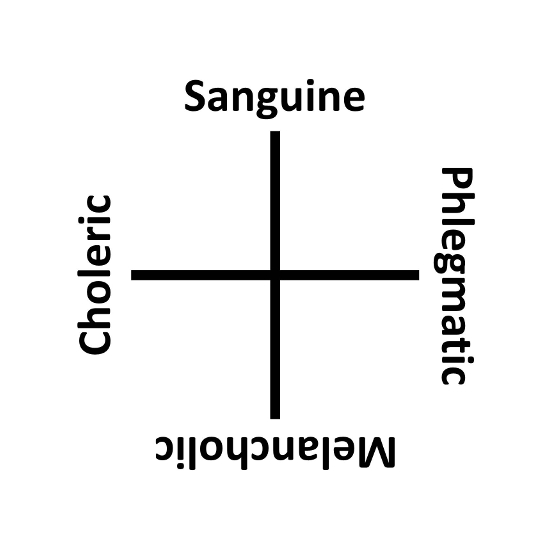
The ancient Greek philosopher Empedocles somehow reasoned that the world was made entirely from four basic elements: fire, earth, water, and air. Science as we know it has disproved this from being the case, but this idea still has a rich symbolic meaning even today that informs our popular culture.
A recent philosophical stance called “ontic structural realism” argues that science suggests that only relations between things are of lasting importance, that is the structural relationships within and between things, not the things themselves that bracket the relations. What we call a quark for instance is just the relations it has with other quarks and the other entities that have relationships with quarks. Perhaps then the world consists of “relations all the way down”, instead of stopping at some point on the lowest level with the things that constitute the world.
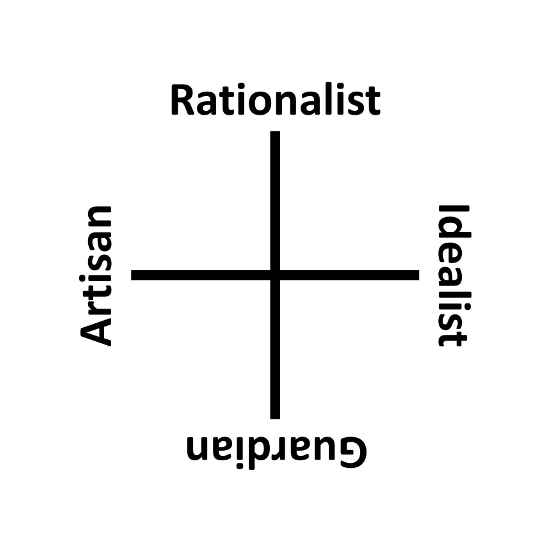
If this is so, what if the world was made completely from four basic relations, instead of four basic things? 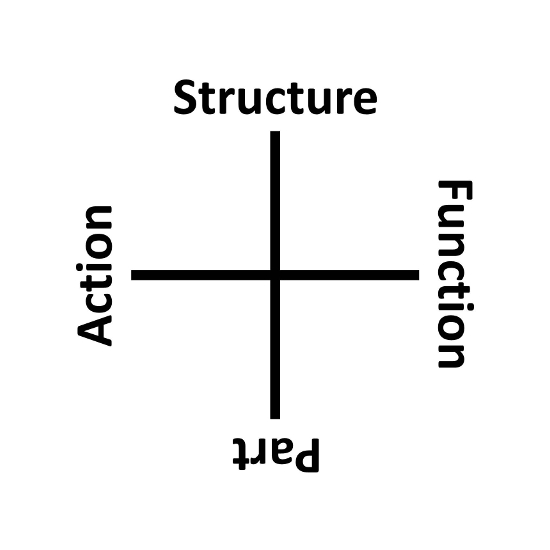 Could they be something like the four binary operators of linear logic? I have likened these four basic operators of Linear Logic to my fourfold Structure-Function, where in addition to Structures, we also have Functions, Actions, and Parts. But these three other relations are also structural, in that only the relation something has to another something makes it structural, functional, actional, or a part of a something.
Book Description for Every Thing Must Go:
Every Thing Must Go argues that the only kind of metaphysics that can contribute to objective knowledge is one based specifically on contemporary science as it really is, and not on philosophers’ a priori intuitions, common sense, or simplifications of science. In addition to showing how recent metaphysics has drifted away from connection with all other serious scholarly inquiry as a result of not heeding this restriction, they demonstrate how to build a metaphysics compatible with current fundamental physics (“ontic structural realism”), which, when combined with their metaphysics of the special sciences (“rainforest realism”), can be used to unify physics with the other sciences without reducing these sciences to physics itself. Taking science metaphysically seriously, Ladyman and Ross argue, means that metaphysicians must abandon the picture of the world as composed of self-subsistent individual objects, and the paradigm of causation as the collision of such objects. Every Thing Must Go also assesses the role of information theory and complex systems theory in attempts to explain the relationship between the special sciences and physics, treading a middle road between the grand synthesis of thermodynamics and information, and eliminativism about information. The consequences of the author’s metaphysical theory for central issues in the philosophy of science are explored, including the implications for the realism vs. empiricism debate, the role of causation in scientific explanations, the nature of causation and laws, the status of abstract and virtual objects, and the objective reality of natural kinds.
Stuff I need to read:
James Ladyman, Don Ross / Every Thing Must Go: Metaphysics Naturalized
http://plato.stanford.edu/entries/structural-realism/
Jason D. Taylor / Relations all the way down? Exploring the relata of Ontic Structural Realism
http://hdl.handle.net/10402/era.27885
https://ndpr.nd.edu/reviews/every-thing-must-go-metaphysics-naturalized/
<>
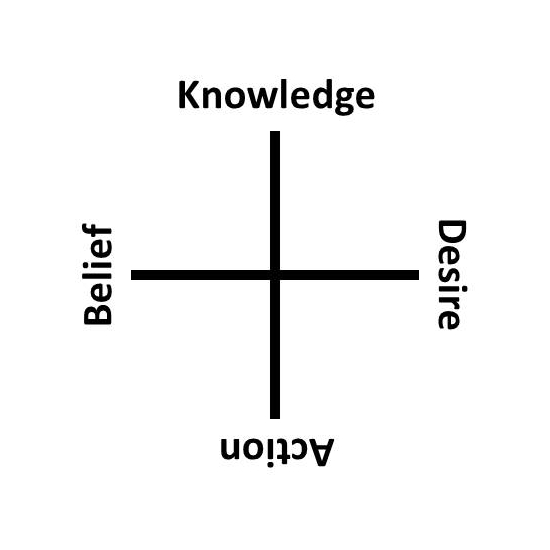


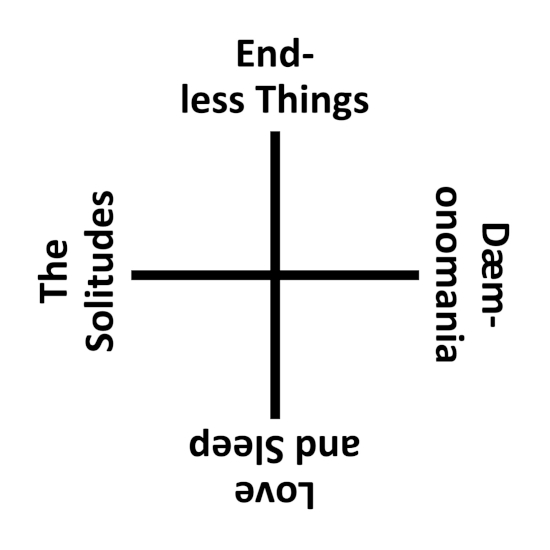


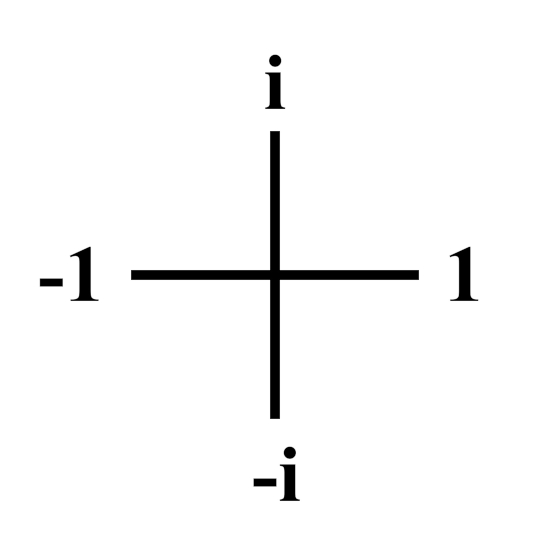



 Equivalent Exchange