All posts by Martin K. Jones

The Rational Structure of Inquiring Systems

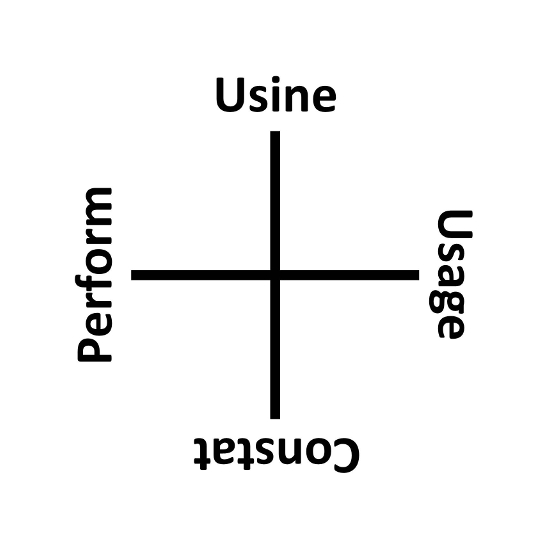
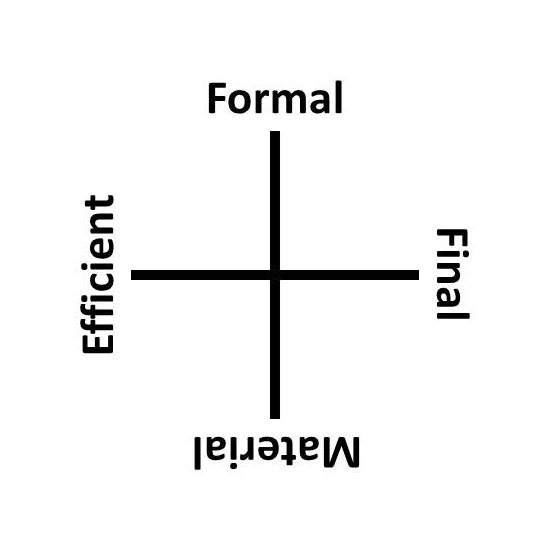
sq_engelhartWhat are the components of consciousness? In the dissertation of L. Kurt Engelhart we see a fourfold used to analyze the texts and bodies of work of both scientists and philosophers, a hermeneutical tool if you will. This tool is also styled by concepts of “systems theory”, and requires the exposition of the aspects of Content, Control, Process, and Purpose of the authors. These match closely the Four Causes of Aristotle, which are the causes of made things or the explanations of how and why they came about: material, efficient, formal, and final. In fact, this close association was one of the main reasons I dove into the world of fourfolds. Texts are made things, after all.sq_causes

Making is so fundamental to what we do, that humans have been called “Homo Faber”, man the maker. We make tools, stories, culture, and even our concept of self. What if I turned this tool onto my own work, the writings and images found here? Perhaps that will be the project of another analyst, if my efforts warrant. What if I applied this tool to Engelhart’s project? That would be interesting indeed.

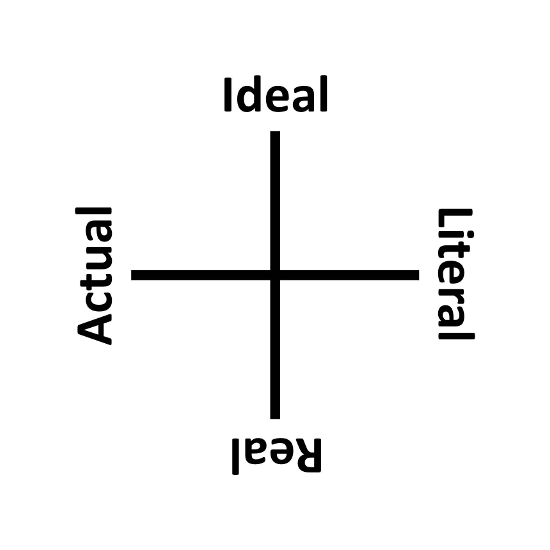
Another fourfold Engelhart presents is that of the domains of conscious experience, or the self itself as system. sq_four_alsThis fourfold consists of the Real, the Actual, the Ideal, and the Literal, but my version is in disagreement with Engelhart’s as to the classification of integrative and differentiative for the Ideal and the Literal. My assignments match the conjunctive and disjunctive properties of the operators of Linear Logic. Also left out is the Universal and how it supersedes the Actual as we make a complete turn. I like my version because it is similar to Richard McKeon’s Things, Thoughts, Words, and Actions. Also T. S. Eliot’s Falls the Shadow.

Of course this is just a brief gloss of the rich ideas presented in Engelhart’s work. Another of his key concepts is that of wholeness, which I have completely omitted. I hope to return and write a better review at a later time. I’m glad to see that Engelhart’s dissertation is now available as a Kindle book for the low, low price of $1. It is much easier to read in this format! From the Amazon Book Description:

This study describes, as a single systemic model of inquiry, the context common to conscious experience of the phenomenon of inquiry. Data are the published texts of selected contemporary writers relevant to the question. The problem is to define a common systemic structure of inquiry in a context of consciousness. Research verifies that a specific structure is common to these writers and that their respective views are converging on this same structure.

Identifying a common structure involves reducing the textual descriptions of the writers to their systemically relevant essentials. Defining the essential elements and describing a reduction method depends heavily on theory of metaphor and metaphorical evolution. A history of the metaphorical structure relevant to inquiry is described and this structure is used as a basis for finding structure in the selected texts. Texts researched include evolutionary biology, sociology, psychology (phenomenology), and philosophy. This work replicates that done by Talcott Parsons in experimentally describing a voluntaristic theory of action. A wholistic theory of inquiry is described using the same systemic scheme.

The metaphysical approaches to inquiry of realism and idealism have converged on a common theoretical structure for describing inquiry. Commonalities emphasize systemic structure comprising the elements of function: purpose, process, content, and control. It has been necessary to distinguish between affectual and instrumental purposes, and between organic and mechanical function. The ontological essentiality of the structure reveals a necessary logical relationship between function, systemicity, wholeness, and rationality in human understanding. Continuing research in philosophy is crucial to expanding our understanding of the ontological and epistemological structural essentials of consciousness.

Human inquiry during the last century has specialized in the material realm of realism, objective description, and mechanical explanation. A wholistic theory of inquiry does not discount the contributions of realism-based science or idealism-based philosophy, but expands the horizons of each to include the other. Where mathematics provides essential tools for mechanical explanation, organic explanation still lacks abstract structural tools for describing conscious organic, including human, behavior. The intent of a wholistic theory of inquiry is to provide conceptual tools that support disciplined inquiry into conscious behavior.

References and Links:

L. Kurt Engelhart / Wholeness and the Rational Structure of Inquiring Systems: A Dissertation

http://lkengelhartassoc.org/

http://en.wikipedia.org/wiki/Systems_theory

http://en.wikipedia.org/wiki/Homo_faber

http://en.wikipedia.org/wiki/Book_of_Nature

http://en.wikipedia.org/wiki/The_purpose_of_a_system_is_what_it_does

Notes:

I removed some text about the “Book of Nature”, because it needed more work. This mentioned the systems theory adage “the purpose of a system”, which can also tie into “meaning as use”. I also missed seeing an obvious thought that inquiry is making.

[*2.188, *3.104, *8.134]

<>


A Four-fold Riddle

sq_roses_dogs_stars_stonesA rose I give to you
This rose so fresh with fragrance rare,
Its petals bringing joy to you
The fairest of the fair.
Oh roses are like memories
They fade and pass above
But you dear heart will e’er remain
My fading flower of forgotten love.

Fading Flower of Forgotten Love by Agnes Ellicott Strong

John Crowley (author of the AEgypt Tetralogy) has mentioned several times in his books a curious list: dogs, stones, stars, and roses. What can he mean by this?

I propose this is a metaphor (Meta-four?) for the four colors of the Magnum Opus: yellow dogs, black stones, white stars, and red roses.

At least until I find out otherwise!

References:

http://watershade.net/wmcclain/AEgypt.html

http://watershade.net/wmcclain/love_sleep.html

http://watershade.net/wmcclain/jc-daemonomania.html

https://www.imayberry.com/tagsrwc/wbmutbb/anewsome/private/songs2.htm

[*8.13, *9.116]

<>


Teenage Mutant Ninja Turtles

sq_TMNTIt’s turtles all the way down!

— See Wikipedia.

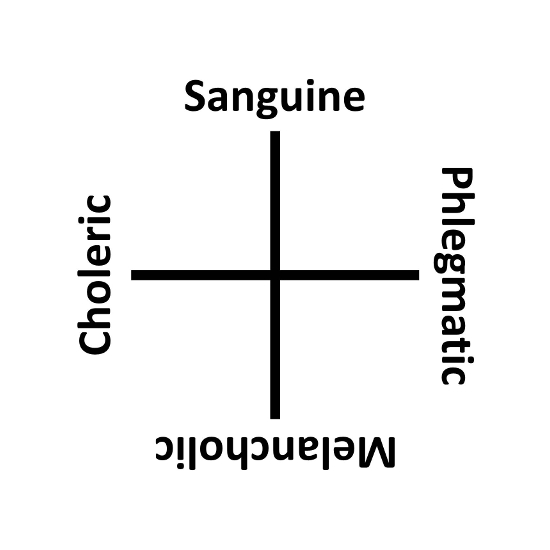
sq_four_temperamentsCowabunga!

Even the personalities of the Teenage Mutant Ninja Turtles can be put in correspondence with the Four Temperaments!

.

.

.

Links:

http://en.wikipedia.org/wiki/Teenage_Mutant_Ninja_Turtles

http://tvtropes.org/pmwiki/pmwiki.php/Main/FourTemperamentEnsemble

[*7.194, *8.127, *8.156]

<>

Magnum Opus

sq_great_workThe Magnum Opussq_magnum_opus, or Great Work, is a term from alchemy for the process of creating the Philosopher’s Stone, which is a substance that was purported to be able to turn stuff into gold, like King Midas’s Touch. Work and Stone can also be metaphors for perfecting the individual self, as gold was considered the perfect material.

.

Tsq_RWBYbhe Great Work is often broken into four stages, identified by different colors also seen in the Medicine Wheel of Native Americans. Red is Rubedo or Iosis, White is Albedo or Leukosis, Black is Nigredo or Melanosis, and Yellow is Citrinitas or Xanthosis. The order is usually Black, White, Yellow, and then Red, through beginning to ending stages of the work.

.

Is this my Great Work? Will I create a Philosopher’s Stone?

Links:

http://en.wikipedia.org/wiki/Magnum_opus_%28alchemy%29

http://en.wikipedia.org/wiki/Philosopher%27s_stone

[*6.182, *8.12, *8.13, *8.124]

<>

Kant’s Analytic-Synthetic Distinction

One of the oldest and most problematic philosophical questions is the comparison of the a prioria posteriori distinction with that of the analyticsynthetic distinction. Both are used in epistemology to divide knowledge, or true statements, between the innate and the learned, or the immediate and the earned, so they might even be considered the same. A priori and a posteriori statements are before “experience” and after it, respectively. Analytic statements are true only by their “meaning”, whereas synthetic statements are true only when facts about the world are combined consistently with that meaning.

It seems we have complicated the issue because now we must define and understand “experience” and “meaning”. However, these concepts are not independent because we must experience meaning, and meaning in turn conditions experience. In addition, even the a priori or the analytic are not innate or immediately obvious because deductions and the rules of logic require effort just like inductions do. Otherwise we would have Fitch’s Paradox: all truths are in fact known. What a muddle! So both experience and meaning are necessarily locked into a cooperative spiral dance to improve each other.

Even so, these two distinctions can be distinguished and combined into a fourfold.

The web site of Stephen R. Palmquist has a great wealth of material on fourfolds in relation to Kant’s as well as his own philosophy. From my own initial reading of his extensive material I have tried to choose a canonical Kantian fourfold which has the most relevance to my project.

The fourfold shown to the right Dr. Palmquist calls Kant’s “reflective perspectives on experience”. Consisting of the logical, the empirical, the transcendental, and the hypothetical, these facets bear a close analogical likeness to many of the fourfolds presented here.

Logical: Analytic a priori
Transcendental: Synthetic a priori
Hypothetical: Analytic a posteriori
Empirical: Synthetic a posteriorikant_table

Dr. Palmquist also has many of his own books available on his web site for the interested reader. I will certainly be returning to his web site in the future for much enjoyable study.

Links:

http://en.wikipedia.org/wiki/Analytic-synthetic_distinction

http://en.wikipedia.org/wiki/A_priori_and_a_posteriori

http://plato.stanford.edu/entries/analytic-synthetic/

A Priori and A Posteriori

http://plato.stanford.edu/entries/fitch-paradox/

http://www.philosophypages.com/hy/5f.htm

http://www.hkbu.edu.hk/~ppp/

http://www.hkbu.edu.hk/~ppp/ksp2/KCR3.htm

[*8.126]

<>


Off to See the Wizard

sq_wizard_ozIf the Wizard is a Wizard who will serve.
Then I’m sure to get a brain; a heart; a home; the nerve!

From the film The Wizard of Oz

Links:

http://en.wikipedia.org/wiki/If_I_Only_Had_a_Brain

Brains, heart, courage and home: Principles to live by

[*8.124]

<>

The 4-H Club Pledge

sq_four_h_clubI pledge my head to clearer thinking,
My heart to greater loyalty,
My hands to larger service,
and my health to better living,
for my club, my community, my country, and my world.

— From the 4-H Pledge

Links:

http://en.wikipedia.org/wiki/4-H

Further reading:

Also see Metropolis: “The Mediator between the head and hands must be the heart!”

[*7.14, *7.22]

<>

The Fantastic Four

Fire, Aire, Earth, Water, all the Opposites
That strove in Chaos, powrefull Love unites;
And from their Discord drew this Harmonie,
Which smiles in Nature.

– From Sandy’s translation of Ovid’s Metamorphoses (1632)

sq_fantastic_fourAll fours are fantastic, but especially this superhero team! I hear that a reboot of the movie franchise is on the way.

Nsq_elementsote they are close to being elementals, after the Four Elements. Paracelsus associated different spirits with each element.

Gnome: spirit of earth (industrious)
Undine: spirit of water (inspired)
Sylph: spirit of air (curious)
Salamander: spirit of fire (changeable)

Notes:

Her name is now the Invisible Woman, instead of the Invisible Girl.

Links:

http://en.wikipedia.org/wiki/Fantastic_Four

http://en.wikipedia.org/wiki/Elemental

http://en.wikipedia.org/wiki/Classical_elements_in_popular_culture

http://ovid.lib.virginia.edu/sandys/contents.htm

[*7.12, *8.96]

<>

Wave-Particle Duality

sq_wave_particle_dualityIs the fundamental nature of light and matter more like a wave or is it more like a particle? After hundreds of years of scientific research the answer is … Yes! Light and matter have aspects of both: sometimes one and sometimes the other. Kind of like that duck-rabbit illusion where the drawing flips back and forth between a duck or a rabbit.

Now that we have the irreconcilable duality of wave and particle, can we add to the confusion and enlarge it into a four-fold? Two additional aspects (from physics) come to mind: motions, as in the motions of particles, and fields, as in electric and magnetic fields.

We immediately can see this four-fold as a play of dimensions: (idealized) particles have 0 dimensions, motions have 1 (along a path), waves have 2 (or more), fields have 3 (or more).

sq_lucretiusWe can also see this four-fold in a weak analogy with the Four Elements: particles for earth, waves for water, motions for fire, and fields for air (or space). Also compare to the four-fold for Lucretius!

Should fields above be replaced with wave-functions? I guess a wave-function is a kind of field of probabilities of existence over space and time, so perhaps it makes no difference!

Links:

http://en.wikipedia.org/wiki/Wave%E2%80%93particle_duality

http://en.wikipedia.org/wiki/Field_%28physics%29

http://en.wikipedia.org/wiki/Rabbit%E2%80%93duck_illusion

http://dl.acm.org/citation.cfm?id=2811288&picked=formats

Charis Anastopoulos / Particle or Wave: The Evolution of the Concept of Matter in Modern Physics

Notes:

I like Forces or Speeds better than Motions. Atoms better than Particles at top?

[*7.152, *8.32]

<>


Reasons Things Happen

sq_reasons

What kind of reasons do we give for things happening? In physics, we call the reasons causes and the things that happen are called effects. One way that these causes can be divided into two is by distinguishing between chances and necessities: causes that can happen and those that must happen. In contrast, in describing reasons why we as agents do things, we merely call the reasons reasons, or reasons for actions. One way these reasons can be divided into two is by distinguishing between choices and plans: the reasons for making a choice and the explanations for planning a goal.

If we cannot understand the reasons that something happened, we might claim that it was just random or it was just fate. We might come to believe that there is an agent we know that is responsible for the thing happening by either a choice they have made or a goal they have planned. Or we might even think that there is an agent or institution hidden from our knowledge that might be responsible, with hidden choices and plans. This is not the same as the world operating by chance and necessity.

If we cannot understand the reasons why an agent does what they do, their behavior appears random or even insane. If we can understand the reasons for their actions, their behavior may be justified to us, but it can still be considered good or bad. Of course, our good actions may be ineffectual against the world’s chances and necessities, in which case we are not responsible for outcomes. Even so, our bad actions and our plans and goals may still be scrutinized in a normative way. If an agent’s actions or plans appear to be contrary to our goals or society’s goals, that agent is at odds with us or society.

Ordinarily what is called free will consists of the freedom to make choices and plans and to attempt to carry them out. What is free will free from? Is it free from physical laws, or the energy and matter of our brains and bodies? That doesn’t make much sense to me. Is it the same as chance? That isn’t a freedom worth wanting, as Daniel Dennett says. If we do something that doesn’t make sense to us, various experiments have determined that we then construct reasons for ourselves that we can understand and believe that explain our actions. Are they the real reasons or have we just lied to ourselves?

Regardless whether free will exists, the explanations given by choices and plans are required for our understanding of each other’s actions and goals. sq_modal_verbsHowever, these must not be confused with the chances and necessities of the world when and where they apply.

Notes:

This four-fold consisting of Choice, Chance, Fate, and Plan is inspired by the Modal Verbs: May, Can, Must, and Should. One might consider it as the double duality of internal or external and possibility or necessity.

Also consider changing “chance” to “luck”, and “choice” to “pick”.

Links:

http://en.wikipedia.org/wiki/Causality_(physics)

http://people.wku.edu/jan.garrett/302/4persona.htm

[*8.116]

<>