Tag Archives: Marten Kuilman

The Known Knowns of Donald Rumsfeld

The stars madden, and satellites hum silently
Where no sound can awaken a sleeper. She dreams
A language which cannot trouble her, a vocabulary

Without voice. She has forgotten the ugly grammar,
The deformed sentences. She has forgotten
The irregularities of memory, the unknown knowns,

The can-no-longer-remembers, the slow impeachment
Of experience. She rises, stunned and serene,
Toward the promise of nothing.

— From Sad-faced Men, by William Logan

  • Known Knowns: what we know we know
  • Known Unknowns: what we know we don’t know
  • Unknown Unknowns: what we don’t know we don’t know
  • Unknown Knowns: what we don’t know that we know

Further Reading:

https://en.wikipedia.org/wiki/There_are_known_knowns

https://academic.oup.com/jxb/article/60/3/712/453685

https://english.stackexchange.com/questions/35284/known-unknown-vs-unknown-known

The Known Unknowns Matrix

The Rumsfeldian Knowledge Matrix

https://www.google.com/search?sa=X&q=known+unknown+matrix&tbm=isch

Also see:

The Johari Window

The Quadralectics of Marten Kuilman

[*11.121]

<>


The Book of Nature

sq_four_senses2The purpose of a system is what it does.

— Stafford Beer

The natural world we find ourselves in is of sufficient wonder, beauty, pain, and terror that many insist that some demiurge had to have made it, and fashioned us as well. For centuries before the dawn of science, the notion of the “Book of Nature” was an influential concept of how knowledge about the world was to be found and understood, borrowed from ideas on how to read and interpret religious writings: exegesis or hermeneutics. Nature was a text, writ by its creator.

Back in Medieval times, there were four ‘senses’ of reading and understanding scripture:

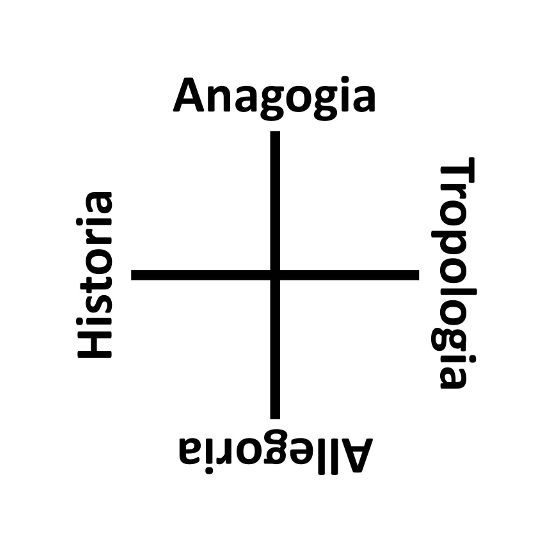
  • Anagogia: the higher meaning (Invisible Invisibility*)
  • Allegoria: the deeper meaning (Invisible Visibility)
  • Historia: the literal meaning (Visible Visibility)
  • Tropologia: the moral meaning (Visible Invisibility)

Perhaps the meaning of these senses were more or less literal. Therefore on my diagram I have placed the higher above, the deeper below, the historical in the past, and the moral in the future. Morals inform us what we should do or what our purpose is. A heuretic of systems thinking coined by Stafford Beer is “the purpose of a system is what it does.” And remember the immortal words of Yoda: “Try not. Do or do not. There is no try.”

Fortunately or unfortunately, nature is nothing like a text. All texts are written by people, and are structured by human thought and language. Nature requires other methods for understanding its basis and processes. The so-called scientific method evolved by fits and starts to explore the workings of nature, its components, causes, structures and functions. And it continues to evolve because it is not in itself entirely mechanistic: no precise algorithm that we know of can be specified to turn the crank and do ‘science’. Does that mean it’s unscientific? Not at all.

References and Links:

* The terms Invisible Invisibility, etc. are from:

6. The four senses

The Quadralectics of Marten Kuilman

http://en.wikipedia.org/wiki/Book_of_Nature

http://en.wikipedia.org/wiki/Systems_theory

http://en.wikipedia.org/wiki/The_purpose_of_a_system_is_what_it_does

[*8.48, *8.52]

<>

The Quadralectics of Marten Kuilman

sq_quadralectics Marten Kuilman has written extensively on four-folds and what he calls quadralectics, division-thinking, or four-fold thinking.

Publishing in the Netherlands, his books aren’t available on Amazon. Graciously, he has made several of his works available on the internet via his blogs Quadralectics and Quadriformisratio. Quadriformisratio presents Four – A Rediscovery of the ‘Tetragonus Mundus’, a treatise of four-folds through history, and Quadralectics is his two volume work on Quadralectic Architecture.

Not only does Kuilman expound at length on various four-folds throughout the ages and how they affected the intellectual and artistic developments of the time, his work unifies many of them into his four aspects of visibility: invisible invisibility, invisible visibility, visible visibility, and visible invisibility. Above, I’ve arranged these four aspects by my positions for the four elements. Unfortunately, they aren’t in the same sequence as Kuilman’s quadrants.

Because Kuilman emphasizes a recurring association of  his four-fold of visibility with communication, it is also reminiscent of Hjelmslev’s Net. Then, invisibility could be understood as content, and visibility as expression.

Interestingly, my four-fold of Bright-to-Dark (here or here) is most relatable to this four-fold of visibility, but in the reverse sense that the invisible invisibility is bright, and the visible visibility is dark. One could quickly reconcile this opposition by considering the empty circle as most invisible, and the full circle as most visible.

Another interesting result of Kuilman’s investigations is to derive his four-fold of Unity, Muun (Multi-unity), Part, and Whole, which I believe has important associations with my four-fold Structure-Function.

References:

Marten Kuilman / Four – A Rediscovery of the ‘Tetragonus Mundus’

Marten Kuilman / QUADRALECTIC ARCHITECTURE – A Panoramic Review

http://quadriformisratio.wordpress.com/

http://quadralectics.wordpress.com/

http://quadralectics.wordpress.com/7-the-quadralectic-theory/

[*8.48, *8.52, *8.53, *8.54, *8.55]

<>