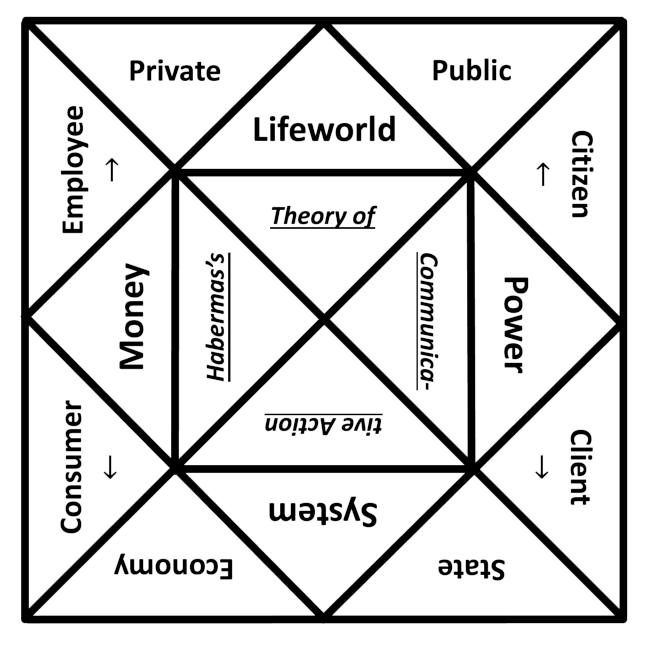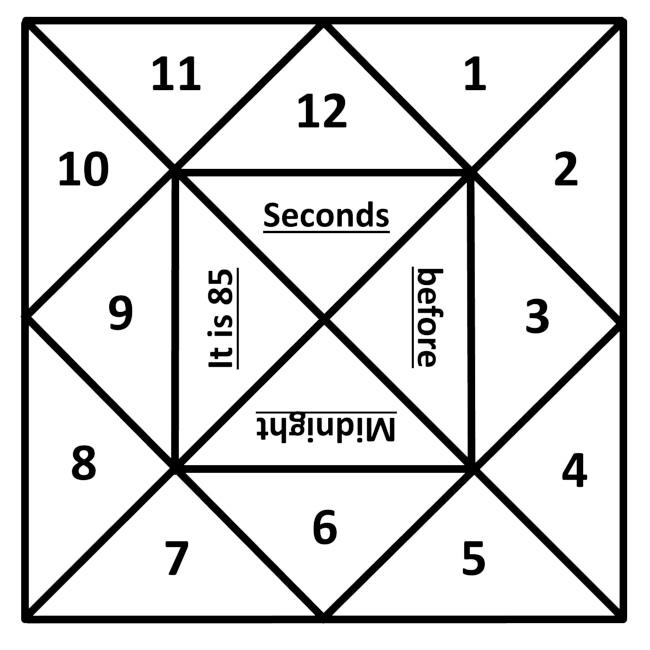
On the Doomsday Clock, it is 85 seconds before midnight!
Tick… tick… tick… tick…
Further reading:
Home page for the Bulletin of the Atomic Scientists:
2026 Doomsday Clock Announcement: Complete Livestream
<>
On the Doomsday Clock, it is 85 seconds before midnight!
Tick… tick… tick… tick…
Further reading:
Home page for the Bulletin of the Atomic Scientists:
2026 Doomsday Clock Announcement: Complete Livestream
<>
In Atomic Habits, author James Clear describes the behavior of making and breaking habits in four stages:
Further Reading:
James Clear / Atomic Habits: An Easy & Proven Way to Build Good Habits & Break Bad Ones
https://aliabdaal.com/book-notes/atomic-habits-summary/
Atomic Habits: An Easy & Proven Way to Build Good Habits & Break Bad Ones
[*13.86]
<>
The Twelve Virtues of Aristotle:
Further Reading:
https://plato.stanford.edu/entries/aristotle-ethics/
https://en.wikipedia.org/wiki/Virtue_ethics
12 Virtues Introduced by Aristotle – the master of those who know
https://www.cwu.edu/~warren/Unit1/aristotles_virtues_and_vices.htm
https://kevinhabits.com/aristotles-12-virtues-from-courage-to-magnificence-patience-to-wit/
https://www.google.com/search?q=twelve+virtues+of+aristotle&tbm=isch
<>
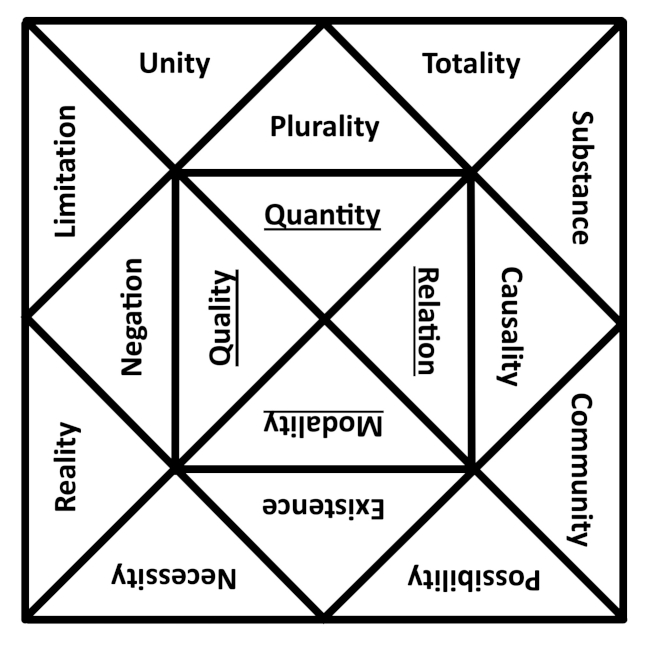
Even though Immanuel Kant’s tables of Judgments and Categories are each made up of four triples, both are divided into the same four headings: Quantity, Quality, Relation, and Modality. And as to the tripartite structure of their divisions, I can’t say I’m convinced of their coherence and completeness, c.f. Lovejoy’s article below.
Judgments
Further Reading:
https://plato.stanford.edu/entries/kant-judgment/
https://en.wikipedia.org/wiki/Category_(Kant)
Arthur O. Lovejoy / Kant’s Classification of the Forms of Judgment, The Philosophical Review, Nov. 1907, Vol. 16, No. 6, pp. 588-603
Some researchers discussing Kant’s judgments that look interesting:
https://siucarbondale.academia.edu/RichardLanigan
https://www.degruyter.com/view/journals/semi/2019/227/article-p273.xml?language=en
http://www.mrc.uidaho.edu/~rwells/
https://webpages.uidaho.edu/rwells/techdocs/Principles%20of%20Mental%20Physics/
[*4.136, *7.114]
<>
From far, from eve and morning
And yon twelve-winded sky,
The stuff of life to knit me
Blew hither: here am I.
Now — for a breath I tarry
Nor yet disperse apart —
Take my hand quick and tell me
What have you in your heart.
Speak now, and I will answer;
How shall I help you, say;
Ere to the wind’s twelve quarters
I take my endless way.
— “From Far” (A Shropshire Lad), by A. E. Housman
The Rose of the Twelve Greek Winds:
Further Reading:
https://en.wikipedia.org/wiki/Classical_compass_winds
https://en.wikipedia.org/wiki/The_Wind%27s_Twelve_Quarters
https://en.wikipedia.org/wiki/A_Shropshire_Lad
https://en.wikisource.org/wiki/A_Shropshire_Lad/XXXII
https://en.wikipedia.org/wiki/Anemoi
https://www.greekmythology.com/Other_Gods/Anemoi/anemoi.html
https://www.theoi.com/Titan/Anemoi.html
[*12.9]
<>
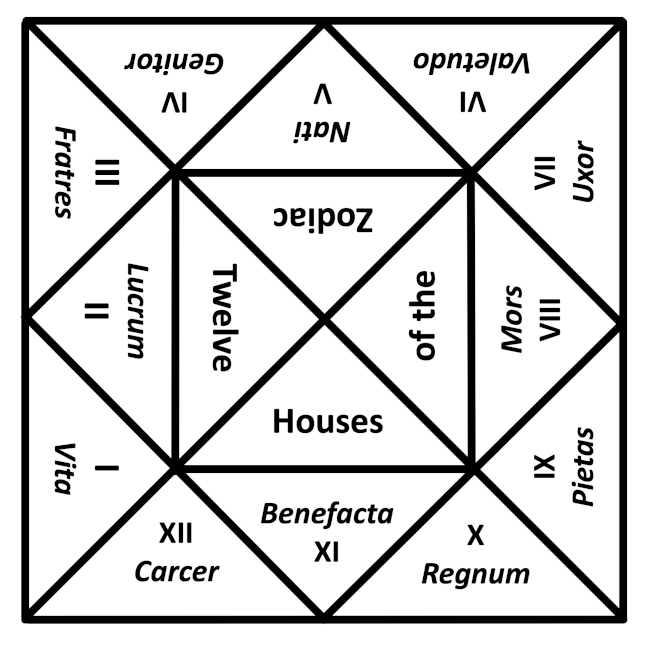
How does one circumscribe the totality of human experience, both for the individual as well as for culture? One of the oldest ways is the twelvefold division of the Houses of the Zodiac, which may have its origins in Babylon. Other similar systems were used in India, China, Europe, etc. In my diagram above I’m using Latin numerals along with the Latin names of the houses.
For Western Astrology, four groups of three houses are divided by the four classical elements and then into triplicities (from Wikipedia):
And somewhat similarly for India, the divisions of Vedic Astrology are broken into four Bhavas or “needs” (from Wikipedia):
There are more recent and scientific divisions of human universals, such as those by George Murdock, Robin Fox, and Donald Brown, as mentioned by Jungian analyst Anthony Stevens in his book “Archetype Revisited”. These are also grouped into four categories (from Wikipedia):
Further Reading:
https://en.wikipedia.org/wiki/House_(astrology)
https://en.wikipedia.org/wiki/Hindu_astrology
https://www.dimension1111.com/astrology-the-houses.html
https://en.wikipedia.org/wiki/Cultural_universal
https://en.wikipedia.org/wiki/Anthony_Stevens_(Jungian_analyst)
Anthony Stevens / Ariadne’s Clue: a guide to the symbols of mankind
Note that John Crowley’s “AEypgt Quartet” uses the Latin names of the Houses as “books”, three to a volume.
[*11.156]
<>
In his book “The Geometry of Meaning”, Arthur M. Young developed a system which he called his “Rosetta Stone” because he claimed that it associated mental attributes to some physical measurements, giving a kind of map to mind-body dualism. In the above diagram the expressions and names of these twelve objective values or physical units are shown. Examine the list below to see the twelve subjective values or mental attributes (shown in parentheses) that Young ascribed to them.
I’ve rearranged the sequence of these somewhat because I don’t quite understand the reasons for the organization Young gave them. I’ve also relabeled the units using the more standard derivative notation L’ = dL/dT, L” = d^2 L/ dT^2, etc. His notation is given at the end of each line below in parentheses for comparison (essentially he removes the d’s from the derivatives, writing dL/dT as L/T, which seems confusing to me when then multiplied by L).
Given the measurement Position or Length (L), Moment is Mass (M) times Position giving ML, and Moment of Inertia is Moment (ML) times Position giving ML^2. Velocity (L’), Acceleration (L”), and Control (L”’) have similarly related pairs of values by multiplying each by M and by ML. This gives four sets of similar expressions differing by their common derivative. I should have probably named the 1st set to be 0th, 2nd set to be 1st, 3rd set to be 2nd, and 4th set to be 3rd after the order of the common derivative.
How does Young justify associating, for example, the mental attribute “Faith” with the physical unit “Moment of Inertia”? It seems to have something to do with his original cyclic order of these twelve measurements and the associations he gives them to the Astrological Signs of the Zodiac. This mapping is not shown but can easily be found in the links below.
Further Reading:
Arthur M. Young / The Geometry of Meaning
http://kairos.laetusinpraesens.org/meaning_1_h_15
The only early entry in my blog without a leading figure (and poor tables as well):
https://equivalentexchange.blog/2011/01/02/arthur-m-young%e2%80%99s-fourfold-theory-of-process/
[*7.78, *7.79, *8.2, *11.38]
<>
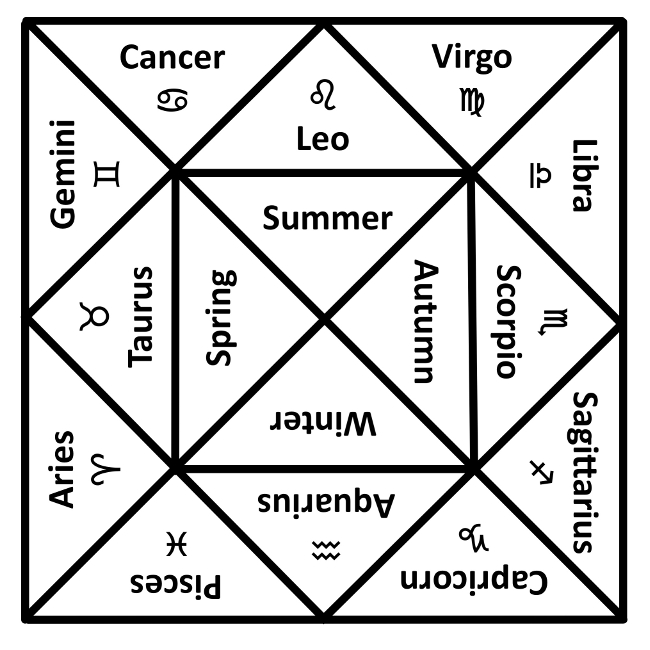
This isn’t a bad little diagram of the four seasons along with the twelve zodiac names and symbols. However, it might be oriented wrong by convention or going clockwise instead of counter-clockwise. Interestingly, old horoscope charts that show what was in the sky (the positions of the zodiac stars and the eight or nine planets in regards to the twelve “astrological houses”) at the time of a person’s birth were shown using the outside ring of twelve triangles instead of the more familiar circle that is used today. The inner square might be for notes or some nice drawing.
Further Reading:
https://en.wikipedia.org/wiki/Zodiac
https://www.completehoroscope.org/envelope-diagram-horoscope.htm
[*10.145]
<>
Because there are way more than seven wonders in the world.
Always Forward Between Heaven and Earth
Psychological Musings
Critiquing anime and everything else
"For man has closed himself up, till he sees all things thro' narrow chinks of his cavern" -- William Blake
Category Theory, Haskell, Concurrency, C++
Reviewing fascinating science books since 2017
Every Fourth Thing
Derek Wise's blog: Mathematics, Physics, Computing and other fun stuff.
integrating 4 binary opposites in life, learning, art, science and architecture
Chasing the Paper Rabbit
experiments in a reaction from the left
A blog about computers, evolution, complexity, cells, intelligence, brains, and minds.
mind maps, infographics, and expositions
neat ideas from unusual places
Introduction to a Quadralectic Epistomology
Astronomy, space and space travel for the non scientist
Every Fourth Thing
A Serious Look at Trivial Things
A Survey of Tetradic Testimonials in Architecture
Musings from a Naturalist
Why Evolution is True is a blog written by Jerry Coyne, centered on evolution and biology but also dealing with diverse topics like politics, culture, and cats.
Four-fold thinking4you
Craig Weinberg's Cosmology of Sense
Purveyors of Fine Anime Reviews and Ratings Since 2010
Between Subject and Object
Every Fourth Thing
Every Fourth Thing
Every Fourth Thing
Every Fourth Thing
Sometimes those Sticking their Heads in the Sand are Looking for Something Deep
Online Home of Christopher Vitale, Associate Professor of Media Studies, The Graduate Program in Media Studies, Pratt Institute, Brooklyn, NY.
Linking Ideas
RESEARCHING THE DEMANDS OF THOUGHT
Explorations in the Paradoxes of Meaning
"The centaur of classical metaphysics shall be mated with the cheetah of actor-network theory."
objects & things, design, art & technology