Category Archives: Philosophy

Matter and Memory, Moment and Measure

The more of these moments memory can contract into one, the firmer is the hold which it gives to us on matter : so that the memory of a living being appears indeed to measure, above all, its powers of action upon things, and to be only the intellectual reverberation of this power. Let us start, then, from this energy, as from the true principle : let us suppose that the body is a centre of action, and only a centre of action. We must see what consequences thence result for perception, for memory, and for the relations between body and mind.

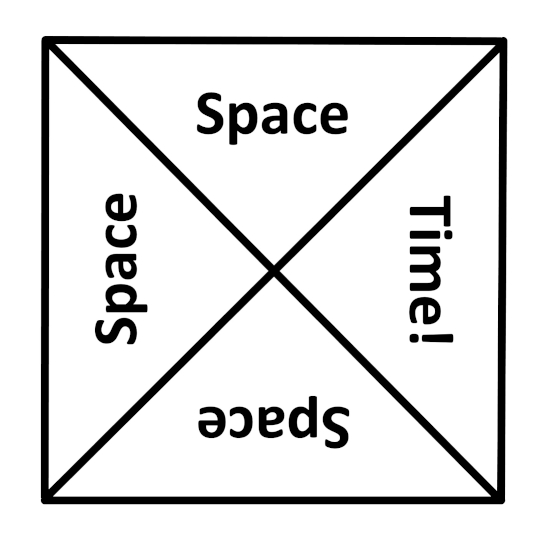
Perception is master of space in the exact measure in which action is master of time.

— Henri Bergson, from Matter and Memory

Further Reading:

https://brocku.ca/MeadProject/Bergson/Bergson_1911b/Bergson_1911_05.html

https://epochemagazine.org/50/creative-recollection-bergsons-theory-of-memory/

Henri Bergson’s Matter and Memory: Law of Masters

Click to download a pdf copy of Matter and Memory.

https://en.wikipedia.org/wiki/Matter_and_Memory

Emily Herring / Herald of a Restless World, how Henri Bergson brought philosophy to the people

[*12.116]

<>

Aristotle’s Fourfold Division of Being

Aristotle’s fourfold division of being, found in his work Categories, classifies entities based on whether they are “Said of” a subject and whether they are “Present in” a subject. The four categories obtained  by these distinctions are: Accidental Particulars (not Said of but Present in), Accidental Universals (Said of and Present in), Primary Substances (or Substantial Particulars) (neither Said of nor Present in), and Essential Universals (or Substantial Universals) (Said of but not Present in) (also called Secondary Substances).

Present in Not Present in
Said of Accidental Universals Essential Universals
Not Said of Accidental Particulars Primary Substances

Or, looking at these four categories another way, with explanation:

Said of? Present in?
Essential Universals Yes No These are species or genera that are “Said of” particular substances but are not “Present in” any single subject. (i.e. the species of “humans”)
Accidental Particulars No Yes These are non-substantial particulars that are “Present in” a subject but are not “Said of” any other subject. (i.e. the wisdom of Socrates)
Accidental Universals Yes Yes These are universals that are both “Said of” and “Present in” subjects. (i.e. the wisdom that can be in some humans, such as philosophers)
Primary Substances No No These are individual, particular things that can exist on their own, such as an individual man or other type of entity. (i.e. Socrates)

Note the original term “accidental” can now be thought of as merely “non-substantial”. But Aristotle’s fourfold division wasn’t discussed at great length in the Categories, as pride of place was devoted to his ten-fold ontology, which we won’t be covering here.

The recent philosopher E. J. Lowe wrote much on essentially this same fourfold classification, which he called the Four Category Ontology. Lowe’s diagram of this, which he called “The Ontological Square”, also describes several other relationships between these four categories: Instantiation (between Kinds and Objects, and Attributes and Modes), Characterization (between Kinds and Attributes, and Objects and Modes), and Exemplification (between Attributes and Objects).

Non-substances Substances
Universals Non-substantial Universals, i.e. Attributes Substantial Universals, i.e. Kinds
Particulars Non-substantial Particulars, i.e. Modes Substantial Particulars,
i.e. Objects

Further Reading:

https://www.ancientgreekphilosopher.com/2015/08/05/aristotles-categories-four-fold-division-of-being/

https://philosophy-models.blog/2019/01/20/aristotles-categories-the-four-fold-division/

https://faculty.washington.edu/smcohen/320/cats320.htm

https://plato.stanford.edu/entries/aristotle-categories/#FouFolDiv

https://plato.stanford.edu/entries/aristotle-metaphysics/supp1.html

https://plato.stanford.edu/entries/aristotle-categories/

Ludger Jansen / Aristotle’s Categories

https://link.springer.com/article/10.1007/s11245-006-9009-1

Kevin Mulligan, Peter Simons, Barry Smith / Truth-makers in Philosophy and Phenomenological Research 44(3) 287-321 (1984)

E.J. Lowe / The Four-Category Ontology: A Metaphysical Foundation for Natural Science

https://ndpr.nd.edu/reviews/the-four-category-ontology-a-metaphysical-foundation-for-natural-science/

[*4.94, *6.98, *6.143]

<>


Plato’s Fourfold Vision in the Phaedrus

In Plato’s Phaedrus, this “fourfold vision” refers to four distinct types of divine madness or inspiration; and being of divine origination are associated with various Greek gods. These are: prophecy from Apollon (later, Roman Apollo), mystic rites (telestic madness) from Dionysus (Bacchus), poetry and arts from the Muses (Camenæ), and love from Aphrodite and Eros (Venus and Cupid). These different forms of divine madness are seen as beneficial blessings and essential for a fulfilling life, crucial for living well and having a deeper connection to truth and beauty.

Also in the Phaedrus is Plato’s theory of the soul, most famously utilizing the metaphor of a chariot driven by two horses. The four types of divine madness represent different ways the soul can be uplifted. They are powers that can help guide the charioteer, steering the soul towards its higher purpose. If the soul follows the divine, the charioteer can ascend to the “plain of truth” (i.e. the realm of Plato’s Forms.) If not, the soul falls to earth in human form. The better the soul has seen truth, the higher will be its place in its “next” life.

It’s kind of odd that the charioteer is supposed to embody Reason, in order to steer the chariot’s horses properly, and yet there is no divine madness specifically associated with reason. Where is Athena (Roman Minerva), to aid the soul in its journey, as a guide for Reason? Perhaps Plato thought that Apollon could serve double duty, as he was thought to also symbolize reason as well as prophecy. Or perhaps the very notion of “divine madness” should not be associated with reasoning and logic. I disagree.

The writings of Benjamin Labatut come to mind as showcases of the “divine madness” of reason and logic. Various persons of science and mathematics are written about in a pseudo-bibliographical way: the mathematician Alexander Grothendieck, the computer scientist John von Neumann, and others. Other writers have also written about those that live in the highest realms of logic and mathematics: Kurt Godel, Grigory Perelman, etc. Their intellect may put them close to a form of madness.

Note:

I’ve chosen the Roman names for these Greek gods for the sole reason that they fit better in my diagram. I hope it’s not too confusing.

Further Reading:

https://en.wikipedia.org/wiki/Phaedrus_(dialogue)

PLATO’S PHAEDRUS: FOUR TYPES OF DIVINE MADNESS

View at Medium.com

View at Medium.com

https://en.wikipedia.org/wiki/Muses

https://en.wikipedia.org/wiki/Benjam%C3%ADn_Labatut

https://en.wikipedia.org/wiki/Alexander_Grothendieck

https://en.wikipedia.org/wiki/John_von_Neumann

Matthew Shelton / Divine Madness in Plato’s Phaedrus

https://www.academia.edu/118753337/Divine_Madness_in_Plato_s_Phaedrus

Katja Maria Vogt / Plato on Madness and the Good Life

Click to access paper-vogt-plato-on-madness-and-the-good-life.pdf

<>


Plato’s Fourfold Division in the Philebus

In Plato’s dialogue the Philebus, Socrates uses a fourfold division to describe fundamental, metaphysical principles of all things: the Unlimited (ápeiron, the indefinite, boundless aspect), the Limited (péras, the definite aspect of measure and boundary), the Mixture of these two (meikton, a combined indefinite-definite), and the Cause of the mixture (aitia, which gives structure to the mixture and is responsible for unifying it).

This framework provides the foundation for the dialogue’s central argument about what constitutes the good life, and what activity is best to achieve it. In the dialogue, Socrates uses the four parts of the division to examine the natures of both pleasure and reason, determining that their mixture, brought about by some cause, is the key to a truly good life. So neither pleasure alone, nor reason alone, would suffice.

This fourfold division reminds me of Aristotle’s later schema of the Four Causes. Initially I thought that the Unbounded could be the Material Cause, the Bounded could be Formal Cause, the Mixture could be Final Cause, and finally the Cause could be Efficient Cause. That is because one might think that there is always more material to be had if you want it, and the form of a project puts shape, constraints, limits, and relationships on it.

However, I now believe that what is truly limited is the raw material (matter, energy, time, information), and what is unlimited is all possible form (and not any one particular form). The combinations or permutations that one can make from a finite set of elements are essentially unlimited in number, or at least increase exponentially with the length of the permutation or the size of the combination.

Consider the finite nature of an alphabet, and the endless number of sentences that can be formed from it. Or think about the four DNA base pairs, and the endless variety of genes and organisms that can be generated from them. Remember Darwin’s quote: “Endless forms most beautiful”. Of course many of sentences one can make are gibberish, and many of the organisms one could make are not fit or even viable.

I realize that in Plato’s dialogue the Unlimited and the Limited are more about the continuous and the discrete: the infinite and the finite, the unbounded and the bounded, the indefinite and the definite. The examples of the Unlimited given have the common aspect of “more and less”, i.e. they are indeterminant. By contrast, the examples of the Limit(ed) are of a determinant nature, a bound, a limit, a fixation, a stop to the “more and less”.

It seems that one could spent an unlimited amount of time studying the intricacies of the Philebus and thinking about the meaning of it. But I am starting to feel that my time is indeed limited and other matters require my attention. I know I am probably at odds with all others in the proper interpretation of this part of the dialogue. At least you might enjoy the limited links I have provided, and you still have the unlimited freedom to make of them what you will.

Further Reading:

https://en.wikipedia.org/wiki/Philebus

https://www.gutenberg.org/files/1744/1744-h/1744-h.htm

https://standardebooks.org/ebooks/plato/dialogues/benjamin-jowett/text/philebus

https://plato.stanford.edu/entries/plato-ethics/

Mary Louise Gill / The Fourfold Division of Beings (Philebus 23b-27c)

https://www.academia.edu/40402669/The_Fourfold_Division_of_Beings_Gill_on_Platos_Philebus_

Ashley Lascano / A critical analysis of the metaphysics of limit and unlimited in Plato’s Philebus

https://commons.lib.jmu.edu/honors201019/691/

George Rudebusch / Philebus 23c-26d: Peras, Apeiron, and Meikton as Measure Theory

https://impactum-journals.uc.pt/platojournal/article/view/10332

<>

The Golden Mean

The Golden Mean is the desirable middle ground between two extremes of behavior, one of excess and the other of deficiency. It appeared in Greece at least as early as the Delphic maxim “nothing in excess”, which was discussed by Plato. Aristotle analyzed the Golden Mean by saying that the virtues of character can be described as means between having too much and having too little. For example, courage is a virtue in the Aristotelian view, being the mean between recklessness (too much) and cowardice (too little).

  • Excess
  • Dearth
  • Virtue
  • Mean

The Mean between Excess and Dearth is Virtue!

Further Reading:

https://en.wikipedia.org/wiki/Golden_mean_(philosophy)

https://philosophybreak.com/articles/the-golden-mean-aristotle-guide-to-living-excellently/

https://plato.stanford.edu/entries/aristotle-ethics/

Aristotle’s Politics: The Politics of the Golden Mean

[*14.98]

<>


Information and Computation

I’ve long wished for a succinct definition for the notion of information. What is it? What makes something information and another thing disinformation? Why do people accept things as truth that others know as false? Is information something that informs the physical universe, or is it only a way that the human mind tries to structure itself? The nonhuman world seems to get along just fine without knowing anything, doesn’t it?

Here is an idea for a simple schema for information that utilizes notions from other posts.

  • Distinction = an action that tells or makes a Difference.
  • Difference = a fact (or part) that is told or is made by a Distinction.
  • Information = a structured collection of facts (or parts).
  • Computation = a functional collection of actions.

In relation to the Four Causes, Whitehead’s Criteria, and Structure-Function we see:

  • Efficient: Consistency: Action: Distinction
  • Material: Applicability: Part: Difference
  • Formal: Coherence: Structure: Information
  • Final: Adequacy: Function: Computation

And so:

  • A Distinction is an action that tells or makes a Difference, consistently and efficiently.
  • A Difference is a fact or part that is told or is made by a Distinction, and applies materially.
  • Information is a structured collection of Differences (as facts or parts), that has a formal coherence.
  • A Computation is a functional collection of Distinctions (as actions), that are adequate for an end or purpose.

Further Reading:

https://grammar.collinsdictionary.com/us/english-usage/what-is-the-difference-between-difference-and-distinction

https://en.wikipedia.org/wiki/Information

https://www.informationphilosopher.com/

https://plato.stanford.edu/entries/facts/

https://plato.stanford.edu/entries/action/

https://plato.stanford.edu/entries/logic-information/

https://plato.stanford.edu/entries/computation-physicalsystems/

https://en.wikipedia.org/wiki/Material_implication_(rule_of_inference)

[*9.26, *9.106, *13.196, *13.200]

<>


Four-dimensionalism

Previous posts (here and here) have considered mathematical and scientific ideas about four dimensions. Here are some links about the metaphysical considerations of four-dimensionalism.

Further Reading:

Theodore Sider / Four-Dimensionalism: An Ontology of Persistence and Time

https://ndpr.nd.edu/reviews/four-dimensionalism-an-ontology-of-persistence-and-time/

https://tedsider.org/

Ludwig Jaskolla / Real Fourdimensionalism: An Essay in the Ontology of Persistence and Mind

https://ndpr.nd.edu/reviews/real-fourdimensionalism-an-essay-in-the-ontology-of-persistence-and-mind-2/

https://en.wikipedia.org/wiki/Four-dimensionalism

https://plato.stanford.edu/entries/temporal-parts/

https://en.wikipedia.org/wiki/The_Unreality_of_Time

https://en.wikipedia.org/wiki/Philosophy_of_space_and_time

Also:

https://ndpr.nd.edu/reviews/persistence-through-time-and-across-possible-worlds/

https://ndpr.nd.edu/reviews/how-things-persist/

And even:

https://ndpr.nd.edu/reviews/the-language-and-reality-of-time/

https://ndpr.nd.edu/reviews/the-elements-and-patterns-of-being-essays-in-metaphysics/

https://ndpr.nd.edu/reviews/a-materialist-metaphysics-of-the-human-person/

Maybe:

https://www.friesian.com/lieb.htm

[*10.89]

<>

Roads and Rivers

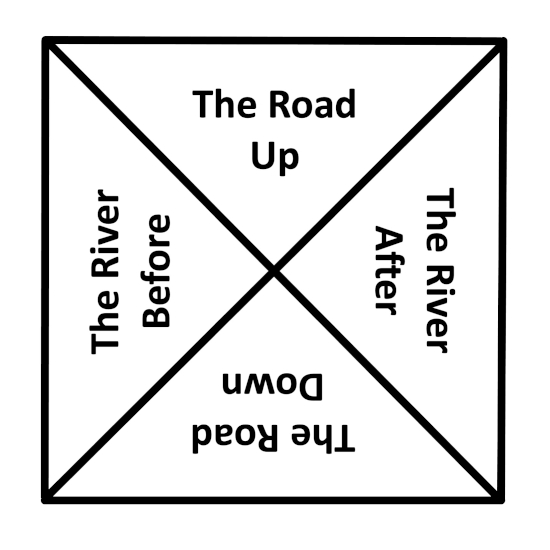
Heraclitus once said that one cannot step into the same river twice, yet he also said that the road up and the road down are one and the same. These two notions seem to be completely contradictory.

I don’t think he meant that rivers change whereas roads don’t, although the water in the river is changing as it flows by, and the material or dirt of the road usually doesn’t.

If I step into a river and then again later, I also have the memory of stepping into it before. If I travel the road up, then on the road down I remember the journey and what I’ve seen each way, and maybe what’s changed.

Perhaps he meant that the “road up” is the path of increased success and well-being, and the “road down” has those things decreased. Maybe you’re supposed to take both equally, like the Stoics.

Further Reading:

https://en.wikiquote.org/wiki/Heraclitus

https://plato.stanford.edu/entries/heraclitus/

https://www.albany.edu/~rn774/fall96/philos3.html

<>

What is Information?

Information is a difference that makes a difference.

— Gregory Bateson

Information is a distinction that makes a difference.

— Donald M. Mackay

Draw a distinction.

— G. Spencer-Brown

To Luciano Floridi, information can have one (or more?) of the following four properties:

    • As something
    • About something
    • In something
    • For something

To Charles S. Peirce, information is about semiosis, integrating the four aspects of:

    • Denotation
    • Connotation
    • Extension
    • Comprehension


Further Reading:

https://en.wikipedia.org/wiki/Philosophy_of_information#Definitions_of_%22information%22

https://en.wikipedia.org/wiki/Philosophy_of_information

https://en.wikipedia.org/wiki/Logic_of_information

https://en.wikipedia.org/wiki/Semiotics

https://en.wikipedia.org/wiki/Denotation

https://en.wikipedia.org/wiki/Connotation

https://en.wikipedia.org/wiki/Extension_(semantics)

https://en.wikipedia.org/wiki/Comprehension_(logic)

Aaron Sloman on Bateson and Information:

https://www.cs.bham.ac.uk/research/projects/cogaff/misc/information-difference.html

https://www.cs.bham.ac.uk//research/projects/cogaff/misc/austen-info.html

https://www.cs.bham.ac.uk//research/projects/cogaff/sloman-inf-chap.html

Various links:

https://www.stephanie-burns.com/blog/2017/3/25/the-difference-that-makes-the-difference

https://www.edge.org/conversation/daniel_c_dennett-a-difference-that-makes-a-difference

Dynamics of Information as Natural Computation (2 links to same paper):

https://www.mdpi.com/2078-2489/2/3/460

https://www.researchgate.net/publication/220121522_Dynamics_of_Information_as_Natural_Computation

[*13.192, *13.194]

<>

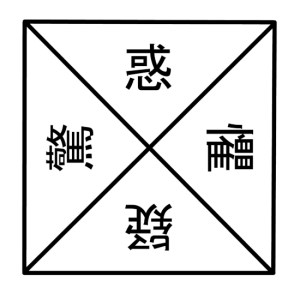
Hakuin Ekaku: Four Ways of Knowing

Hakuin Ekaku: Four Ways of Knowing:

    • Gate of Inspiration
    • Gate of Practice
    • Gate of Awakening
    • Gate of Nirvana

Further Reading:

https://en.wikipedia.org/wiki/Hakuin_Ekaku#Four_ways_of_knowing

Zen Master Hakuin on the Four Ways of Knowing

Others to consider:

Click to access waysofknowing.pdf

What are the four Ways of Knowing (WOKs)?

Ways of acquiring knowledge (knowing)

  • Intuition/Emotion
  • Authority/Language
  • Sense/Observation
  • Reason/Logics

https://nonprofitquarterly.org/multiple-ways-knowing-expanding-know/

  • Artistic
  • Practical
  • Foundational
  • Generalized

A Reflection on 4 epistemologies (ways of knowing 😛 )

  • Presentational
  • Practical
  • Experiential
  • Propositional

Ways of Knowing

  • Instinct & Intuition
  • Naming & Description
  • Narrative
  • Discourse
  • Philosophy/Logic
  • Qualitative Science
  • Quantitative Science
  • Models & Simulations

Images:

https://www.google.com/search?q=%22ways+of+knowing%22&tbm=isch

<>