Category Archives: fourfolds

Tetraphobia

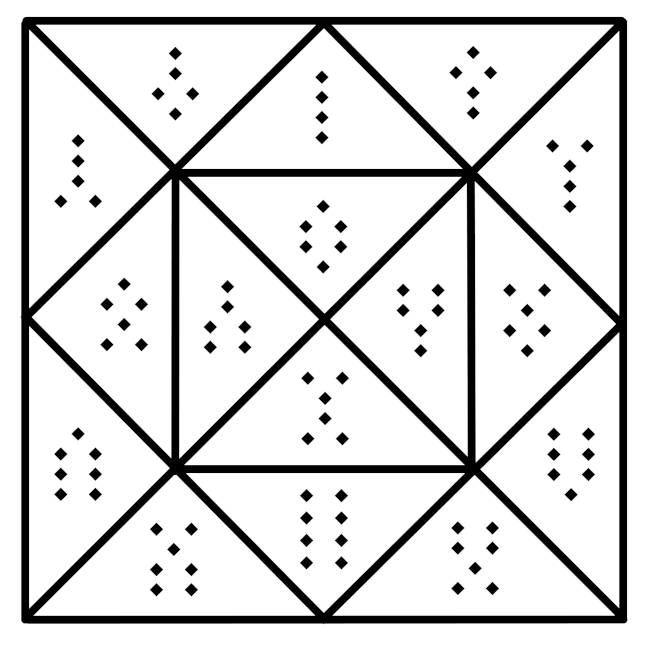
Tetraphobia is the fear of the number 4. In some East Asian cultures, the number 4 is considered unlucky because it sounds similar to the word for “death.” This superstition has led to buildings skipping the 4th floor, hospitals avoiding room numbers with the number 4, and many other cultural practices. People with tetraphobia experience anxiety and distress when they encounter the number 4.

Further Reading:

https://en.wikipedia.org/wiki/Tetraphobia

https://www.joincake.com/blog/tetraphobia/

[*10.108]

<>

Trust, Belief, Faith, and Hope

ChatGPT, can you please describe the differences and similarities between the terms trust, belief, faith, and hope?

Certainly! While the terms trust, belief, faith, and hope are related, they each have distinct meanings and connotations. Here’s a breakdown of their differences and similarities:

Trust: Trust is a reliance or confidence placed in someone or something based on their reliability, integrity, or abilities. It involves having faith in the character, competence, and intentions of another person or entity. Trust is typically built through consistent behavior, honesty, and the fulfillment of promises. It often implies a sense of predictability and the expectation that the trusted person or thing will act in a dependable and desirable manner.

Belief: Belief refers to accepting something as true or real without necessarily requiring concrete evidence or proof. It can be based on personal experiences, cultural upbringing, or persuasive arguments. Beliefs are subjective and can vary widely among individuals or communities. They can be influenced by knowledge, values, emotions, and religious or philosophical systems. Beliefs may or may not align with objective reality and can change over time in response to new information or experiences.

Faith: Faith typically involves a strong, unwavering belief or trust in something or someone, often associated with religious or spiritual contexts. It goes beyond rationality and may involve a conviction in the absence of conclusive evidence. Faith often relates to beliefs about the divine, the supernatural, or philosophical principles. It can provide comfort, meaning, and a sense of purpose to individuals and communities. While faith can be influenced by external factors, it is often seen as deeply personal and subjective.

Hope: Hope is an optimistic or positive expectation about the future. It involves desiring or anticipating that something desired or favorable will happen. Hope is often based on a belief that circumstances can improve or that desired outcomes are attainable. It can provide motivation, resilience, and a sense of possibility in challenging situations. Hope can be deeply personal and can arise from individual aspirations, societal changes, or collective movements. It is often associated with a positive mindset and can contribute to overall well-being.

Similarities: All four terms—trust, belief, faith, and hope—involve an element of relying on or expecting something or someone. They can contribute to shaping our thoughts, emotions, and actions. Additionally, they are subjective experiences that can vary among individuals and cultures. Trust, belief, faith, and hope can also influence our perceptions of the world, impact our relationships, and provide a sense of security or meaning.

Despite these similarities, the terms differ in their specific meanings, contexts, and the level of evidence or assurance involved. Trust focuses on reliability and confidence, belief on accepting something as true, faith on conviction and spirituality, and hope on positive anticipation for the future.

[*13.182]

<>

Roads and Rivers

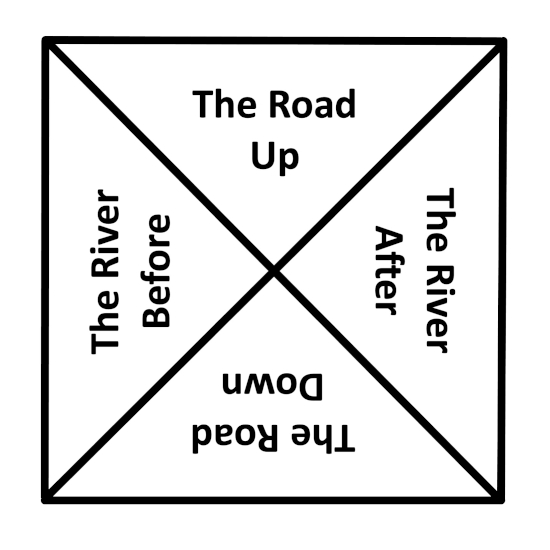
Heraclitus once said that one cannot step into the same river twice, yet he also said that the road up and the road down are one and the same. These two notions seem to be completely contradictory.

I don’t think he meant that rivers change whereas roads don’t, although the water in the river is changing as it flows by, and the material or dirt of the road usually doesn’t.

If I step into a river and then again later, I also have the memory of stepping into it before. If I travel the road up, then on the road down I remember the journey and what I’ve seen each way, and maybe what’s changed.

Perhaps he meant that the “road up” is the path of increased success and well-being, and the “road down” has those things decreased. Maybe you’re supposed to take both equally, like the Stoics.

Further Reading:

https://en.wikiquote.org/wiki/Heraclitus

https://plato.stanford.edu/entries/heraclitus/

https://www.albany.edu/~rn774/fall96/philos3.html

<>

Much in Little

“I’m always looking for the Hows and the Whys and the Whats,” said Muskrat, “That is why I speak as I do. You’ve heard of Muskrat’s Much-in-Little, of course?”
“No,” said the child. “What is it?”
Muskrat stopped, cleared his throat, ruffled his fur, drew himself up, and said in ringing tones, “Why times How equals What.” He paused to let the words take effect. “That’s Muskrat’s Much-in-Little,” he said.

— From “The Mouse and His Child”, by Russell Hoban

“What?,” asked the child.
“Yes, exactly!,” said Muskrat.

— Not in the book

“Who?,” said the Owl.

— Maybe somewhere in the book

Further Reading:

https://en.wikipedia.org/wiki/The_Mouse_and_His_Child

http://www.ocelotfactory.com/hoban/mouse.html

In Latin, Multum in Parvo.

Multum in Parvo

And now, a nice poem:

Much in Little, by Yvor Winters

Amid the iris and the rose,
The honeysuckle and the bay,
The wild earth for a moment goes
In dust or weed another way.

Small though its corner be, the weed
Will yet intrude its creeping beard;
The harsh blade and the hairy seed
Recall the brutal earth we feared.

And if no water touch the dust
In some far corner, and one dare
To breathe upon it, one may trust
The spectre on the summer air:

The risen dust alive with fire,
The fire made visible, a blur
Interrate, the pervasive ire
Of foxtail and of hoarhound burr.

https://www.poetryfoundation.org/poems/47783/much-in-little

https://en.wikipedia.org/wiki/Yvor_Winters

<>

What is Information?

Information is a difference that makes a difference.

— Gregory Bateson

Information is a distinction that makes a difference.

— Donald M. Mackay

Draw a distinction.

— G. Spencer-Brown

To Luciano Floridi, information can have one (or more?) of the following four properties:

    • As something
    • About something
    • In something
    • For something

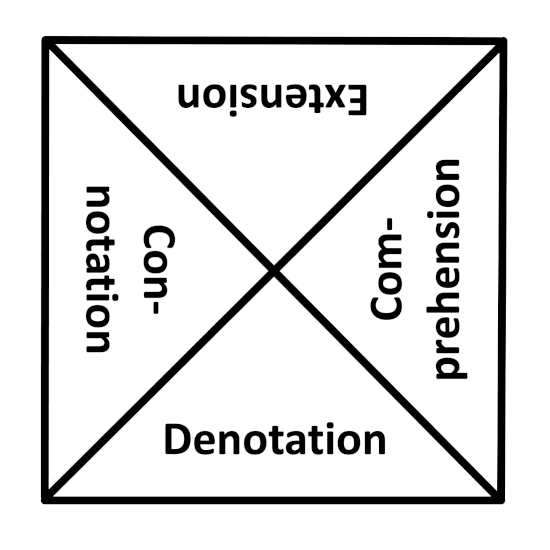
To Charles S. Peirce, information is about semiosis, integrating the four aspects of:

    • Denotation
    • Connotation
    • Extension
    • Comprehension


Further Reading:

https://en.wikipedia.org/wiki/Philosophy_of_information#Definitions_of_%22information%22

https://en.wikipedia.org/wiki/Philosophy_of_information

https://en.wikipedia.org/wiki/Logic_of_information

https://en.wikipedia.org/wiki/Semiotics

https://en.wikipedia.org/wiki/Denotation

https://en.wikipedia.org/wiki/Connotation

https://en.wikipedia.org/wiki/Extension_(semantics)

https://en.wikipedia.org/wiki/Comprehension_(logic)

Aaron Sloman on Bateson and Information:

https://www.cs.bham.ac.uk/research/projects/cogaff/misc/information-difference.html

https://www.cs.bham.ac.uk//research/projects/cogaff/misc/austen-info.html

https://www.cs.bham.ac.uk//research/projects/cogaff/sloman-inf-chap.html

Various links:

https://www.stephanie-burns.com/blog/2017/3/25/the-difference-that-makes-the-difference

https://www.edge.org/conversation/daniel_c_dennett-a-difference-that-makes-a-difference

Dynamics of Information as Natural Computation (2 links to same paper):

https://www.mdpi.com/2078-2489/2/3/460

https://www.researchgate.net/publication/220121522_Dynamics_of_Information_as_Natural_Computation

[*13.192, *13.194]

<>

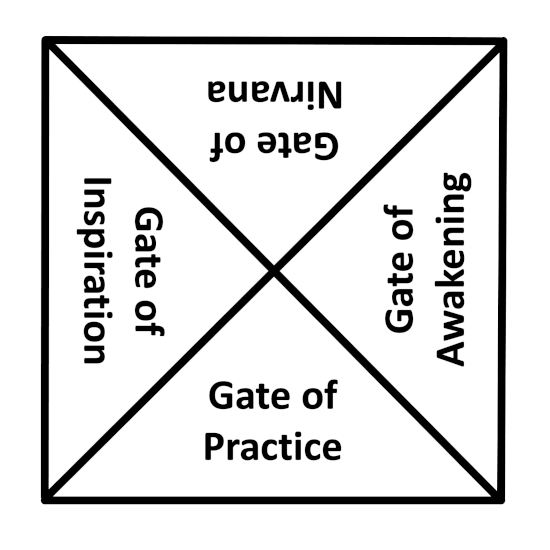
Hakuin Ekaku: Four Ways of Knowing

Hakuin Ekaku: Four Ways of Knowing:

    • Gate of Inspiration
    • Gate of Practice
    • Gate of Awakening
    • Gate of Nirvana

Further Reading:

https://en.wikipedia.org/wiki/Hakuin_Ekaku#Four_ways_of_knowing

Zen Master Hakuin on the Four Ways of Knowing

Others to consider:

Click to access waysofknowing.pdf

What are the four Ways of Knowing (WOKs)?

Ways of acquiring knowledge (knowing)

  • Intuition/Emotion
  • Authority/Language
  • Sense/Observation
  • Reason/Logics

https://nonprofitquarterly.org/multiple-ways-knowing-expanding-know/

  • Artistic
  • Practical
  • Foundational
  • Generalized

A Reflection on 4 epistemologies (ways of knowing 😛 )

  • Presentational
  • Practical
  • Experiential
  • Propositional

Ways of Knowing

  • Instinct & Intuition
  • Naming & Description
  • Narrative
  • Discourse
  • Philosophy/Logic
  • Qualitative Science
  • Quantitative Science
  • Models & Simulations

Images:

https://www.google.com/search?q=%22ways+of+knowing%22&tbm=isch

<>

Walter Bowman Russell (1871-1963)

Walter Bowman Russell was an American polymath, artist, author, and philosopher who made copious contributions and claims to various fields, including spirituality, art, and metaphysics. While his work encompasses a broad range of ideas, here are four major themes that capture the essence of his philosophy:

  • Universal Law and Natural Order: One of Russell’s central ideas is the existence of an underlying universal law and natural order that governs all aspects of the universe. He believed that this law operates in perfect harmony, and by understanding and aligning ourselves with it, we can achieve balance and fulfillment in our lives.
  • Unity and Interconnectedness: Russell emphasized the interconnectedness of all things in the universe. He saw everything as part of a grand, unified whole, where all elements are interdependent and interconnected. According to his philosophy, recognizing this interconnectedness enables us to grasp the fundamental unity of all existence.
  • Harmonic Vibrations and Rhythmic Balance: Russell believed that the universe is fundamentally vibrational in nature, with everything composed of waves and rhythms. He emphasized the importance of achieving harmony and balance within ourselves and in our interactions with the world around us. By attuning ourselves to the harmonies and rhythms of the universe, we can lead more fulfilling and purposeful lives.
  • The Power of Mind and Consciousness: Russell regarded the power of the human mind and consciousness as fundamental forces in shaping our reality. He believed that our thoughts and beliefs have the ability to create and influence the world we experience. According to his philosophy, by harnessing the power of our minds and cultivating a positive and constructive consciousness, we can achieve personal and collective transformation.

These four themes offer a glimpse into the multifaceted philosophy of Russell, often presented with his signature illustrations. However, it’s worth noting that Russell’s ideas encompass a vast array of subjects, including a non-standard physics and a spiritual cosmology, all interconnected through his unique perspective and understanding of the universe. Indeed, he was perhaps the first to endorse “new age” thought.

(Thanks, ChatGPT! I didn’t have the strength to read enough to write a quick summary. You were far less skeptical than I would have been, so I made a few small edits.)

Further Reading:

https://en.wikipedia.org/wiki/Walter_Russell

https://www.philosophy.org/#/

https://projectavalon.net/forum4/showthread.php?41699-The-Enigmatic-Walter-Russell

Startseite

RUSSELL, WALTER BOWMAN — MIAMI

WALTER RUSSELL

Only for NYT subscribers:

https://timesmachine.nytimes.com/timesmachine/1963/05/20/90548414.html?pageNumber=31

Also, see:

The Decemberists – Cavalry Captain

[*13.175]

<>

Four Positive Attitudes and Their Opposites

I generally dislike those type of household decorations with words that encourage positive things to promote in your life or to be thankful for. I’m sure you know the kind that I’m talking about, like motivational or inspirational posters for the home. I guess a good word for such things is schmaltz, or more meanly: “virtue signaling”.

One wonders then why I spend so much time making somewhat similar diagrams for this blog, although I don’t (often) print and pin them up for display. And I can say for the most part that they are not of this nature, but that’s just an excuse. Even so, I kind of like this one, so please forgive.

These four attitudes (calm, care, love, and hope) started with their four opposites (anger, spite, hate, and dread) as the key messages I took away from ads from a certain political party a few years ago. Unlike my post Capitalistic Values, which dealt with actual, social objectivities, messages with these four types of negativity were intended to inculcate base subjective emotions.

But the more I looked at them and considered what to say about them, the more I thought that I was adopting these negative attitudes for myself as well. And so I hope that I can choose the positive ones and not their negative counterparts, as things continue forward.

  • Have Calm, Not Anger
  • Have Care, Not Spite
  • Have Love, Not Hate
  • Have Hope, Not Dread

Or perhaps you’d prefer only the positives.

Further Reading:

https://en.wikipedia.org/wiki/Virtue_signalling

https://en.wikipedia.org/wiki/Keep_Calm_and_Carry_On

[*13.76]

<>

A Couple of Loops About Thinking and Then Doing

The Shewhart Cycle (also known as the PDCA) is an iterative design and management cycle for continuous quality improvement of products and processes. It is named after Walter Shewhart who is known as the father of statistical quality control. The more recent name, PDCA, has several variations in the literature. The PDCA or Shewhart Cycle consists of four parts:

    • Plan
    • Do
    • Check
    • Act

Similarly, the OODA Loop is an iterative framework for the improvement and management of decision processes. It is used in various domains such as business, litigation, and military strategy. The OODA Loop consists of four parts:

    • Observe
    • Orient
    • Decide
    • Act

Learning Cycles are similar to Design Cycles in that the process to be improved is learning and the product to be improved is knowledge. It would be interesting to compare the two types of cycles to understand their similarities and differences. Some of each type have four stages but others have more or less. I have mentioned several learning cycles with four steps already in this blog, the Kolb learning cycle and the Scientific Method.

Further Reading:

https://en.wikipedia.org/wiki/PDCA

https://en.wikipedia.org/wiki/Walter_A._Shewhart

https://en.wikipedia.org/wiki/Continual_improvement_process

https://www.praxisframework.org/en/library/shewhart-cycle

https://www.google.com/search?q=PDCA+cycle&tbm=isch

https://en.wikipedia.org/wiki/Decision_cycle

https://en.wikipedia.org/wiki/OODA_loop

https://www.techtarget.com/searchcio/definition/OODA-loop

https://en.wikipedia.org/wiki/Learning_cycle

https://www.google.com/search?q=learning+cycles+and+design+cycles+compared&tbm=isch

[*6.54]

<>


The Tree of Knowledge System

The Tree of Knowledge (ToK) System posits four hierarchical planes of existence having separate dimensions of complexity mapped out or studied by four different kinds of sciences:

  • Matter/Object: mapped by Physical Sciences
  • Life/Organism: mapped by Biological Sciences
  • Mind/Animal: mapped by Psychological, Cognitive, and Behavioral Sciences
  • Culture/Person: mapped by Human Social Sciences

The ToK System is reminiscent of other “big history” or “cosmic evolution” schemas such as Tyler Volk’s Combogenesis except for the special consideration for the mental and psychological (i.e. subjective) aspects of existence. I would think that this is primarily due to the fact that the developer of the system, Professor Gregg Henriques, is a psychologist.

In order to support his focus on consciousness and psychology, Henriques has developed several theories to address the “problem of psychology”, for example the Justification Systems Theory and the Behavioral Investment Theory. With the ToK System, these and several other key ideas, he claims he has a “Unified Theory of Knowledge” (UToK)!

Further Reading:

https://en.wikipedia.org/wiki/Tree_of_knowledge_system

https://www.unifiedtheoryofknowledge.org/8-key-ideas/the-tree-of-knowledge

https://en.wikipedia.org/wiki/Gregg_Henriques

http://www.gregghenriques.com/

https://www.unifiedtheoryofknowledge.org/

https://www.psychologytoday.com/us/blog/theory-knowledge

https://drive.google.com/file/d/1W6h2wsRx4EqYJ5WuPHxFUwphRJJwy0p1/view

Combogenesis: a constructive, emergent cosmos

<>