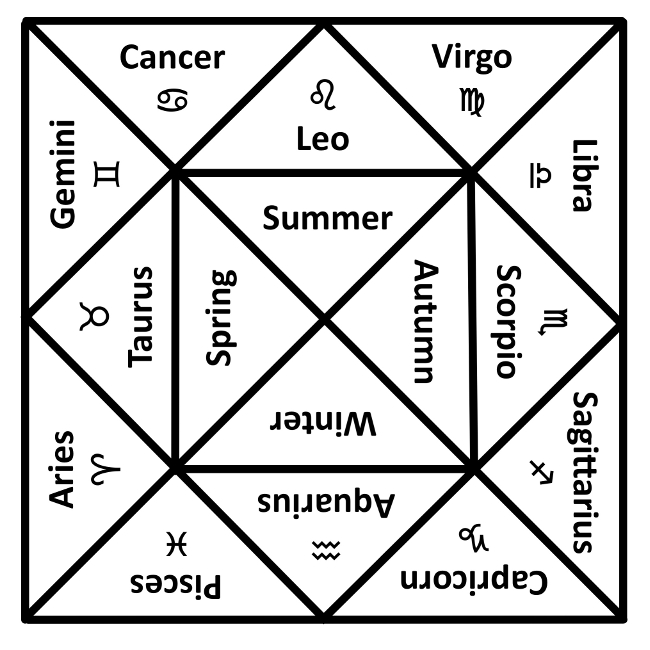
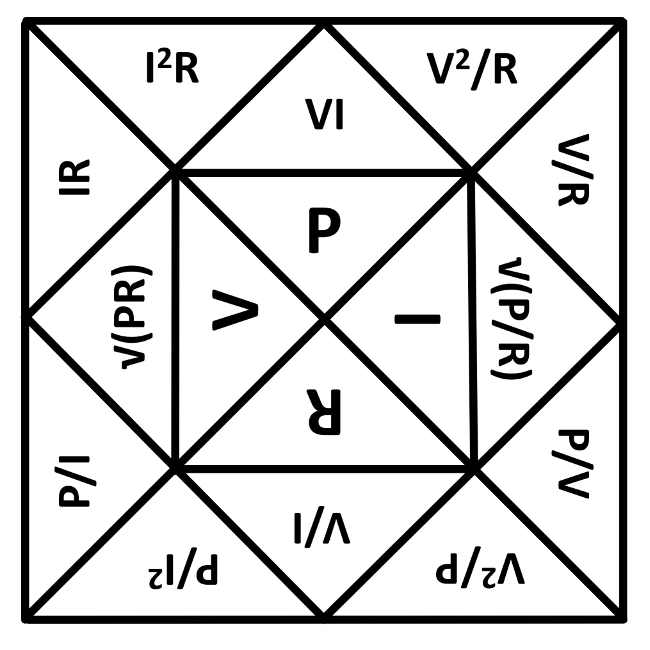
“The Matrix of Four, the Philosophy of the Duality of Polarity” by Ethan Indigo Smith is basically a book about four-folds, or two-by-two matrices. It’s always nice to see a book devoted to this subject, and Smith has written several other books as well. They seem to range from politics to environmentalism to meditation and spirituality, but they all appear to have a “new age” or esoteric flavor. “The Matrix of Four” claims to be philosophy and even meta-philosophy but how well does it succeed? Perhaps I’m not one to answer, having no definite philosophy, having written no books, and with only a smattering of blog entries for my efforts. However, I’d like to look at this work in depth because I do think it is worthwhile.
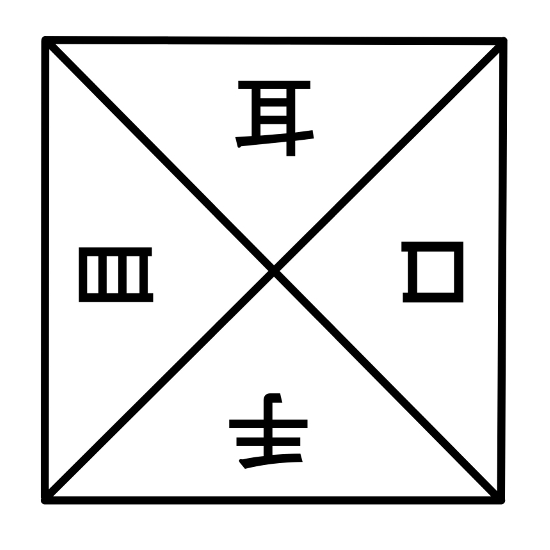
What is the Matrix of Four, the Philosophy of the Duality of Polarity? And why have such an awkward name that is completely written out 71 times? The abstract on Amazon states it is a formula for enhancing consciousness or our potential by exploring philosophical fundamentals. The abstract goes on to give as example the Yin Yang symbol consisting of four aspects of one entirety: positive, negative, positive in negative, and negative in positive. In fact, the icon I created (and use on various websites) tries to express this notion by dividing the Yin Yang symbol into four pieces.
In the “Introduction to Absolutes”, other examples suggest what the duality of polarity is. One example is that of planetary elliptical orbits, giving rise to two solstices and two equinoxes, the first pair the closest and furthest from the sun, and the second the positions halfway between the solstices. The tilt of the Earth’s axis gives rise to the four seasons: summer, fall, winter, spring. I can clearly see the concept of the duality of polarity here. Another is due to the Earth turning every day: the diurnal cycle of day, dusk, night, and dawn. The third is the set of four arithmetic operations, addition and subtraction, multiplication and division. Here I’m not sure how well the duality of polarity is shown. Multiplication is not “subtraction in addition”, but a repeated application of addition, just as exponentiation is repeated multiplication.
But perhaps the matrix of four, the philosophy of the duality of polarity is essentially just considering two associated pairs of opposites at once. I have said something similar in my notion of the Marriage of Opposites, that the way to solve the problem of dualities (Smith says polarities) is to consider two pairs at once. In the book’s eleven chapters, Smith looks at various subjects and their ubiquitous use of four-folds to conceptualize them.
In Chapter 1, “The Magic of Breath”, Smith discusses a subject that he has done extensive reading on, and from what I can tell, experience of: meditation and Buddhism. Matrices of Four mentioned include the Buddhist mantra “Aum mani paddle hum”, the four physical positions for meditation discussed in Angeles Arrien’s book “The Four Fold Way” (also called the four actions), and Buddhism’s Four Thoughts.
In Chapter 2, “The Riddle”, the Yin Yang symbol and its history is presented. It is perhaps the exemplary paradigm for his philosophy of the duality of polarity. Other matrices of four discussed are the four types of information (known knowns, unknown knowns, known unknowns, and unknown unknowns) and Buddhist mandalas.
Chapter 3, “The Cross”, discusses the symbolism of the cross throughout human history and religion. Other four-folds mentioned include ankhs, swastikas, the four Christian gospels, the Tetragrammaton, the four questions of Passover, the four forms of theological interpretation (literal, allegorical, comparative, and secretive), the Sufi four gates of speech, Buddhism’s Four Noble Truths, Four Immeasureables, and the Four Right Exertions, the Classical Four Elements, and the four cardinal directions.
“From Egyptian to Jungian”, Chapter 4, talks about the four humors or four vital fluids, the Classic four-fold hot/cold and moist/dry, the four temperaments, the four personality types of Plato and those of Aristotle, the Four Causes of Aristotle, the four forms of spiritual development due to G.I. Gurdjieff as presented by P.D. Ouspensky, psychologist Carl Jung and his four psychic functions, and the ancient Pythagorean symbol of the Tetraktys.
“The Exclusion of Four” is the title for Chapter 5. In this chapter, Smith returns to mathematical reasonings for his matrix of four. He also argues that the consideration of dualities of polarity is richer and more informative than merely thinking about polarities or opposites. Often triplets of things leave out a fourth that should be included. In some cultures the word death is a homonym for the word for four, giving rise to tetraphobia. The set of Three Monkeys (See No Evil, Hear No Evil, Speak No Evil) should include a fourth, Fear or Do No Evil. Does the common triple of mental, physical, and spiritual have a missing quarter-part of “natural”? Other matrices of four or four-folds described and expounded on come from classical philosophy: the Allegory of the Cave and the Divided Line.
Chapter 6 is “Questions and Answers”. The human body and certain of its organs are considered as four-part structures, for example the brain and heart. The physical universe can be carved into four parts in a variety of ways, e.g. four dimensions and four fundamental forces. Answers to questions have four truth claims (it is so, it is not so, it is both, it is neither), and so to the Hegelian synthesis, antithesis, synthesis can be added nullisis, or none (others have suggested anti-synthesis). Smith goes on to talk about various mythologies and religious systems that consider four important. Prejudice is discussed at length in relation to the matrix of four or the duality of polarity.
In Chapter 7, “Right and Rule”, Smith compares and contrasts legality and morality, human laws and human rights and wrongs. The matrix of four to be considered is legal/moral, illegal/moral, legal/immoral and illegal/immoral. In Chapter 8, “A Set of Reactions”, the freed prisoner in the Allegory of the Cave and the Wise Monkey that fears or does no evil are the best of their set, those that break harmful custom or immoral laws to do the right thing. Wu Wei, the concept of natural action, is discussed as a matrix of knowledge and action in relation to four cardinal “velocities” of thinking and being.
“Life and Literature” (Chapter 9), “The Matrix of Mind” (Chapter 10), and “The Final Chapter” (Chapter 11) explore miscellaneous topics using the concepts introduced so far. Many polarities are mentioned, and many dualities of polarity, such as the “Four Laws that Drive the Universe” by Peter Atkins. Even self-help and leadership books are mentioned. The Johari Window is discussed as well.
Perhaps I was overly harsh in my introduction of Smith’s book. I might have started reading it thinking that it was not going to be worthwhile. Instead, I learned of several four-folds that I was not aware of and different ways to think about them, and I enjoyed reading it on the whole. I’m excited that Smith is working to bring four-folds in all their fascination and generalization to the public. Plus, this was a good opportunity to go crazy and link many of my posts to this review.
So what exactly is the matrix of four, or the duality of polarity? There doesn’t seem to be a simple formula. Perhaps this sentence of Smith sums it up best: “There is polarity in practically all things and there is duality in practically all polarity and yet there is always more.”
Further Reading:
Ethan Indigo Smith / The Matrix of Four, the Philosophy of the Duality of Polarity
Author’s Facebook Page:
https://www.facebook.com/108Zone/
https://matrixof4.weebly.com/
[*9.129, *10.172]
<>
 Number is the ruler of forms and ideas, and the cause of gods and daemons.