Category Archives: fourfolds

The Logic of Universalization Guides Moral Judgment

From the abstract:

To explain why an action is wrong, we sometimes say, “What if everybody did that?” In other words, even if a single person’s behavior is harmless, that behavior may be wrong if it would be harmful once universalized. We formalize the process of universalization in a computational model, test its quantitative predictions in studies of human moral judgment, and distinguish it from alternative models. We show that adults spontaneously make moral judgments consistent with the logic of universalization, and report comparable patterns of judgment in children. We conclude that, alongside other well-characterized mechanisms of moral judgment, such as outcome-based and rule-based thinking, the logic of universalizing holds an important place in our moral minds.

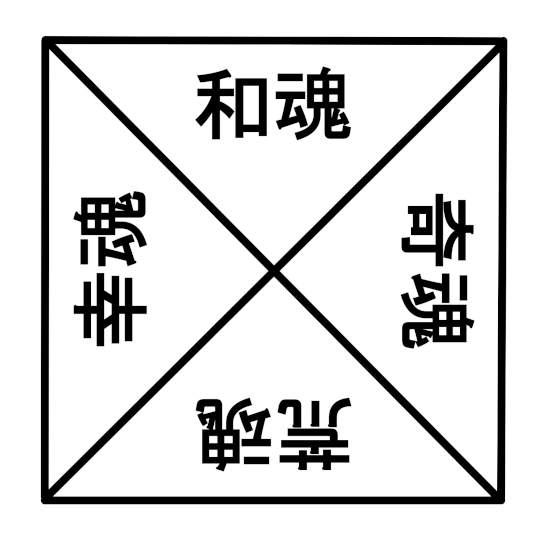
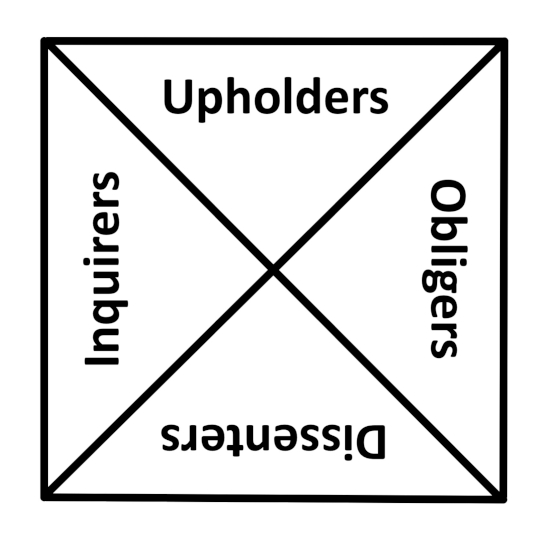
  • Universalization: What if everyone did this?
  • Rule-based: An implicit or explicit rule says I may not do this.
  • Norm-based: I shouldn’t do this because many say not to.
  • Outcome-based: How would it be bad if I did this?

Further Reading:

Sydney Levine, Max Kleiman-Weiner, Laura Schulz, Joshua Tenenbaum, and Fiery Cushman / The logic of universalization guides moral judgment

PNAS first published October 2, 2020; https://doi.org/10.1073/pnas.2014505117

https://www.pnas.org/content/early/2020/10/01/2014505117

<>

Charles Fourier and the Theory of Four Movements

Nothing is too wonderful to be true if it be consistent with the laws of nature.

— Michael Faraday in his Laboratory Notebook

There are many things to scratch one’s head about in Charles Fourier’s “Theory of the Four Movements,” first published anonymously in 1808. However, his progressive political thought influenced many in France and in the United States. Fourier was a utopian and a socialist, and thought social cooperation and unity were the only ways to overcome the discord and strife he observed in his times. His theory is based on a hierarchy of “movements” within four realms, from low to high: the Material, the Organic, the Animal, and the Social.

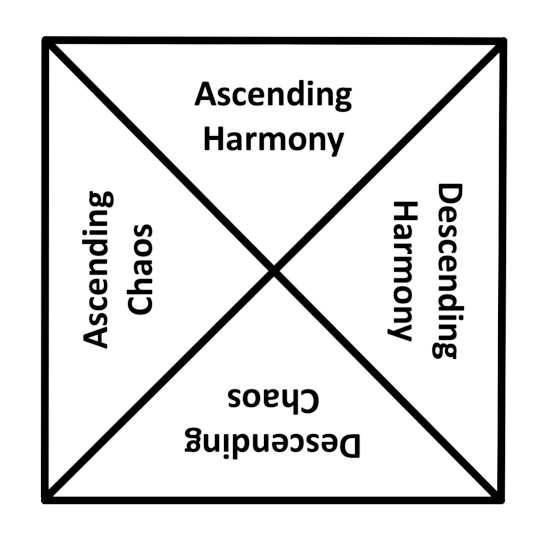
As he elaborated on these movements, Fourier claimed that social history went through four main periods of unhappiness and happiness, ascending from a chaotic period, through two harmonious periods which were each seven times longer, before descending into another chaotic period of length equal to the first. In order to achieve this happiness, he thought that we must envision and engineer a new social order to achieve a common purpose. Nowadays, of course, socialism has a noxious connotation to those of the right-leaning and hyper-capitalist persuasion.

  • Ascending Chaos
  • Ascending Harmony
  • Descending Harmony
  • Descending Chaos

And now, the United States teeters on the brink of choosing four more years of terrible leadership, all to maintain the status-quo of funneling more money into the pockets of the wealthy and more power into the hands of the already dominant.

Further Reading:

Charles Fourier / The Theory of Four Movements

https://libcom.org/library/charles-fourier-theory-four-movements

https://en.wikipedia.org/wiki/Charles_Fourier

https://en.wikipedia.org/wiki/Fourierism

https://publicdomainreview.org/essay/get-thee-to-a-phalanstery-or-how-fourier-can-still-teach-us-to-make-lemonade/

33. In search of harmony

4.1.4.2. The Future City

[*9.62, *12.63]

<>


Classes of Automata

Here is one way to carve up abstract (mathematical) automata into different classes of complexity (from low to high).

There is a somewhat different and older one that is based on the Chomsky Hierarchy (where ND stands for non-deterministic), and the associated language or grammar that they recognize:

Further Reading:

https://en.wikipedia.org/wiki/Automata_theory

https://en.wikipedia.org/wiki/Chomsky_hierarchy

[*11.138]

<>

Ouroboros

Lo! ’t is a gala night
Within the lonesome latter years!
An angel throng, bewinged, bedight
In veils, and drowned in tears,
Sit in a theatre, to see
A play of hopes and fears,
While the orchestra breathes fitfully
The music of the spheres.

— From The Conqueror Worm, by Edgar Allen Poe

The worm, turns.

Further Reading:

https://en.wikipedia.org/wiki/Ouroboros

https://www.poetryfoundation.org/poems/48633/the-conqueror-worm

https://en.wikipedia.org/wiki/The_Conqueror_Worm

https://en.wikipedia.org/wiki/Even_a_worm_will_turn

https://en.wikipedia.org/wiki/The_Worm_Ouroboros

[*12.64]

<>


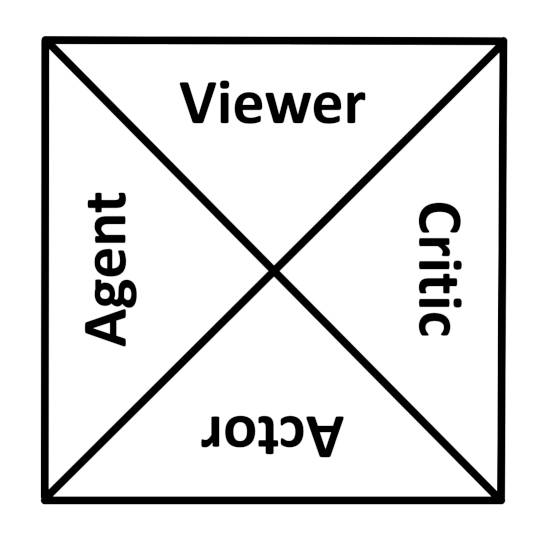
Agent, Actor, Critic, and Spectator

To understand all (causally) is to forgive all (normatively). To understand all (normatively) is to forgive nothing, for it is to talk about norms, not people; about mathematics, in which there is no error and no responsibility, and not about mathematicians, who do make mistakes.

— Lewis White Beck

Here is a set of distinctions by philosopher Lewis White Beck that may have some relevance to thinking about human determination and action. Beck was most renowned as a scholar of Kant.

  • Agent: a person X who thinks they are responsible and free in choices and actions (essentially a “free” agent), with motives and reasons
  • Actor: a person X who thinks they are an agent but is judged by a Spectator Y to not be free and instead determined by external causes
  • Spectator (diagrammed as Viewer): a person Y who observes any X and explains their actions exclusively by causal terms, and so judges them to be an Actor
  • Critic: a person Z who is in a position to agree with X that X is indeed an Agent or a Spectator Y that X is instead an Actor

A great deal of language revolves around explaining our behavior and that of others, both for the benefit or detriment to ourselves and others. All of us would usually rather be free and responsible agents than causally determined actors, but certainly we are not entirely free to act no matter how little we are not. Philosophical discussion of human action continues to be commonly cast into terms such as agency, action, intention, and even authenticity.

Beck later returned to these ideas for his Ernst Cassirer lectures, and a book of them was published in 1975. By the title and a short description, it appears that Beck reduced the fourfold to a mere dual, in order to simplify as well as elaborate his ideas (but I cannot say for sure as I have not read it). Still, I like the original fourfold scheme that in my mind bears likenesses to others presented here (for example, Modal Verbs.)

Further Reading:

Lewis White Beck / Agent, Actor, Spectator, and Critic, The Monist , April, 1965, Vol. 49, No. 2, pp. 167-182
http://www.jstor.com/stable/27901588

Lewis White Beck / The Actor and the Spectator: foundations of the theory of human action (1975)

https://en.wikipedia.org/wiki/Lewis_White_Beck

https://en.wikipedia.org/wiki/Agency_(philosophy)

https://plato.stanford.edu/entries/agency/

https://en.wikipedia.org/wiki/Action_(philosophy)

https://plato.stanford.edu/entries/action/

https://en.wikipedia.org/wiki/Intention

https://plato.stanford.edu/entries/intention/

https://en.wikipedia.org/wiki/Authenticity_(philosophy)

https://plato.stanford.edu/entries/authenticity/

[*4.40, *4.108, *7.38, *9.66]

<>

A Man, a Plan, a Canal, Panama

You may think I’m just being silly by presenting everyone’s favorite palindrome.

But now notice the rough correspondence of these four things to the Four Causes.

Further Reading:

https://www.americanheritage.com/man-plan-canal-panama

[*12.62]

<>


The Canonical Formula of Myth

Further Reading:

Claude Lévi-Strauss / The Structural Study of Myth, The Journal of American Folklore, 68, 270, Myth: a symposium, American Folklore Society, http://www.jstor.org/stable/536768

https://www.webpages.uidaho.edu/~sflores/KlagesLevi-Strauss.html

https://www.webpages.uidaho.edu/~sflores/KlagesPoststructuralism.html

Lévi-Strauss’s ‘double twist’ and controlled comparison: transformational relations between neighbouring societies

Jack Morava / On the Canonical Formula of C. Lévi-Strauss, arXiv:math/0306174v2 (2003)

James B. Harrod / A post-structuralist revised Weil–Lévi-Strauss transformation formula for conceptual value-fields, November 2018, Sign Systems Studies 46(2/3):255

Jean-Loïc Le Quellec, Marc Thuillard / A phylogenetic interpretation of the canonical formula of myths by Levi-Strauss, December 2016

Mark S. Mosko / The Canonic Formula of Myth and Nonmyth, American Ethnologist, Feb., 1991, Vol. 18, No. 1 (Feb., 1991), pp. 126-151, http://www.jstor.com/stable/645568

[*9.128, *12.64]

<>

Hyper-analogies

I’ve written a few times about relating two different fourfolds and juxtaposing or comparing them in one eightfold diagram. A normal analogy is usually written as A:B::C:D, which means A is to B as C is to D. So if you have two such fourfolds, one way to write it as an eightfold is A:B::C:D:::E:F::G:H. I think a good name for this is a hyper-analogy. I couldn’t really find anything of merit about this concept, but perhaps it goes by another name.

I’m not sure what diagram arrangement shows this the best. Some ideas are 1) A-D are arranged vertically (as well as E-H) and both are arranged horizontally (side-by-side), or 2) A-D are the triangles pointing down, and E-H are the triangles pointing up. Or, 3) A-B can be the upper left and C-D the lower right squares, and E-H can be the upper right and lower left squares. Or, one can use the radial eightfold schema, and have 4) A-D are the triangles on the inside, E-H are the triangles on the outside (or vice-versa).

For example, here I show the Four Causes combined with my Structure-Function. Also, please examine my Eightfold Metaphysics, which combines Space-Time-Matter-Energy with Structure-Function. Additionally, another I like is the one for Tanabata, which relates the astronomical with the symbolized. I could go on and on, and probably will.

Further Reading:

An Eightfold Metaphysics

Tanabata, V2

Noether-Pauli-Jung, V2

[*12.54]

<>

Flowing and Falling

Some philosophers say everything is process. From the cosmic scale of the universe to the submicroscopic scale of atoms, physical forces marshal matters and energies to and fro. In between these at the human scale, biology is ruled by flows of energy from the sun and nutrients from the environment as well as from other living beings. Dynamical forces such as temperature, weather and tides also affect biology and even the cultural processes of higher lifeforms.

At the scale of the solar system, gravity collects gases to ignite stars and form planets. Once stars reach their limits to burn, gravity can collapse them to dense cinders and black holes or even to rebound and spread their atomic matters in novas and supernovas. Even light spread by the stars can be gathered together into gravity wells such as black holes. Stars in turn are gathered into galaxies by the gravity of black holes and even unknown dark matters.

At the scale of atoms and molecules, temperature differentials and water can partition certain types of elementary constituents to form membranes and segregate insides from outsides. If an inside is protected sufficiently, then there is time and the conditions to harbor and perpetuate the delicate structures and processes that form cells. Cells can even gather together and continue as multicellular communities, or only temporarily to fruit and disperse again as simple creatures known as slime molds.

At the individual human or societal scale, there are flows for nutrients and excreta, materials for habitation and the manufacture of tools, distributed energies such as electricity, fossil fuels, and information for learning, work, and civic participation. Even speech and writing can be thought as flows of information. But just as flows of nutrients and materials and energies can prove toxic to biological health or ecologies, so can information.

For two-dimensional dynamical systems, certain common elements can be mapped out: sources and sinks, saddles and centers. Sources have flows out from a point or region, and sinks have flows in. Saddles have a roughly stationary center, due to balanced flows in and out at (not necessarily) right angles. Centers are circular vortexes about a stationary point or region. Sources and sinks can spiral, saddles can twist, centers can become eccentric or elliptical.

For example, think about everyday weather forecasts. The atmosphere is relatively thin compared to the earth and so the flows of air can be considered two-dimensional, at least at the ordinary strata of human habitation. There are air pressure highs and lows (sources and sinks), and air temperature cold and warm fronts (usually not saddles though), stationary fronts (centers?), and even circulations (hurricanes are spiraling sinks I guess).

Ordinary, human-sized change has conditioned many of our intuitions and insights about the way the universe works. Heraclitus famously said that all was change, and so he thought fire was the primal element. His predecessor Thales thought that water was instead the basic element, and it is pretty mutable also. Lucretius, inspired by Empedocles, thought none of the four classical elements were foundational, but all were composed of tiny bits that fell and bounced against each other through an endless void.

As earth is in opposition to air, and fire to water, the seasonal changes of temperature and moisture were considered by Hippocrates. Heat gains dominion over cold in Spring and Summer, but cold replaces it in Fall and Winter. Similarly wet and dry quarters cycle through the seasons. These oppositions gave rise to the theory of the four temperaments or humourism. Even to this day these considerations have inspired various theories of personality, like the Myers-Briggs Assessment.

Is everything a struggle of opposites? Empedocles, already mentioned, thought love and strife were the relations that respectively attracted and repelled all matter in their dance and change. Now we know that things fall towards the earth, not for the love of it, but because of the shape of space that the earth’s mass makes. Heat flows into the cold because both even up. Order dissolves into chaos since the latter is more likely, unless fed by other sources of order turning to disorder.

Is everything a flow between opposites? Light spreads out and diminishes into darkness, but gravity gathers matter together. Enough gravity can even gather light and bind it into the darkness of a black hole. A drop of ink spreads out in a glass of water, never to return to that inky state, unless the glass sits and the water evaporates until only a drop remains. Even epidemics and pandemics can be thought to be flows of transmission and contagion. Here, the small becomes the large, and the few the many.

Further Reading:

https://en.wikipedia.org/wiki/Stability_theory

https://en.wikipedia.org/wiki/Four_temperaments

https://en.wikipedia.org/wiki/Process_philosophy

Also note that these four classifications are somewhat analogous to four valued logic: True is Source, False is Sink, None is Center, Both is Saddle.

[*12.52, *12.56]

<>


Conditional Branching is Not Necessary

Four simple instructions are sufficient to evaluate any Turing computable function using self-modifying programs: LOAD, STORE, GOTO, INCREment.

Further Reading:

Raul Rojas / Conditional Branching is Not Necessary for Universal Computation in von Neuman Computers, Journal of Universal Computer Science 2,11 (1996) 756-768

William F. Gilreath, Phillip A. Laplante / Computer Architecture: A Minimalist Perspective

[*11.65]

<>