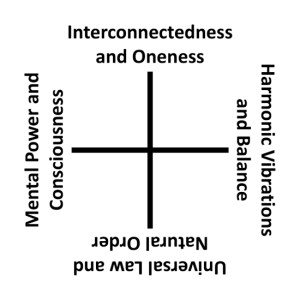
 Walter Bowman Russell was an American polymath, artist, author, and philosopher who made copious contributions and claims to various fields, including spirituality, art, and metaphysics. While his work encompasses a broad range of ideas, here are four major themes that capture the essence of his philosophy:
- Universal Law and Natural Order: One of Russell’s central ideas is the existence of an underlying universal law and natural order that governs all aspects of the universe. He believed that this law operates in perfect harmony, and by understanding and aligning ourselves with it, we can achieve balance and fulfillment in our lives.
- Unity and Interconnectedness: Russell emphasized the interconnectedness of all things in the universe. He saw everything as part of a grand, unified whole, where all elements are interdependent and interconnected. According to his philosophy, recognizing this interconnectedness enables us to grasp the fundamental unity of all existence.
- Harmonic Vibrations and Rhythmic Balance: Russell believed that the universe is fundamentally vibrational in nature, with everything composed of waves and rhythms. He emphasized the importance of achieving harmony and balance within ourselves and in our interactions with the world around us. By attuning ourselves to the harmonies and rhythms of the universe, we can lead more fulfilling and purposeful lives.
- The Power of Mind and Consciousness: Russell regarded the power of the human mind and consciousness as fundamental forces in shaping our reality. He believed that our thoughts and beliefs have the ability to create and influence the world we experience. According to his philosophy, by harnessing the power of our minds and cultivating a positive and constructive consciousness, we can achieve personal and collective transformation.
These four themes offer a glimpse into the multifaceted philosophy of Russell, often presented with his signature illustrations. However, it’s worth noting that Russell’s ideas encompass a vast array of subjects, including a non-standard physics and a spiritual cosmology, all interconnected through his unique perspective and understanding of the universe. Indeed, he was perhaps the first to endorse “new age” thought.
(Thanks, ChatGPT! I didn’t have the strength to read enough to write a quick summary. You were far less skeptical than I would have been, so I made a few small edits.)
Further Reading:
https://en.wikipedia.org/wiki/Walter_Russell
https://www.philosophy.org/#/
https://projectavalon.net/forum4/showthread.php?41699-The-Enigmatic-Walter-Russell
Startseite
RUSSELL, WALTER BOWMAN — MIAMI
WALTER RUSSELL
Only for NYT subscribers:
https://timesmachine.nytimes.com/timesmachine/1963/05/20/90548414.html?pageNumber=31
Also, see:
The Decemberists – Cavalry Captain
[*13.175]
<>
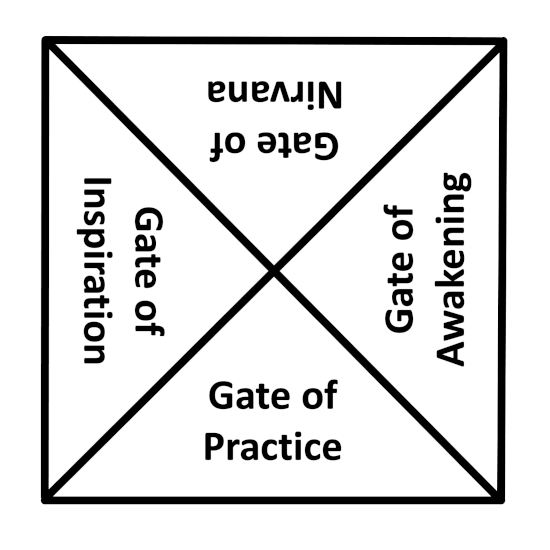 Hakuin Ekaku: Four Ways of Knowing:


 Equivalent Exchange