Matter, Energy, Space, and Time

sq_MESTThe first little ball is red and green
Oh it’s pretty, yes I know what you mean
I call it Substance, do dio dio do
And what it will do I just don’t know

The next little ball is silver and black
See it chase the first one forward and back
I call it Space, do dio dio do
What it will do I just don’t know

The next little ball is too hot to hold
I have to keep tossing it and I hope it gets cold
I call it Power do dio dio dio
What it will do I just don’t know

The next little ball is orange and blue
I can’t juggle four so I’ll toss it to you
And I call it Time…

— From “The Juggler’s Song” by The Incredible String Band

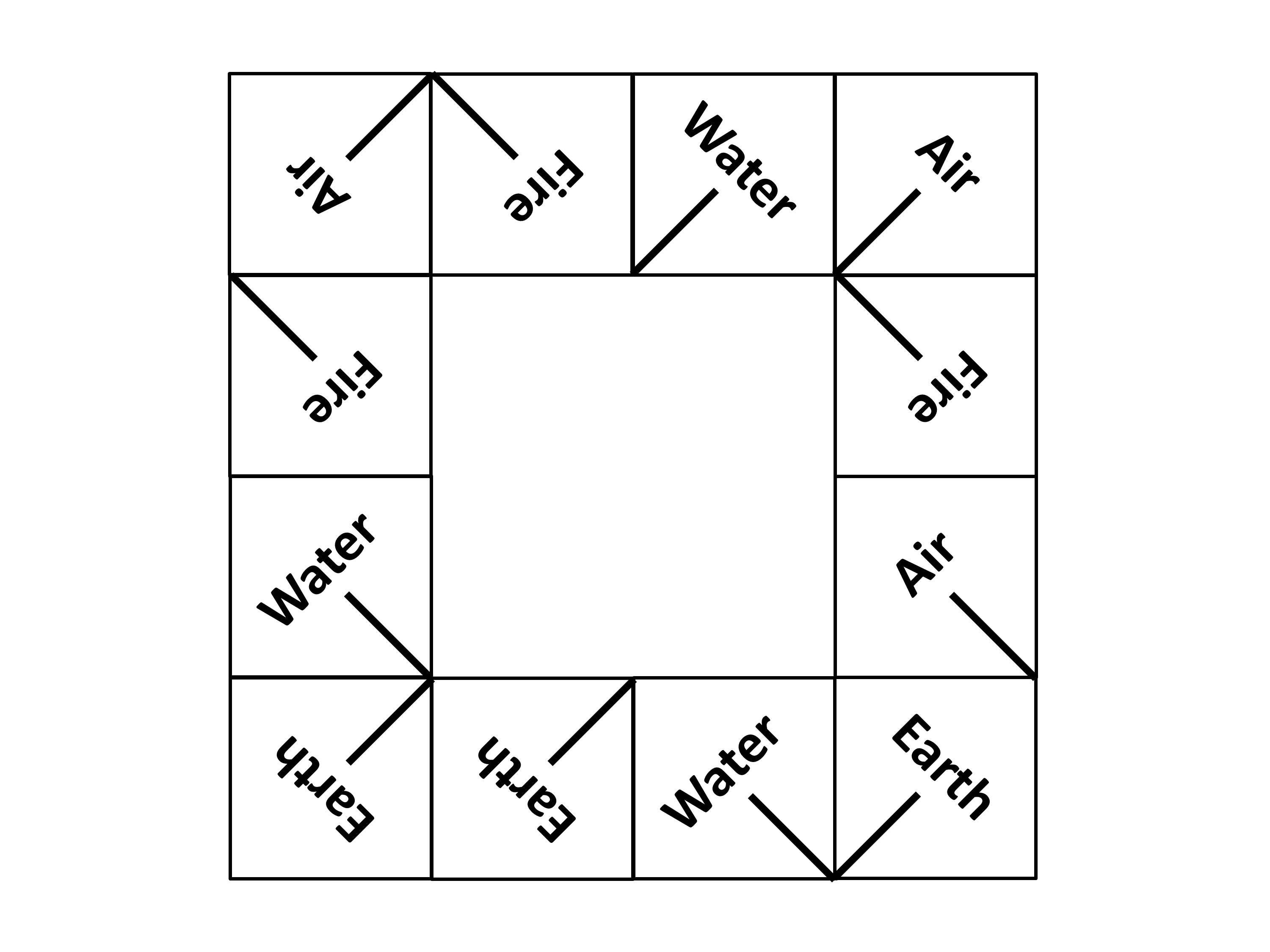
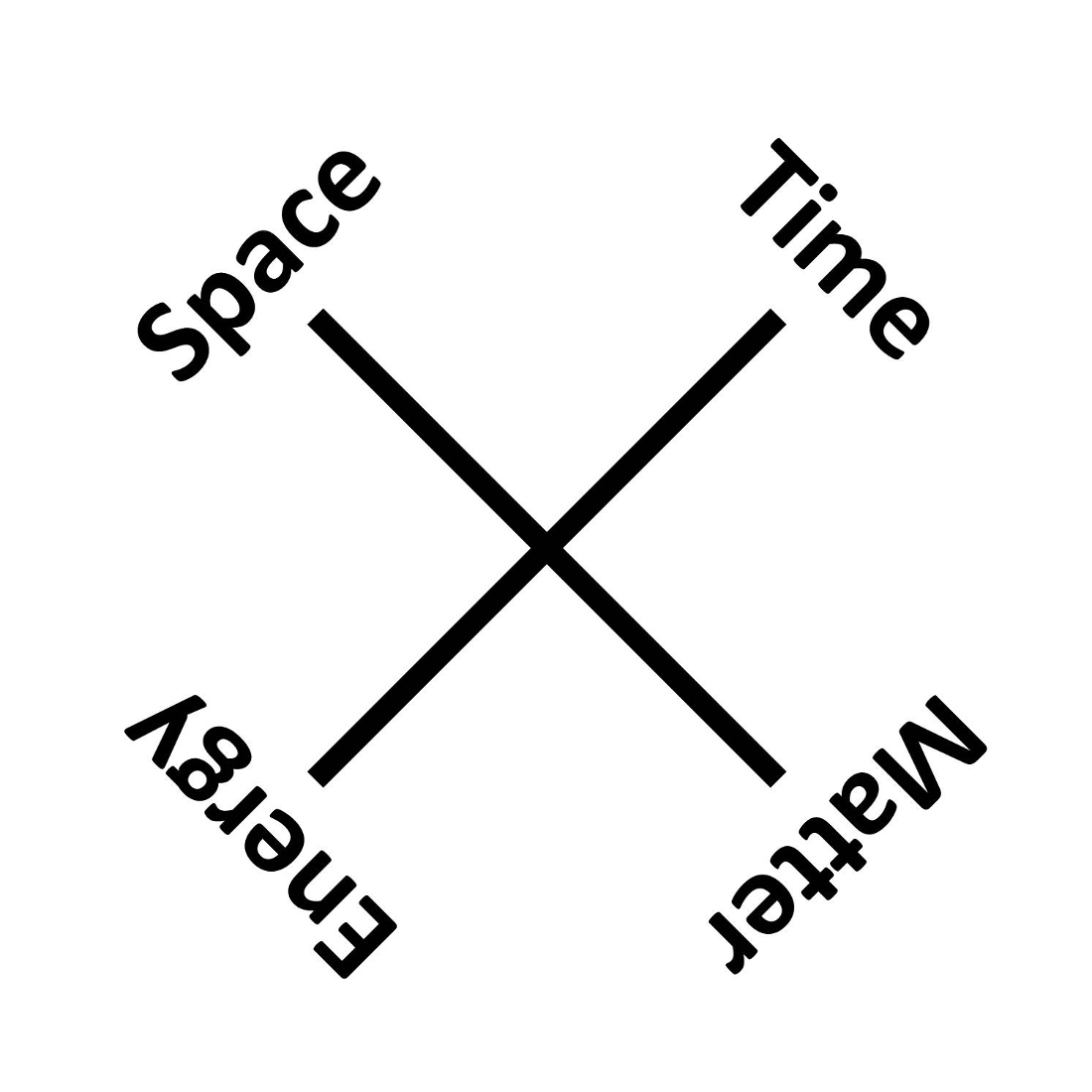
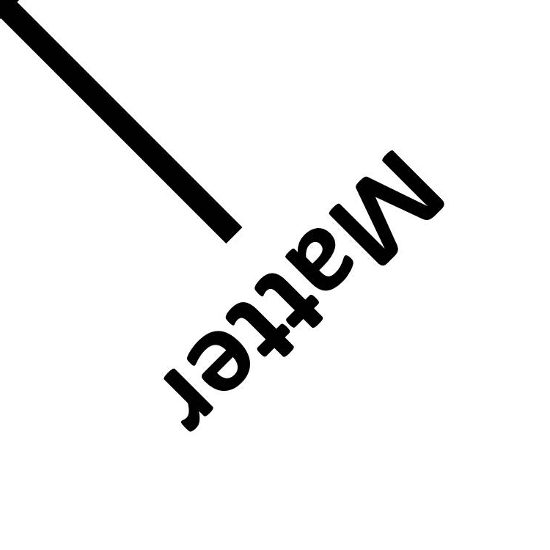
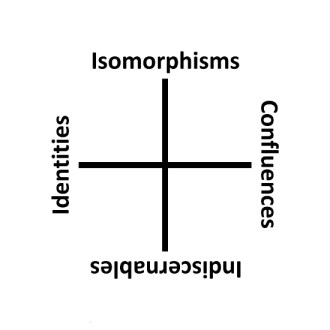
Here’s a nice little fourfold that I’ve overlooked until now, kind of like a four-leaf clover. If you search for images of matter, energy, space, and time, several websites show a diagram quite similar to this, and some have interesting things to say.

One shows free energy instead of energy in general. Free energy is energy that is able to do work, and that is an important distinction, especially if you are thinking about the Four Causes. Then the four can be considered fundamental resources.

There are some other things to consider from these references. One is that there is the familiar equivalence between matter and energy. Another is the equivalence principle between gravity and acceleration.

Also, there are obvious analogies between this fourfold and the Four Elements and the Four States of Matter. sq_Noether's TheoremI have also used the pairs space-time and matter-energy as two parts of the fourfold Noether’s Theorem, the other two parts being symmetry and conservation. There is also the fourfold Spacetime that has some similarities to this one. And let’s not forget the atomism of On the Nature of Things by Lucretius.

Be sure and watch the upcoming television series Cosmos: a Spacetime Odyssey, hosted by Neil deGrasse Tyson. I’m sure there will be much talk of Matter, Energy, Space, and Time.

Notes:

There is even a term coined for Matter-Energy-Space-Time: MEST. Of course, MEST also stands for Math, Engineering, Science, and Technology! No, sorry, that’s STEM!

Links:

http://abyss.uoregon.edu/~js/ast123/lectures/lec09.html

http://billmoyers.com/2014/01/10/the-new-cosmos-a-spacetime-odyssey/

[*7.90, *8.32]

<>


Relations All the Way Down

There is nothing to be known about anything except an initially large, and forever expandable, web of relations to other things. Everything that can serve as a term of relation can be dissolved into another set of relations, and so on for ever. There are, so to speak, relations all the way down, all the way up, and all the way out in every direction: you never reach something which is not just one more nexus of relations.

— Richard Rorty from Philosophy and Social Hope

sq_ll2

The ancient Greek philosopher Empedocles somehow reasoned that the world was made entirely from four basic elements: fire, earth, water, and air. Science as we know it has disproved this from being the case, but this idea still has a rich symbolic meaning even today that informs our popular culture.

A recent philosophical stance called “ontic structural realism” argues that science suggests that only relations between things are of lasting importance, that is the structural relationships within and between things, not the things themselves that bracket the relations. What we call a quark for instance is just the relations it has with other quarks and the other entities that have relationships with quarks. Perhaps then the world consists of “relations all the way down”, instead of stopping at some point on the lowest level with the things that constitute the world.

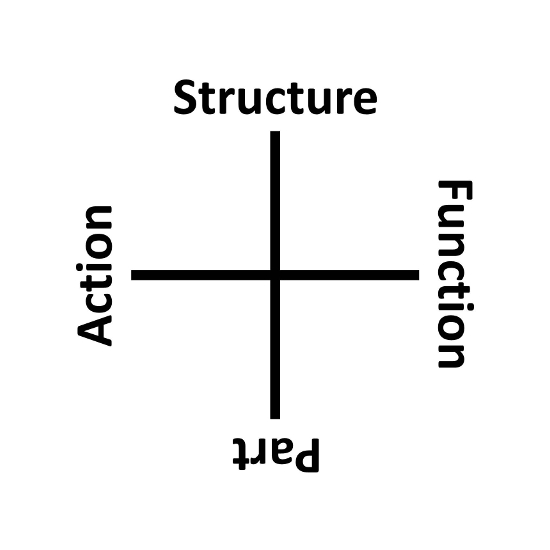
If this is so, what if the world was made completely from four basic relations, instead of four basic things? sq_structure_functionCould they be something like the four binary operators of linear logic? I have likened these four basic operators of Linear Logic to my fourfold Structure-Function, where in addition to Structures, we also have Functions, Actions, and Parts. But these three other relations are also structural, in that only the relation something has to another something makes it structural, functional, actional, or a part of a something.

Book Description for Every Thing Must Go:

Every Thing Must Go argues that the only kind of metaphysics that can contribute to objective knowledge is one based specifically on contemporary science as it really is, and not on philosophers’ a priori intuitions, common sense, or simplifications of science. In addition to showing how recent metaphysics has drifted away from connection with all other serious scholarly inquiry as a result of not heeding this restriction, they demonstrate how to build a metaphysics compatible with current fundamental physics (“ontic structural realism”), which, when combined with their metaphysics of the special sciences (“rainforest realism”), can be used to unify physics with the other sciences without reducing these sciences to physics itself. Taking science metaphysically seriously, Ladyman and Ross argue, means that metaphysicians must abandon the picture of the world as composed of self-subsistent individual objects, and the paradigm of causation as the collision of such objects. Every Thing Must Go also assesses the role of information theory and complex systems theory in attempts to explain the relationship between the special sciences and physics, treading a middle road between the grand synthesis of thermodynamics and information, and eliminativism about information. The consequences of the author’s metaphysical theory for central issues in the philosophy of science are explored, including the implications for the realism vs. empiricism debate, the role of causation in scientific explanations, the nature of causation and laws, the status of abstract and virtual objects, and the objective reality of natural kinds.

Stuff I need to read:

James Ladyman, Don Ross / Every Thing Must Go: Metaphysics Naturalized

http://plato.stanford.edu/entries/structural-realism/

Jason D. Taylor / Relations all the way down? Exploring the relata of Ontic Structural Realism

http://hdl.handle.net/10402/era.27885

Relations All the Way Down

https://ndpr.nd.edu/reviews/every-thing-must-go-metaphysics-naturalized/

<>


Knowledge and Its Limits

Knowledge and action are the central relations between mind and world. In action, world is adapted to mind. In knowledge, mind is adapted to world. When world is maladapted to mind, there is a residue of desire. When mind is maladapted to world, there is a residue of belief. Desire aspires to action; belief aspires to knowledge. The point of desire is action; the point of belief is knowledge.

— From Knowledge and Its Limits by Timothy Williamson

sq_knowledge_limits

Or with some substitutions:

Theory and practice are the central relations between the mental and the physical. In practice, the physical is shaped to the mental. In theory, the mental is shaped to the physical. When the physical is misshaped to the mental, there is a residue of intention. When the mental is misshaped to the physical, there is a residue of attention. Intention aspires to practice; attention aspires to theory. The point of intention is practice; the point of attention is theory.

sq_knowledge_limits2

Also, note the similarity to The Scientific Method.

Further Reading:

Timothy Williamson / Knowledge and Its Limits

[*6.24, *6.32, *8.22]

<>

The Noble Truths of Suffering

The Four Noble Truths of Suffering are:

  • Dukkha: the truth that suffering exists.
  • Samudaya: the truth that suffering has a beginning.
  • Nirodha: the truth that suffering can end.
  • Magga: the truth that there exists a path for the end of suffering.

Further Reading:

http://en.wikipedia.org/wiki/Four_Noble_Truths

[*8.24]

<>

Ægypt Tetralogy

AEgypt is a literary work by John Crowley consisting of four novels published over a period of twenty years. Each of the four books is divided into three parts, and the twelve parts are named after the astrological houses.

Many occult, alchemical, and esoteric themes run through the novels, and one might describe the work as being “magical realism”. Many of the magical elements are told as “a book within the book” about British occultist Doctor John Dee and Italian heretic Giordano Bruno. Even though some of the magical events occurring in the past and described within the novels seem to be actually magical, by the time the novels end the age of magic is now over, and the last magical event seemed to erase the fact that magic ever was.

The ending of the last book makes several references to Shakespeare’s “The Tempest”.

Further Reading:

http://en.wikipedia.org/wiki/%C3%86gypt

Some very useful reviews of the first three books can be found below.

http://watershade.net/wmcclain/jc-index.html

http://en.wikipedia.org/wiki/House_%28astrology%29

http://www.latimes.com/features/la-bkw-park7oct07,0,4224148.story#axzz2lmoAGKzp

http://www.latimes.com/features/la-bkw-park4nov04,0,6059163.story#axzz2lmoAGKzp

<>

The Medicine Wheel

The Native American Medicine Wheel is a symbol system that associates several fourfolds together, such as the Four Seasons, the Four Cardinal Directions, the Four Elements, etc. Another fourfold that does this is the Four Temperaments.

There should be a good word for this amalgamation of fourfolds into one hyper- or mega- or uber- fourfold. What about quadriphilia? No, that’s just love of fours, but it is in the Urban Dictionary. Quadrasyncretism? I like the neologism tetrasyncretism, from tetra meaning four, and syncretism, meaning combining different (or many) beliefs into one.

The aspect of the Medicine Wheel illustrated above is similar to the Four Temperaments.

The colors Red, White, Black, and Yellow are important for the Medicine Wheel. The colors often occur in a certain order within quadrants of the circle of the wheel. The colors also correspond to the Four Seasons: Black for Autumn, White for Winter, Yellow for Spring, and Red for Summer, although there can be other mappings.

These same four colors are also important in alchemy and represent stages of the Magnus Opus or Great Work, where Red is Rubedo or Iosis, White is Albedo or Leukosis, Black is Nigredo or Melanosis, and Yellow is Citrinitas or Xanthosis. The order is usually Black, White, Yellow, and then Red, through beginning to ending stages of the work.

In addition, the current anime RWBY has characters with these main costume colors. Apparently it is a story with some magic and much fighting with large weapons by four young women.

Further Reading:

http://en.wikipedia.org/wiki/Medicine_wheel

http://en.wikipedia.org/wiki/Magnum_opus_%28alchemy%29

http://en.wikipedia.org/wiki/Cardinal_direction

http://en.wikipedia.org/wiki/RWBY

Angeles Arrien / The Four-Fold Way: Walking the Paths of the Warrior, Teacher, Healer, and Visionary

Google search for images of the Medicine Wheel.

Google search for images of the Four Cardinal Directions.

[*7.194, *8.12]

<>


The Tempest and Forbidden Planet

To work mine end upon their senses that
This airy charm is for, I’ll break my staff,
Bury it certain fathoms in the earth,
And deeper than did ever plummet sound
I’ll drown my book.

Prospero from The Tempest

In times long past, this planet was the home of a mighty, noble race of beings who called themselves the Krell. Ethically and technologically they were a million years ahead of humankind, for in unlocking the mysteries of nature they had conquered even their baser selves, and when in the course of eons they had abolished sickness and insanity, crime and all injustice, they turned, still in high benevolence, upwards towards space. Then, having reached the heights, this all-but-divine race perished in a single night, and nothing was preserved above ground.

Dr. Morbius from Forbidden Planet


Further Reading:

http://en.wikipedia.org/wiki/The_Tempest

http://en.wikipedia.org/wiki/Forbidden_Planet

http://en.wikipedia.org/wiki/Return_to_the_Forbidden_Planet

https://grg.org/charter/Krell2.htm

[*7.154, *8.11]

<>

Complex Numbers and Quaternions

Two conceptualizations of four directions in mathematics are Complex numbers and Quaternions. For complex numbers, two of the directions are the opposite or negative of the other two. Complex numbers are like Cartesian coordinates in that they combine an (x,y) coordinate pair of real numbers into one complex number x + yi. Plus, complex numbers can by manipulated by extensions of arithmetic operations, like addition, subtraction, multiplication, and division.
Quaternions are an extension of the complex numbers where the directions are all different, and each direction is perpendicular to the other three. Like complex numbers are a notion of numbers that cover a plane, quaternions are a notion of number that fill four dimensional space. Thus they combine a 4-tuple (w,x,y,z) into one quaternion number w + xi + yj + zk. Like complex numbers, quaternions can be manipulated by further extensions of arithmetic operations.

http://en.wikipedia.org/wiki/Complex_number

http://en.wikipedia.org/wiki/Quaternion

[*7.189]

<>

Ohm’s Law

Charts for the equations of Ohm’s Law usually consist of the fourfold relation between Voltage (Volts), Current (Amps), Resistance (Ohms), and Power (Watts). For each electrical quantity, there are three equations that represent it in terms of two others, making twelve equations total.

Ohm’s Law is really only between voltage, current, and resistance. Apparently, power is more correctly introduced by the formula for “Joule heating”.

Both voltage and current have been in two fourfolds previously (Four Basic Electrical Components and System Dynamics) but not power and resistance. Well, resistance did make an appearance as a relation between current and voltage.

The twelve equations can be generated by the following identities (where E = voltage, I = current, R = resistance, and P = power):

I*R/E = P/(I*E) = P*R/E^2 = R*I^2/P = 1

http://en.wikipedia.org/wiki/Ohm%27s_law

http://en.wikipedia.org/wiki/Joule%27s_first_law

Google search for images for Ohm’s Law.

[*8.4, *8.5, *8.8, *8.9, *8.10]

<>


The Four Temperaments

What would a list of fourfolds be without mentioning the Four Temperaments: Sanguine, Choleric, Melancholic, and Phlegmatic?

Indeed, these personality types from ancient medicine and philosophy are still a source of classification and inspiration for modern psychology, even though the reasons for the differences (the four humors) has been discredited. The four humors were blood, yellow bile, black bile (they were big on bile), and phlegm, and were also related to the Four Seasons and the Four Elements.

Below is psychologist David Keirsey’s modernization of the four temperaments, consisting of Idealist, Artisan, Guardian, and Rationalist.

References:

http://en.wikipedia.org/wiki/Four_temperaments

http://en.wikipedia.org/wiki/Humorism

http://en.wikipedia.org/wiki/Myers-Briggs_Type_Indicator

http://en.wikipedia.org/wiki/David_Keirsey

http://en.wikipedia.org/wiki/Keirsey_Temperament_Sorter

https://en.wikipedia.org/wiki/The_Four_Temperaments_(ballet)

Images of the Four Temperaments.

[*6.122, *6.123, *7.194, *8.14, *8.94, *8.139]

<>


Every Fourth Thing

Daydream Tourist

Because there are way more than seven wonders in the world.

The Digital Ambler

Always Forward Between Heaven and Earth

The Mouse Trap

Psychological Musings

Wrong Every Time

Critiquing anime and everything else

The Chrysalis

"For man has closed himself up, till he sees all things thro' narrow chinks of his cavern" -- William Blake

  Bartosz Milewski's Programming Cafe

Category Theory, Haskell, Concurrency, C++

The Inquisitive Biologist

Reviewing fascinating science books since 2017

Gizmodo

Every Fourth Thing

Simplicity

Derek Wise's blog: Mathematics, Physics, Computing and other fun stuff.

COMPLEMENTARY 4x

integrating 4 binary opposites in life, learning, art, science and architecture

INTEGRATED 4x

integrating 4 binary opposites in life, learning, art, science and architecture

Playful Bookbinding and Paper Works

Chasing the Paper Rabbit

Antinomia Imediata

experiments in a reaction from the left

Digital Minds

A blog about computers, evolution, complexity, cells, intelligence, brains, and minds.

philosophy maps

mind maps, infographics, and expositions

hyde and rugg

neat ideas from unusual places

Visions of Four Notions

Introduction to a Quadralectic Epistomology

Explaining Science

Astronomy, space and space travel for the non scientist

Log24

Every Fourth Thing

Ideas Without End

A Serious Look at Trivial Things

Quadralectic Architecture

A Survey of Tetradic Testimonials in Architecture

Minds and Brains

Musings from a Naturalist

Why Evolution Is True

Why Evolution is True is a blog written by Jerry Coyne, centered on evolution and biology but also dealing with diverse topics like politics, culture, and cats.

Quadriformisratio

Four-fold thinking4you

Multisense Realism

Craig Weinberg's Cosmology of Sense

RABUJOI - An Anime Blog

Purveyors of Fine Anime Reviews and Ratings Since 2010

Intra-Being

Between Subject and Object

The Woodring Monitor

Every Fourth Thing

FORM &amp; FORMALISM

Every Fourth Thing

Log24

Every Fourth Thing

The n-Category Café

Every Fourth Thing

THIS IS NOT A BLOG

Every Fourth Thing

PHILOSOPHY IN A TIME OF ERROR

Sometimes those Sticking their Heads in the Sand are Looking for Something Deep

Networkologies

Online Home of Christopher Vitale, Associate Professor of Media Studies, The Graduate Program in Media Studies, Pratt Institute, Brooklyn, NY.

Hyper tiling

Linking Ideas

DEONTOLOGISTICS

RESEARCHING THE DEMANDS OF THOUGHT

Incognitions

Explorations in the Paradoxes of Meaning

Object-Oriented Philosophy

"The centaur of classical metaphysics shall be mated with the cheetah of actor-network theory."

Objects & Things

objects & things, design, art & technology